
For Nigerians in the UK and across the diaspora, stories like this hit differently. You’re far from home, but still deeply connected to your community, your friends, your children studying in British universities, and the everyday realities of life abroad. At Chijos News, we don’t just report headlines; we break them down in a way that speaks to you clearly, calmly, and with the context you actually need to protect yourself and your loved ones.
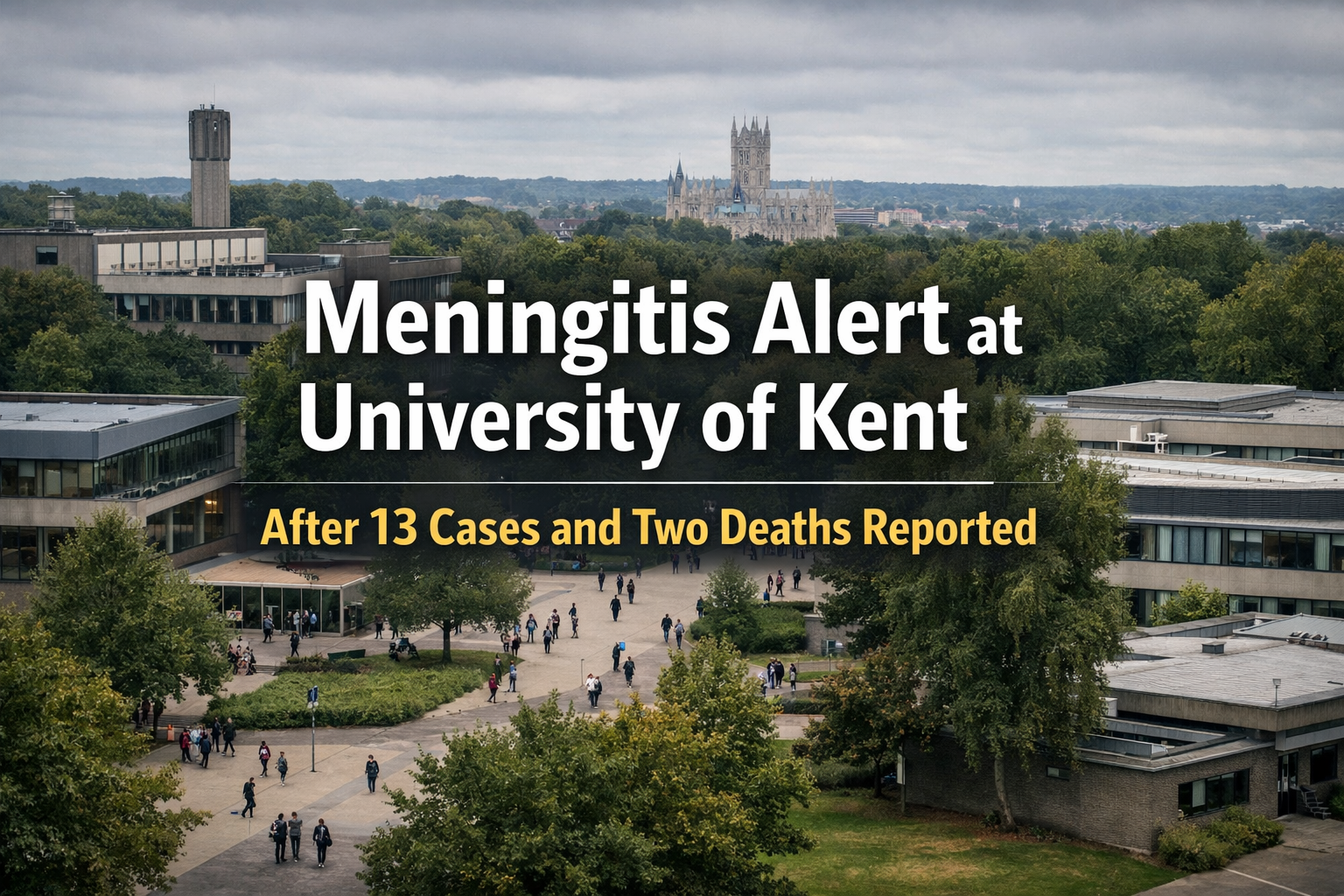
A growing meningitis outbreak in Kent is raising concern across the UK, especially among students and families with loved ones in university communities.
According to the UK Health Security Agency (UKHSA), as of 21 March, there are 20 confirmed cases of meningococcal disease, with additional cases still under investigation. While some earlier cases have been reclassified following further testing, the situation remains serious. Tragically, two people have died.
For many Nigerians and other diaspora families in the UK, this is more than just a news update. It’s personal. It’s about your children at university, your younger siblings, your friends living in shared accommodation, people who could be directly affected.
At the centre of the outbreak is the University of Kent, where students have been identified among confirmed cases. Health authorities have moved quickly, offering antibiotics and vaccinations to those most at risk, while also expanding access across the country for students who may have travelled home.
This is the kind of situation that can feel distant until it suddenly isn’t.
Meningococcal disease is rare, but when it happens, it can move fast and become life-threatening within hours. It includes conditions like meningitis, which affects the lining of the brain, and sepsis, a severe bloodstream infection.
One of the biggest challenges is that early symptoms can look like something minor. A headache. A fever. Feeling tired after a long day or a night out. For students especially, it’s easy to dismiss these signs as stress, flu, or even a hangover.
But this is where awareness becomes critical.
Symptoms can escalate quickly. They may include a sudden high fever, severe headache, stiff neck, vomiting, confusion, sensitivity to light, or a rash that does not fade when pressed. In some cases, people may become extremely drowsy or difficult to wake.
For diaspora families, especially Nigerians raising or supporting students in the UK, this moment calls for attention, not panic, but awareness.
There’s also an important reality behind why students are particularly affected. University life brings people into close contact. shared accommodation, social events, crowded lecture halls. Some people can carry the bacteria in their throat without knowing it, passing it unknowingly to others.
That’s why health officials are emphasising two key actions: early treatment and prevention.
Preventative antibiotics are currently the most important immediate step in controlling the outbreak. Vaccination, specifically the MenB vaccine, offers longer-term protection and is being rolled out to those at higher risk.
The reassuring part is this: the risk to the wider population remains low. UKHSA continues to monitor the situation closely, working with the NHS and local authorities to identify cases quickly and respond before the disease spreads further.
But “low risk” does not mean “no risk.”
For many Nigerians in the UK, especially parents, this is a moment to check in. A simple message to your child or younger relative, “How are you feeling?” can go a long way. It’s also a reminder to take symptoms seriously, no matter how small they seem at first.
There’s something else worth acknowledging too.
Living abroad often means balancing independence with distance. Your child might not tell you immediately when they feel unwell. Your younger sibling might brush things off. That’s part of the culture shift of living in the UK.
But situations like this remind us of something deeply Nigerian: we look out for each other.
Even from miles away.
The meningitis outbreak in Kent is still evolving. Case numbers may rise or fall as more testing is completed. Health authorities expect further updates in the coming days as investigations continue.
For now, the message is simple but important.
Stay informed.
Know the symptoms.
Act quickly if something feels wrong.
Because in situations like this, timing can make all the difference.
And as always, wherever you are in the UK, your health and the health of your community matters.