
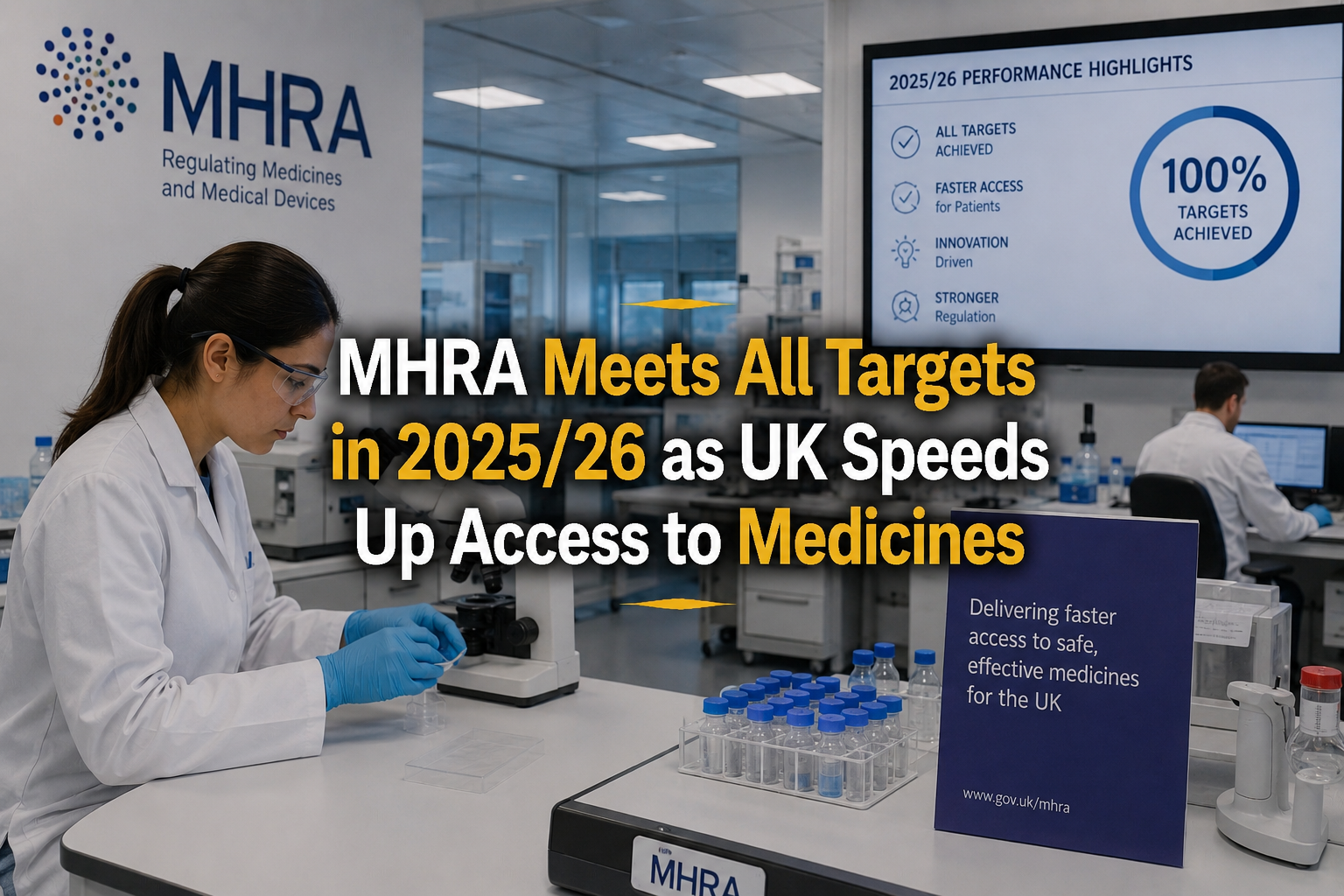
The Medicines and Healthcare products Regulatory Agency has met or exceeded every statutory target for the 2025/26 financial year, reinforcing the UK’s reputation as one of the world’s leading regulators for medicines and medical devices.
According to the agency’s newly published Results and Forecast report, released on 28 April, the MHRA delivered on all key performance commitments while helping patients access innovative medicines more quickly and supporting growth in the UK’s thriving £100 billion life sciences sector.
The report highlights a year of major achievements, from accelerating clinical trial approvals and tackling health misinformation to advancing the regulation of artificial intelligence and rare disease treatments.
UK Patients Gain Faster Access to New Medicines
For patients across the UK, including thousands of Nigerians and other migrants who rely on the National Health Service, the MHRA’s performance means quicker access to life-changing medicines and medical technologies.
The agency said it maintained excellent on-time performance across medicine licensing, clinical trial approvals and safety decisions, ensuring that treatments reach patients faster without compromising safety standards.
The MHRA also introduced stronger post-market surveillance rules for medical devices, modernised safety monitoring systems, and removed nearly 28 million doses of unauthorised medicines from circulation.
Major Advances in AI, Rare Diseases and Clinical Trials
Beyond its regulatory targets, the MHRA expanded its global influence through new partnerships and scientific innovation.
The agency strengthened collaboration with the National Institute for Health and Care Excellence, known as NICE, to create a more streamlined pathway from regulatory approval to patient access. It also launched a UK-Singapore Innovation Corridor and joined the international HealthAI network.
Work with the U.S. Food and Drug Administration has also deepened as part of a broader UK-US pharmaceutical partnership.
Among the most promising developments is a pioneering pathway for rare disease treatments, which could help families gain faster access to highly personalised therapies.
Financial Strength and Improved Staff Morale
The report shows that the MHRA finished the financial year with a healthy surplus, reflecting stronger financial stability and more disciplined operational delivery.
Staff morale also improved significantly, with record participation in the agency’s internal survey and a higher engagement score, suggesting a more motivated and confident workforce.
Independent research found that external sentiment towards the regulator has also improved over the last 12 to 18 months, with more positive views from industry leaders, researchers and healthcare stakeholders.
Ministers Praise MHRA’s High Performance
Dr Zubir Ahmed said the results demonstrate what a modern regulator should look like.
He said the MHRA had put patients first while maintaining speed and high standards, helping deliver the government’s priorities for the NHS, public health and the life sciences sector.
“The UK is positioned as a global destination for life sciences that is open to innovation, serious about safety, and credible on the world stage,” he said.
Lord Vallance said the regulator’s progress strengthens the UK’s reputation as a world-leading centre for research and development.
MHRA Leadership Highlights Patient-Focused Regulation
Lawrence Tallon said the agency’s success is measured not only in regulatory frameworks and timelines, but in improved lives for patients.
“With every performance target met, a strong financial position and more innovative medicines reaching patients, this is high-quality regulation in practice,” he said.
Professor Anthony Harnden praised staff and partners for helping the organisation achieve what he described as regulatory excellence.
He said the MHRA’s trusted standards are respected globally and continue to support health systems around the world.
Industry Leaders Welcome the Progress
Stakeholders from across the pharmaceutical and health technology sectors welcomed the report.
Jane Wall said the regulator has shown it is listening and evolving.
Professor Jonathan Benger said closer collaboration between NICE and the MHRA is helping patients access effective medicines and technologies more quickly.
Patient advocate Julia Vitarello said the UK is creating a world-first pathway that could help children with rare genetic diseases receive life-saving treatments in time.
Why This Matters to Nigerians and Other Migrants in the UK
For Nigerians living in the UK, especially those navigating long-term health conditions or caring for family members, the MHRA’s work has a direct impact.
When the regulator approves medicines faster and ensures high safety standards, patients can benefit from earlier access to treatments through the NHS. This is particularly important for families affected by rare diseases, chronic illnesses and emerging health technologies.
The stronger the UK’s regulatory system, the more confidence patients can have that the medicines they use are both safe and effective.
MHRA’s Five-Year Strategy Coming Later in 2026
Building on this strong performance, the MHRA is set to launch a new five-year strategy later in 2026.
The roadmap will outline how UK regulation will continue to evolve through to 2030, with a focus on patient safety, scientific innovation, NHS priorities and economic growth.
The full report is available on GOV.UK and provides a detailed overview of the MHRA’s achievements and future plans.
For Nigerians across the UK and around the world, developments like this often go unnoticed until they affect a loved one directly. Whether you are managing a chronic condition, supporting a child with a rare disease, or simply relying on NHS prescriptions, the work of regulators such as the MHRA shapes the quality and safety of the healthcare you receive every day.
At Chijos News, we are committed to translating complex UK policy and public health developments into clear, practical information for the diaspora. Because building a successful life abroad is not only about immigration and employment, it is also about understanding the institutions that protect your health, your family and your future.