
For many families across the Nigerian and wider African diaspora living in the United Kingdom, justice reforms and social support programmes play a critical role in shaping safer communities and stronger families. Women who encounter the criminal justice system often face complex challenges including abuse, poverty, and trauma. Policies designed to address these root causes are therefore closely watched by diaspora communities seeking fairness, rehabilitation, and protection for vulnerable individuals. At Chijos News, we report on these developments to help our global diaspora audience understand how government policies affect justice, rehabilitation, and community safety across Britain.
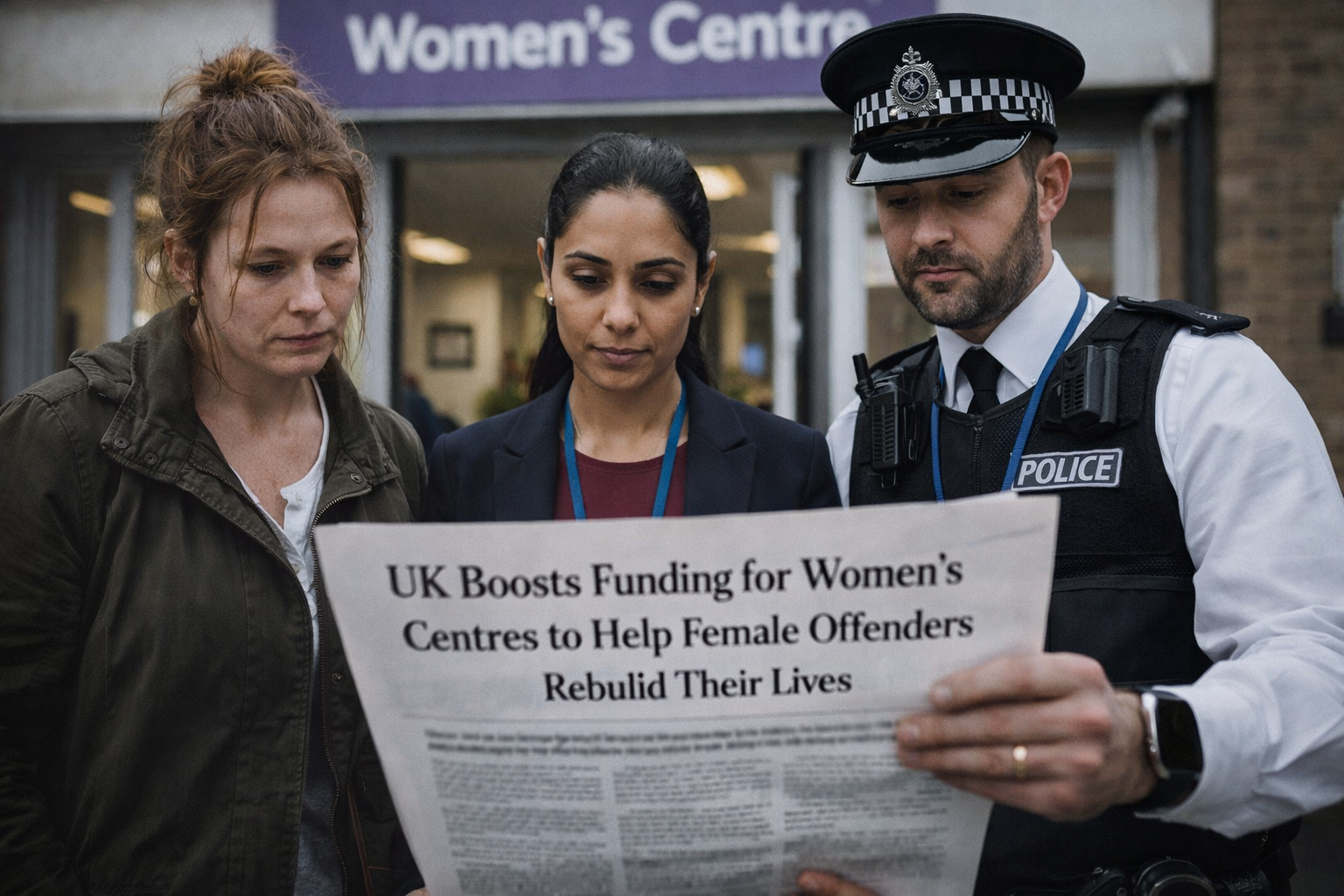
The UK government has announced a significant new investment aimed at supporting women’s centres and charities that provide specialist help to female offenders, many of whom are victims of abuse and trauma themselves.
The multi-year funding package represents a 50 percent increase in support for community organisations that help women recover from addiction, secure employment, find safe accommodation, and escape abusive relationships.
Officials say the funding will strengthen efforts to tackle the root causes of crime among women while reducing reoffending rates across the country.
According to government data, more than two-thirds of women in custody report being victims of domestic abuse, highlighting how trauma and violence often play a major role in their pathway into the criminal justice system.
Other statistics show that over half of female offenders have suffered brain injuries, while a similar proportion struggle with drug addiction. These overlapping challenges often create barriers to rehabilitation and increase the likelihood of repeated offending.
The government believes addressing these underlying problems is essential not only for supporting women but also for reducing crime and cutting the estimated £18 billion annual cost of reoffending to UK taxpayers.
UK Deputy Prime Minister David Lammy said the investment represents a major shift in how the justice system supports vulnerable women.
He emphasised that punishment should help women rebuild their lives rather than trap them in cycles of imprisonment that disrupt families and harm children.
Lammy said the new funding will help women break free from addiction, homelessness, and abusive relationships, ultimately preventing further crimes and improving public safety.
The announcement comes as the Women’s Justice Board publishes a new report outlining how the government can reduce the number of women entering custody.
The independent panel includes experts such as former Victims’ Commissioner Dame Vera Baird and Pia Sinha, director of the Prison Reform Trust.
The report argues that prison should remain necessary for serious crimes but recommends that custody be used as a last resort for lower-level offences. Instead, it highlights community-based alternatives as more effective ways of addressing the social and psychological issues that often lead to offending.
Experts say these approaches can break cycles of crime while strengthening families and communities.
Anne Fox, chief executive of the justice charity Clinks and a member of the Women’s Justice Board, welcomed the funding announcement.
She said many women entering the criminal justice system have long histories of trauma, poverty, abuse, and untreated health conditions. According to Fox, specialist women’s services are best placed to provide the targeted support needed before and after contact with the justice system.
Charities delivering frontline support also praised the new investment.
Natausha van Vliet, chief executive of PACT, which operates the Alana House Women’s Community Project, described the funding as a long-overdue step toward supporting vulnerable women.
She said organisations working directly with female offenders see daily how trauma, poverty, and abuse can push women into criminal behaviour. Community-based, trauma-informed support, she added, has proven effective in reducing reoffending while helping women rebuild stable lives.
Alongside the increased funding, the government plans to expand the use of Intensive Supervision Courts, including a new site for female offenders in Liverpool expected to open later this year.
These specialised courts focus on offenders who have committed low-level crimes but are dealing with complex personal challenges such as addiction or trauma.
Participants are required to attend treatment programmes and regularly appear before the same judge, who closely monitors their progress. Those who fail to comply face strict consequences, including possible imprisonment.
International evidence suggests that offenders participating in similar programmes are around one-third less likely to be arrested for new offences compared with those serving standard prison sentences.
As part of the next stage of reforms, the Women’s Justice Board will transition into a Women’s Justice Advisory Group, continuing to provide independent expertise to guide the government’s long-term strategy for reducing female incarceration.
For diaspora communities across the UK, particularly those who value family stability and community safety, initiatives focused on rehabilitation and social support are increasingly important. Many experts believe that helping vulnerable women overcome trauma, addiction, and poverty can prevent crime before it happens and strengthen communities as a whole.
At Chijos News, we continue to highlight policies that shape justice reform and social support systems in Britain, ensuring diaspora audiences remain informed about the changes affecting communities, families, and the future of rehabilitation in the UK.