
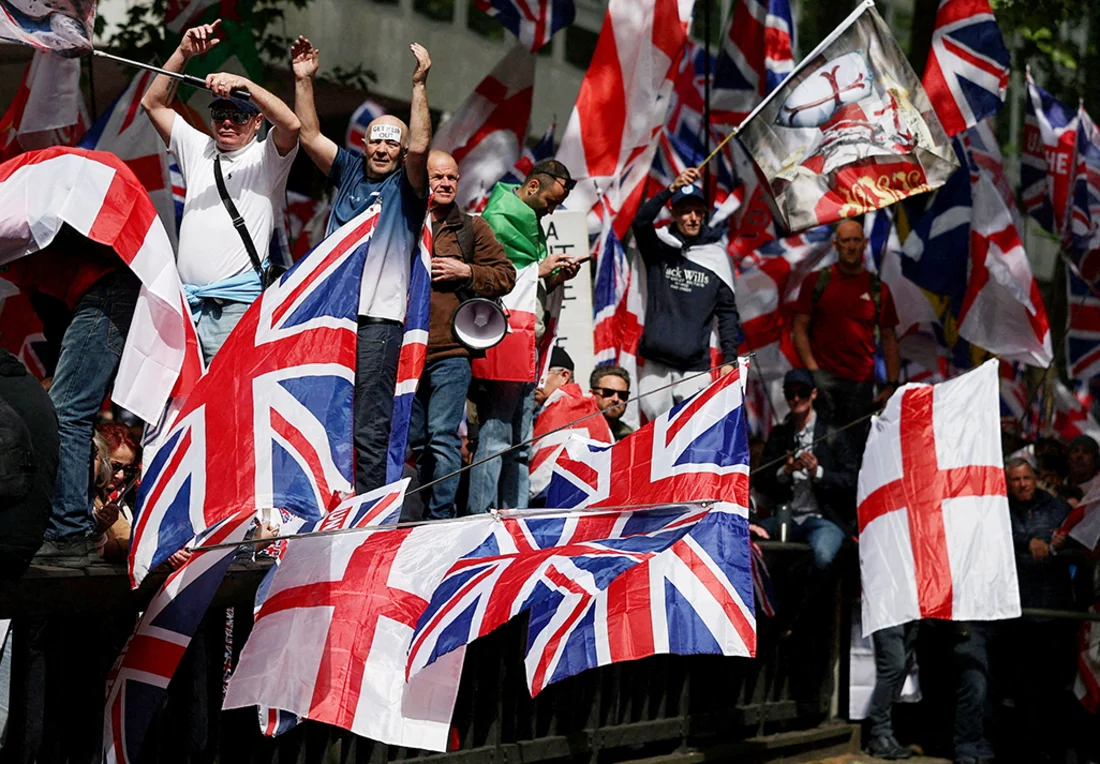
Tens of thousands of people took to the streets of central London on Saturday as two large and politically charged demonstrations unfolded at the same time, one focused on opposition to high levels of immigration in the United Kingdom and the other expressing solidarity with Palestinians amid the ongoing conflict in the Middle East. The scale of both gatherings prompted one of the biggest public order responses in recent years, with police deploying around 4,000 officers across the capital, including support units brought in from outside London, as authorities prepared for potential clashes and disruption.
The Metropolitan Police described the operation as one of its most assertive in recent years, with officers tasked with managing competing marches, preventing escalation and ensuring public safety across key areas of central London. By midday, shortly after both demonstrations began, police confirmed at least 11 arrests linked to a range of offences, while estimating that total turnout across both events could exceed 80,000 people.
The immigration-focused march, branded the “Unite the Kingdom” demonstration, was organised by anti-Islam activist Stephen Yaxley-Lennon, a figure who remains highly controversial in UK public life due to past convictions and repeated involvement in far-right activism. The protest drew supporters waving British and English flags through central London, with participants voicing concerns over immigration levels, cultural change and government policy.
Prime Minister Keir Starmer strongly criticised the organisers ahead of the march, accusing them of promoting division and hostility in public discourse. In response to concerns about external influence, the UK government also moved to block entry to 11 individuals it described as foreign far-right agitators who were reportedly intending to address the gathering.
Some demonstrators at the immigration rally linked their frustrations to broader policy issues, including migration pressures and net-zero climate policies, reflecting a wider mix of economic and cultural grievances. Immigration has remained one of the most politically sensitive issues in the UK, with net migration previously reaching record highs before falling following tighter visa regulations.
At the same time, a separate pro-Palestinian demonstration moved through other parts of central London, marking Nakba Day, which commemorates the displacement of Palestinians during the 1948 war following the creation of Israel. The term “Nakba” translates as “catastrophe” in Arabic and remains a deeply symbolic moment for Palestinian identity and remembrance.
The pro-Palestinian march included activists, community groups and supporters carrying Palestinian flags, with some participants also joining counter-protests against the immigration rally. London has seen repeated large-scale demonstrations on the issue since the escalation of the Israel-Gaza conflict in October 2023, with police noting that such events have created heightened sensitivity among different communities across the city.
Authorities have previously reported tensions linked to public order offences during demonstrations connected to the conflict, including incidents involving antisemitic language and the use of slogans considered inflammatory. Police guidance has repeatedly emphasised that certain expressions may lead to arrest when they cross legal thresholds for incitement or harassment.
The coexistence of both marches in the same urban space highlighted the increasingly polarised nature of public debate in Britain, where issues of immigration, foreign policy and national identity continue to generate strong and often conflicting public responses. With tensions running high and large crowds converging in central London, law enforcement maintained a visible presence throughout the day to prevent escalation and ensure that both demonstrations remained under control.
As London continues to serve as a focal point for global political expression, Saturday’s events reflected not only domestic debates but also wider international pressures shaping public opinion, identity and protest culture in the United Kingdom.
Chijos News continues to provide diaspora-focused coverage that connects Africans and global communities to major UK and world events shaping politics, migration, identity and society in real time.

