
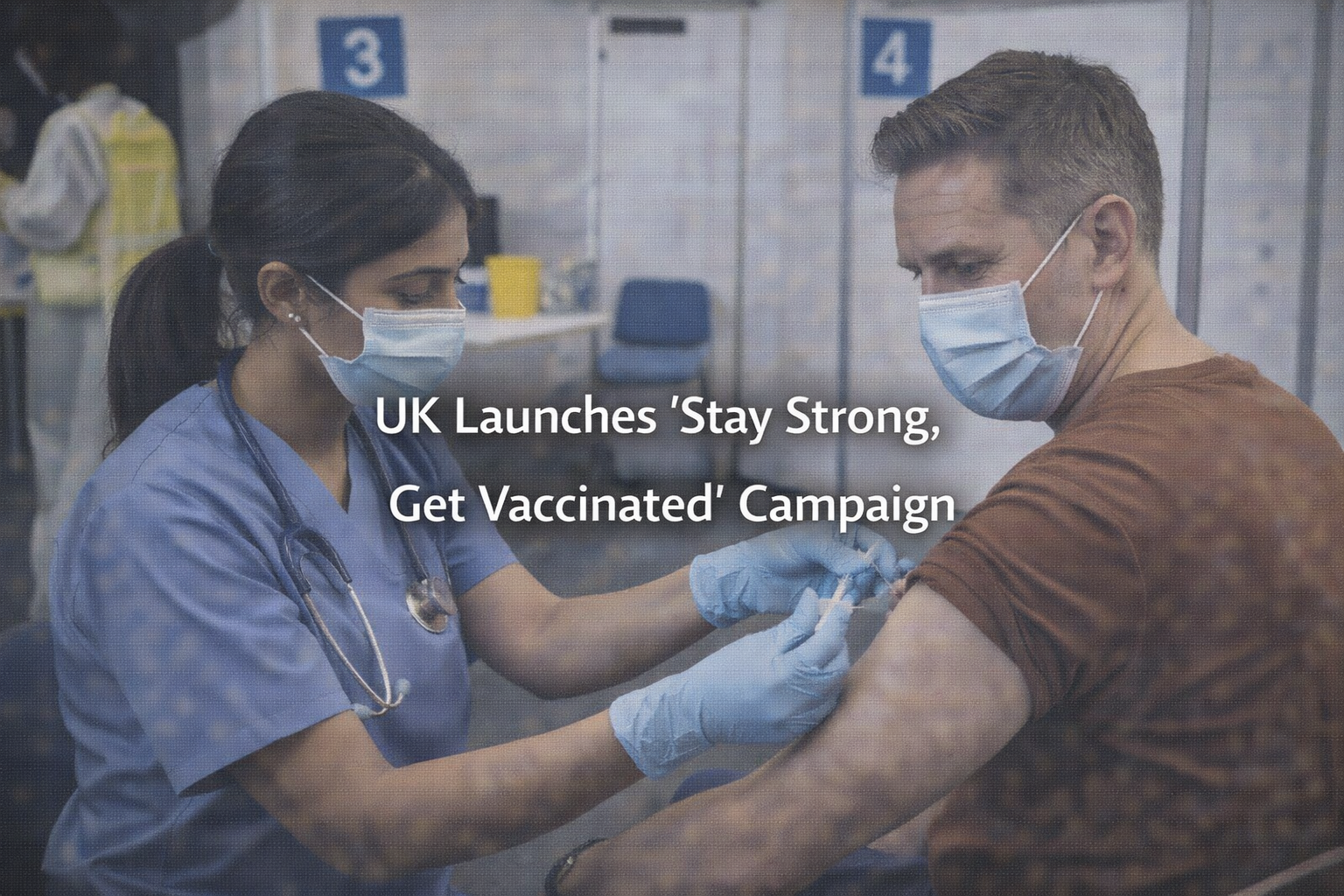
The UK government has launched a new national campaign urging parents to ensure their children are fully vaccinated, as health officials warn that falling immunisation rates are putting young lives at risk.
For diaspora families across England, especially those raising young children far from extended family networks, this campaign is more than a public health announcement. It is a reminder that routine childhood vaccinations remain one of the simplest and most powerful ways to protect children’s futures.
At Chijos News, we focus on stories that matter to diverse communities. This latest campaign, titled “Stay Strong, Get Vaccinated,” comes at a critical moment. England recorded more than 2,900 confirmed measles cases in 2024, the highest level in decades. The UK has also lost its World Health Organization measles elimination status, a setback that reflects a worrying decline in vaccine uptake.
Health experts stress that measles spreads easily, particularly among unvaccinated children. Outbreaks have already been seen in parts of North London, highlighting how quickly infections can move through schools, nurseries and community networks.
Routine childhood immunisations prevent around 5,000 deaths and more than 228,000 hospital admissions every year in England. These are not abstract numbers. They represent children who avoid serious illness, parents who avoid emergency hospital visits, and families spared long-term complications.
For many migrant and diaspora communities, vaccination decisions are influenced by experiences in their home countries, access to information, and trust in healthcare systems. The government says this campaign is designed to provide clear, reliable information and make it easier for parents to check their child’s vaccination status.
Vaccines offered through the NHS are free and highly effective. They protect against 13 serious diseases, including measles, whooping cough, meningitis, polio and diphtheria. Beyond protecting individual children, vaccines reduce transmission across communities, safeguarding babies who are too young to be vaccinated and those with weakened immune systems.
A key development this year is the introduction of the combined MMRV vaccine into the routine childhood schedule. This single jab protects against measles, mumps, rubella and chickenpox. The second dose is now offered earlier, at 18 months, helping ensure children are fully protected before they start school.
Privately, the chickenpox vaccine can cost around £150 for the full two-dose course. Through the NHS, eligible children can receive the MMRV vaccine free of charge. For families navigating rising living costs, removing financial barriers is a significant step toward equitable access to healthcare.
Dr Zubir Ahmed, Health Innovation and Safety Minister, described vaccination as one of the greatest public health successes in modern history. He warned that with falling vaccination rates and the loss of measles elimination status, urgent action is needed to protect children.
Health officials say the campaign is aimed primarily at parents of children aged from birth to five years old. It includes a new television advert, social media outreach and partnerships with popular parenting platforms to ensure accurate information reaches families where they are most active online.
For diaspora parents who rely on digital communities, WhatsApp groups, faith organisations and cultural networks for advice, the campaign also carries a call to action: not only check your own child’s vaccination record, but help raise awareness within your wider community.
Dr Gayatri Amirthalingam from the UK Health Security Agency has warned that a decade of declining vaccination rates has left too many children vulnerable to preventable diseases. Measles and whooping cough, in particular, can have devastating consequences in unvaccinated children.
For families who may have recently moved to the UK, it is important to know that NHS childhood vaccinations are available regardless of immigration status, and registering with a GP is the first step to accessing routine immunisations.
Caroline Temmink, Director of Vaccination, emphasised that booking a vaccination appointment is quick, free and potentially life-saving. She urged parents to respond promptly when invited by their GP practice.
For diaspora communities, this campaign also touches on a broader issue: collective responsibility. Vaccination is not just a personal health choice. High uptake rates protect entire communities, including order relatives and vulnerable members.
The World Health Organization recommends a 95 percent uptake rate to prevent measles outbreaks. England remains below that threshold, which is why outbreaks are re-emerging.
In a country where communities from Africa, Asia, the Caribbean and Eastern Europe live side by side, infectious diseases do not respect cultural or geographic boundaries. A drop in vaccination rates in one area can quickly affect neighbouring communities.
At Chijos News, we believe health information should be clear, accessible and culturally sensitive. Parents are encouraged to check their child’s Red Book, contact their GP practice if unsure about vaccination status, and seek trusted NHS information rather than relying on misinformation circulating online.
Vaccination has long been second only to clean water as one of the most effective public health interventions worldwide. For parents raising the next generation in the UK, ensuring children are up to date with their routine immunisations is one of the strongest foundations they can give them.
As the “Stay Strong, Get Vaccinated” campaign rolls out across England, the message is simple: protecting children protects communities. And for diaspora families building new lives in the UK, that protection matters more than ever.