
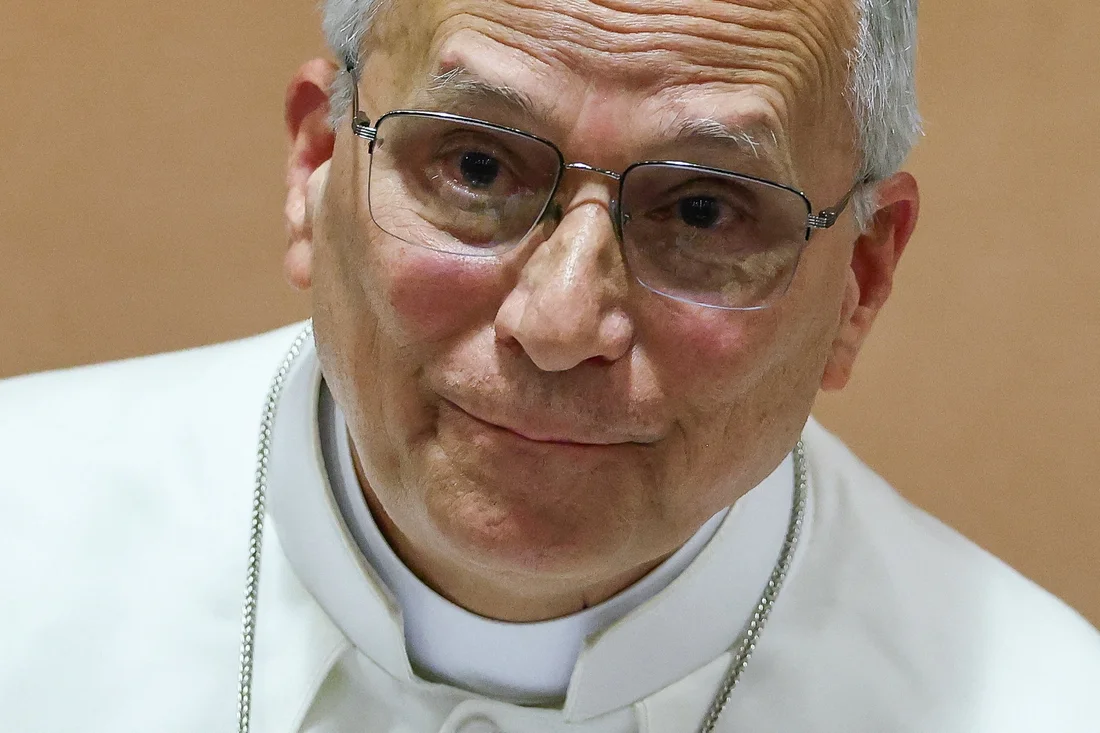
Pope Leo has issued one of the strongest warnings yet from a global religious leader on the dangers of artificial intelligence, urging governments around the world to slow the rapid expansion of AI systems and introduce strict regulations to protect humanity from misinformation, conflict and what he described as the growing risk of endless war.
In a powerful new encyclical titled Magnifica Humanitas meaning “Magnificent Humanity,” the first American pope warned that the unchecked race to dominate artificial intelligence could deepen global instability, weaken human dignity and place life and death decisions into the hands of machines.
The 43,000 word Vatican document, released on Monday, marks the pope’s first major teaching text since his election and is already being viewed as one of the most significant interventions by the Catholic Church on modern technology, global conflict and ethics.
Pope Leo warned that AI systems are increasingly shaping the world without sufficient oversight, while governments and private companies race to develop more powerful technologies at dangerous speed. He called for world leaders to take responsibility before the technology moves beyond human control.
“What is needed is a more active political involvement that is capable of slowing things down when everything is accelerating,” the pope wrote. He stressed the need for “robust legal frameworks, independent oversight, informed users and a political system that does not abdicate its responsibility.”
The Vatican event unveiling the document was attended by Chris Olah, co founder of AI company Anthropic, whose Claude chatbot has become one of the most widely discussed artificial intelligence systems globally. Olah openly acknowledged that even leading AI companies face enormous commercial pressure and require external scrutiny to ensure ethical behaviour.
Leo’s warning comes at a time when artificial intelligence is transforming industries, education, media and warfare at unprecedented speed. Across Europe, Africa and the wider diaspora community, concerns continue to grow over the spread of AI generated misinformation, job displacement and the increasing concentration of technological power among a handful of private corporations.
The pope argued that ownership of AI data and systems should not remain solely in private hands. He also urged governments to protect workers whose jobs may be disrupted by automation and warned about the risks posed to children growing up surrounded by increasingly powerful digital systems.
One of the strongest sections of the document focused on warfare and autonomous weapons. Pope Leo said it should never be acceptable for artificial intelligence systems to make lethal decisions independently.
He expressed alarm that some autonomous military technologies have advanced “practically beyond any human reach to govern them,” warning that humanity risks crossing dangerous ethical boundaries in the pursuit of military and technological superiority.
The pope also condemned the growing culture of global conflict, saying humanity is sliding into a dangerous era where peace is no longer treated as a shared responsibility but merely a pause between wars.
“The past 60 years have been marked by conflicts of astonishing brutality,” he wrote. “Humanity is slipping into a violent culture of power, where peace no longer appears as a responsibility to be taken on, but as a fragile interval between conflicts.”
In one of the most closely watched parts of the encyclical, Pope Leo appeared to reject the traditional “just war” doctrine long used within Christian theology to justify military action under certain conditions. He described the concept as outdated in today’s world of mass destruction and technologically advanced warfare.
“The ‘just war’ theory which has all too often been used to justify any kind of war, is now outdated,” he wrote.
The statement is likely to fuel debate globally, particularly after some political leaders and religious figures invoked just war arguments to defend recent military conflicts involving Iran and the Middle East.
Pope Leo also warned that some governments may deliberately use armed conflict to distract citizens from domestic crises and political failures. He said world leaders must not use war as a cynical political tool while ordinary civilians continue to suffer the consequences.
Beyond artificial intelligence and war, the encyclical also addressed economic exploitation linked to modern technology. The pope criticised what he called “new forms of slavery” affecting workers who mine rare earth materials used in smartphones, computers and AI infrastructure.
He highlighted the exploitation of children and vulnerable workers in parts of the developing world where dangerous labour conditions remain common in global supply chains powering modern technology.
“The bodies of these people are scarred, injured and worn down so that computational flow may continue uninterruptedly,” the pope wrote, describing the reality as a moral crisis of the modern age.
In a deeply symbolic moment, Pope Leo also acknowledged the Catholic Church’s historical failures regarding slavery and formally apologised for the Church’s delayed condemnation of the transatlantic slave trade.
“This constitutes a wound in Christian memory,” he wrote. “For this, in the name of the Church, I sincerely ask for pardon.”
The pope used the biblical story of the Tower of Babel as a warning against humanity’s growing obsession with power and technological dominance without ethical grounding. He urged people across all nations and faiths to work together for the common good instead of allowing greed, competition and political division to shape the future of artificial intelligence.
For many Africans and members of the diaspora, Pope Leo’s message may resonate strongly as debates continue around how emerging technologies could widen global inequalities or further marginalise developing nations if regulation and ethical safeguards are ignored.
The Vatican’s intervention also arrives as African countries increasingly invest in digital economies, fintech, AI startups and technology infrastructure while simultaneously facing concerns about surveillance, misinformation and unequal access to technological opportunities.
Pope Leo ended his message with a reminder that humanity still has the power to shape the future responsibly if governments, businesses and ordinary citizens choose ethical action over indifference.
“Certainly, not everyone has the same power to make a difference,” he wrote. “Yet, no one is without responsibility. We all have our own areas for action.”
For more global affairs, faith, technology and diaspora focused stories shaping conversations across Africa and the world, stay connected to Chijos News, giving a voice to Africans at home and abroad.