
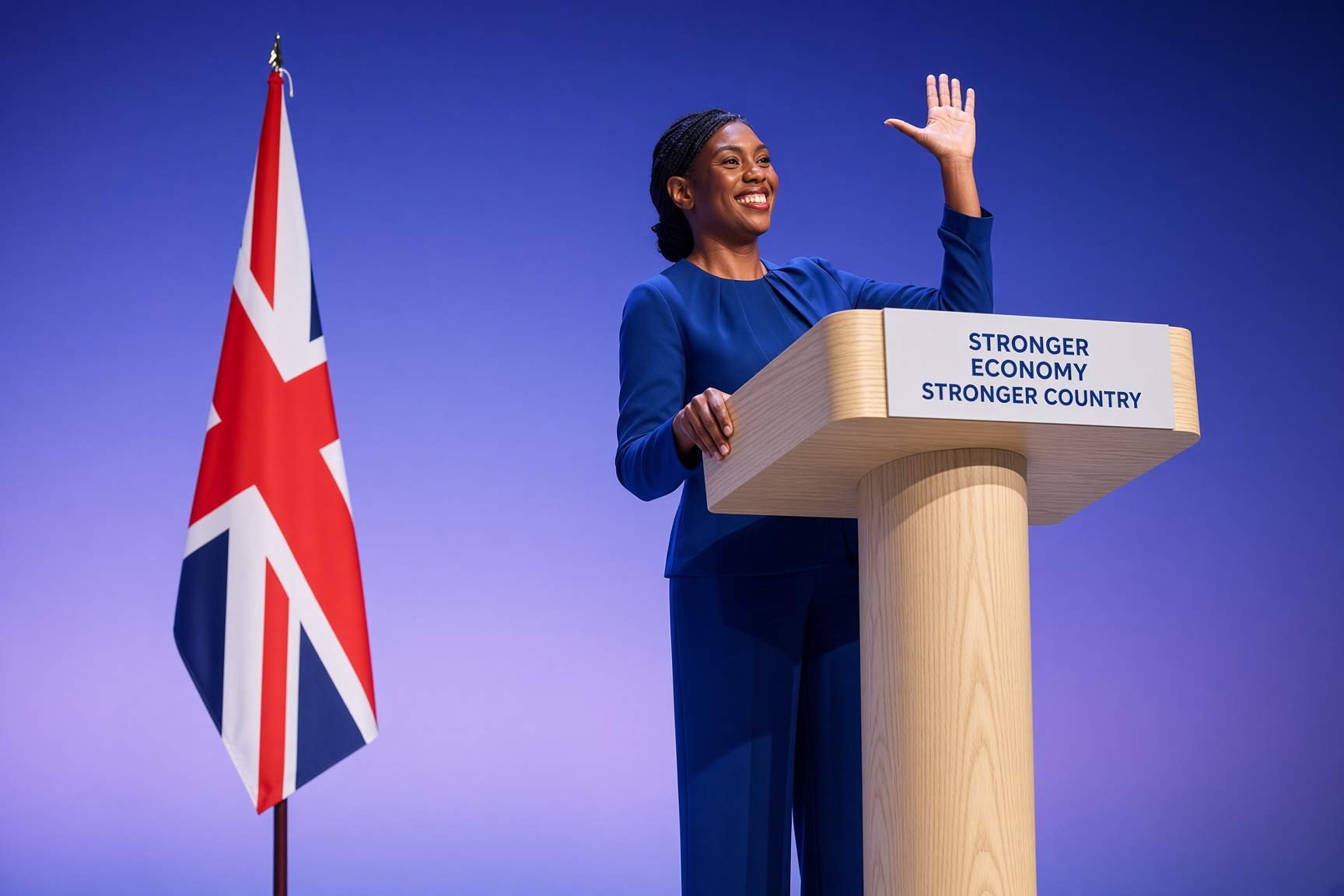
Conservative Party leader Kemi Badenoch has pledged to abolish inheritance tax on family homes and allow couples to pass on an additional £1 million without paying the tax if the Conservatives return to government.
Badenoch made the announcement during her closing speech at the Conservative Party conference in Birmingham, putting lower taxes, economic growth and reducing government spending at the centre of her pitch to voters. She said her ambition was eventually to abolish inheritance tax altogether when the government could afford to do so.
Under the Conservative proposal, the family home would be exempt from inheritance tax when it is passed on to descendants. The party also says the individual inheritance tax threshold would rise to £500,000, meaning a couple could pass on their main home to direct descendants without inheritance tax and could leave a further £1 million without an inheritance tax liability.
The proposal would represent a major change to the current inheritance tax system. At present, inheritance tax is generally charged at 40% on the portion of an estate above the £325,000 threshold, while additional relief can apply when a qualifying home is passed to direct descendants. The Conservatives argue that their proposed changes would reduce inheritance tax bills and cut the number of families paying the tax by more than half.
Badenoch presented the policy as part of a wider argument that people who work, save and build assets should be able to pass more of their wealth to their families. She said she believed people who worked hard and saved should be rewarded for that effort, making inheritance tax one of the central issues of her economic message at the conference.
Inheritance tax remains a politically sensitive issue in Britain despite affecting only a relatively small proportion of estates. Research cited in recent reporting suggests the tax is expected to raise around £14.7 billion by 2030/31, with rising property values contributing to more estates becoming liable. The issue is particularly relevant to homeowners in areas where property prices have increased significantly over time.
Badenoch also used her conference speech to set out a broader programme focused on cutting taxes and reducing government spending. She contrasted the Conservative approach with the economic policies of Prime Minister Andy Burnham’s Labour government, arguing that higher spending and taxation would leave Britain poorer. Those claims form part of the political debate between the two parties rather than an established assessment of the policies’ future economic effects.
Another proposal announced by Badenoch would reduce employer National Insurance contributions for workers aged between 21 and 24. The Conservatives have proposed cutting the employer rate for this age group from 15% to 7.5%, with the party presenting the measure as a way of encouraging businesses to employ more young people.
The Conservative leader also acknowledged that her party still faces a significant challenge in rebuilding public confidence. The Conservatives suffered a major defeat at the 2024 general election and have since faced competition from other parties, while opinion polling has continued to present difficulties for the party. Badenoch told Conservative members that there was still considerable work to do to restore trust and persuade more voters to support the party.
Her inheritance tax announcement therefore forms part of a wider attempt to define what a future Conservative government would offer voters. Alongside tax cuts, Badenoch has placed economic growth, welfare reform, national security and reducing the size of government at the centre of her political message.
For families who own property or are building assets for their children, the inheritance tax proposal could become an important issue ahead of the next general election. However, it is important to note that the measures are currently Conservative Party policy proposals rather than changes to the law. The existing inheritance tax rules remain in place unless and until legislation is introduced and approved by Parliament.
For Nigerians living in the UK, inheritance tax is an issue that can become particularly important as families establish long-term roots, purchase homes and build businesses or savings across generations. Many Nigerian families in Britain are not only thinking about their children’s future in the UK, but also about how property, investments and other assets built here could eventually be passed to children or grandchildren. For first-generation Nigerians who have spent decades working and saving in Britain, changes to inheritance tax could therefore have implications for family wealth planning, especially where a UK home forms a significant part of an estate. It is also important for families with assets or close relatives in both the UK and Nigeria to understand that inheritance and estate rules can involve more than one country’s legal and tax systems. Chijos News will continue to track UK tax and financial policy developments with Nigerians in the UK in mind, explaining what major announcements could mean for homeowners, families, professionals, business owners and the next generation of the Nigerian diaspora.