
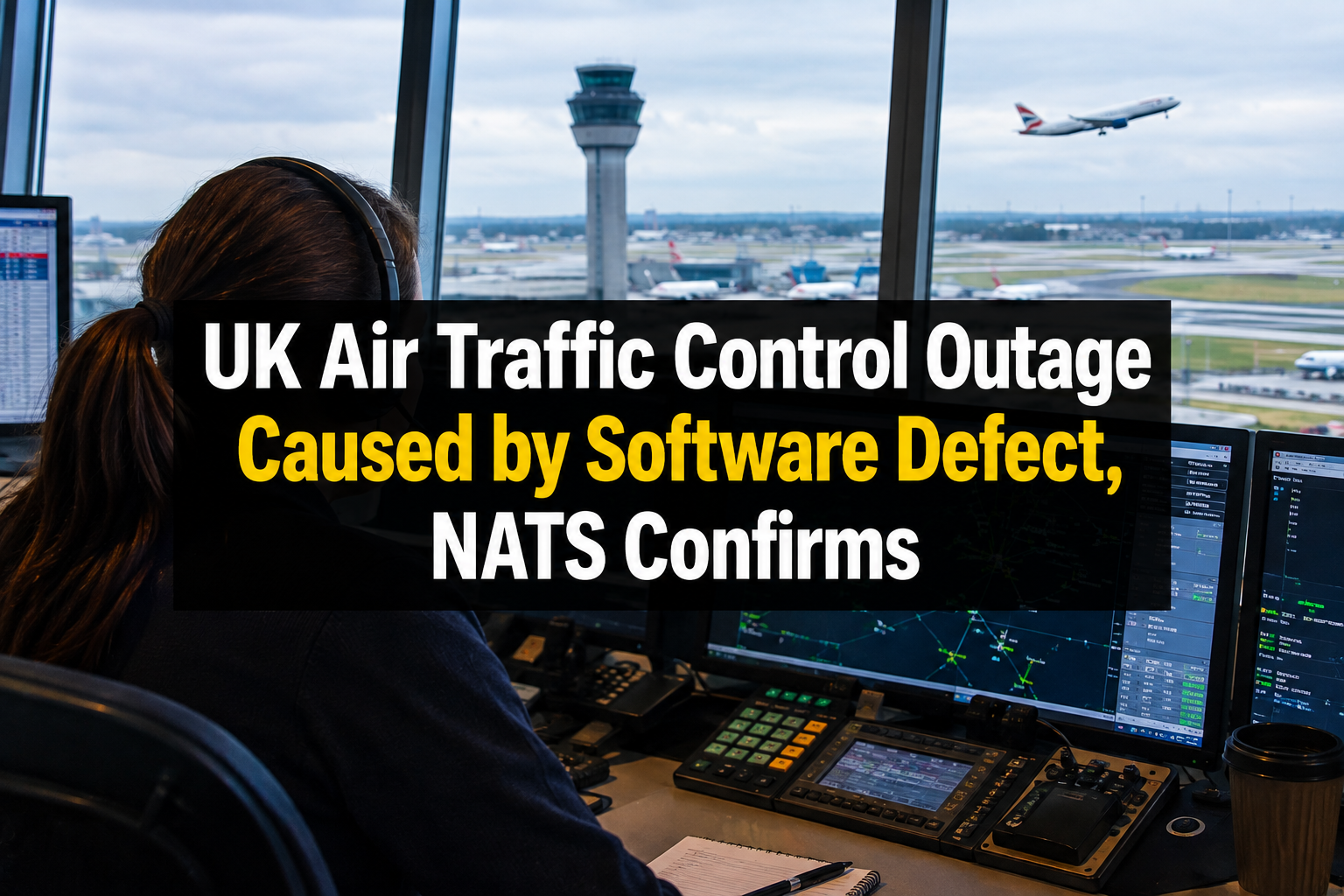
The UK air traffic control outage that disrupted flights for hundreds of thousands of passengers last week was caused by a software defect, according to NATS chief executive Martin Rolfe. The system operator said a fault in a small section of its flight data software triggered the disruption, which resulted in around 2,000 flight cancellations and widespread delays across the UK aviation network.
The incident has sparked renewed criticism of NATS from airlines, with carriers facing significant costs as they worked to reposition aircraft and crews, rearrange flights and provide refunds or alternative travel arrangements for affected passengers. The latest disruption has also revived concerns about the resilience of the UK’s air traffic control infrastructure following previous incidents that have caused major disruption to passengers and airlines.
NATS says software defect caused latest air traffic control failure
In a preliminary report released alongside a statement from NATS, Martin Rolfe said engineers had traced the latest failure to a specific part of the organisation’s flight data system. According to the NATS chief executive, the problem was linked to a small subsection of computer coding that caused the system to behave unexpectedly under a particular set of circumstances.
“This was a software issue in a specific part of our flight data system that we have traced to a small subsection of coding,” Rolfe said.
He added that the underlying issue had now been identified and that temporary measures had been introduced while engineers work on a permanent solution. NATS said the permanent fix would be safety tested before being deployed across the system.
The organisation also said the latest outage was not connected to the major disruption experienced in 2023. It also rejected reports suggesting that military intervention had played a role in the incident. NATS said safety was not compromised during the latest failure, although the technical problem significantly reduced the capacity of the air traffic control system and caused disruption across the wider aviation network.
Thousands of flights affected as disruption spread
The outage resulted in around 2,000 flight cancellations and caused disruption that continued for days as airlines attempted to restore normal operations. The impact was not limited to passengers whose flights were cancelled immediately, as airlines also had to deal with aircraft and crew being left in the wrong locations.
For passengers, this meant longer waits, cancelled journeys, rescheduled flights and uncertainty about when they would be able to reach their destinations. Airlines were also left facing additional operational costs as they attempted to recover their schedules and deal with passengers affected by the disruption.
The scale of the incident has placed further attention on the reliability of the UK’s air traffic control infrastructure, particularly because it follows previous NATS-related disruptions.
Government orders independent review
Transport minister Heidi Alexander described the disruption as “completely unacceptable” and said the government needed to establish why the software issue had not been identified and resolved before it affected passengers.
“We need to urgently understand why this issue was not discovered and fixed before it caused chaos,” Alexander said. “It is crucial that our national infrastructure is fit for the future.”
The government had already demanded that NATS produce a report into the latest incident. An independent review by the Civil Aviation Authority has also been ordered, meaning the circumstances surrounding the outage are expected to face further scrutiny.
The review could examine how the software defect developed, why existing safeguards did not prevent the disruption and whether changes are needed to improve the resilience of the UK’s air traffic control system.
Airlines renew pressure on NATS chief executive
The latest incident has also intensified criticism from airlines, particularly Ryanair, which has again called for Martin Rolfe to resign. The airline has made similar demands since the major air traffic control failure in 2023.
Ryanair chief operations officer Neil McMahon criticised the explanation given by NATS and questioned whether enough had been done to prevent another major failure.
“Martin Rolfe has run out of excuses. The ‘software ate my homework’ is not an acceptable explanation,” McMahon said.
Ryanair has argued that repeated failures within the UK’s air traffic control system have imposed substantial costs on airlines and passengers. Its latest comments reflect the wider frustration within the aviation industry following another disruption that has affected flight schedules across the country.
NATS, however, has defended its handling of the incident and said the problem was identified and brought under control through established procedures.
How the software fault triggered the disruption
According to the preliminary NATS report, the latest incident was caused by the way the system processed two requests arriving in quick succession. An aircraft generated a request for an identification code, followed by a request for a higher-priority activity.
The higher-priority request temporarily paused the first request. NATS said the timing of the two requests was critical and that a difference of just one millisecond in when the second request arrived would have allowed the original update to complete normally.
Instead, the error triggered backup procedures within the system. This meant some flight handovers had to be carried out manually, reducing the number of flights that could be safely handled by air traffic controllers at the time.
The reduction in capacity then created knock-on effects across the wider network. Once engineers understood what had happened, NATS said the problem was resolved under controlled conditions while a limited air traffic service continued to operate.
UK has experienced previous air traffic control failures
The latest outage is not the first major disruption involving NATS in recent years. A major failure in August 2023 caused widespread disruption across UK airports and affected thousands of flights.
An investigation into the 2023 incident found that it was triggered by an unusual flight plan containing two separate waypoints with identical names. The system was unable to process the information correctly, resulting in both the main system and its backup entering a fail-safe mode.
The 2023 incident was estimated to have cost airlines around £100 million. A separate NATS problem caused by a radar fault in July 2025 also resulted in around 150 cancellations.
The repeated incidents have increased pressure on the organisation to demonstrate that its systems can withstand unexpected software, technical and operational problems without creating widespread disruption for passengers.
What happens next after the latest outage?
NATS says the immediate software problem has been identified and that mitigation measures are already in place. A permanent fix is expected to undergo safety testing before it is introduced, reflecting the importance of ensuring that any changes to air traffic control software do not create additional risks.
The independent review ordered by the Civil Aviation Authority will provide another layer of scrutiny. It is expected to look beyond the immediate software defect and consider whether there are broader lessons for the resilience of the UK’s air traffic control infrastructure.
For passengers and airlines, the key issue will be whether the measures introduced after the incident can prevent a similar failure from causing another major wave of cancellations and delays.
What the UK air traffic control outage means for Nigerians in the UK
For Nigerians living in the UK, the disruption is particularly relevant because many members of the Nigerian diaspora regularly travel between the UK and Nigeria for family visits, business, holidays, education and important personal commitments. A major air traffic control failure can affect passengers even when their own airline has not experienced a technical problem, because restrictions elsewhere in the aviation network can lead to delays, cancellations and aircraft scheduling problems.
Passengers travelling from airports across the UK to Nigeria, as well as those connecting through major European aviation hubs, can be affected by wider network disruption. For Nigerians planning international travel, the incident is a reminder of how quickly problems within national aviation infrastructure can affect journeys far beyond the original location of the technical failure.
For Nigerians and other members of the diaspora living in the UK, reliable air travel is an important part of staying connected with family, business networks and communities in Nigeria and across the world. Chijos News continues to keep Nigerians in the UK informed about major developments affecting travel, transport, public services, immigration, business and everyday life across Britain.