
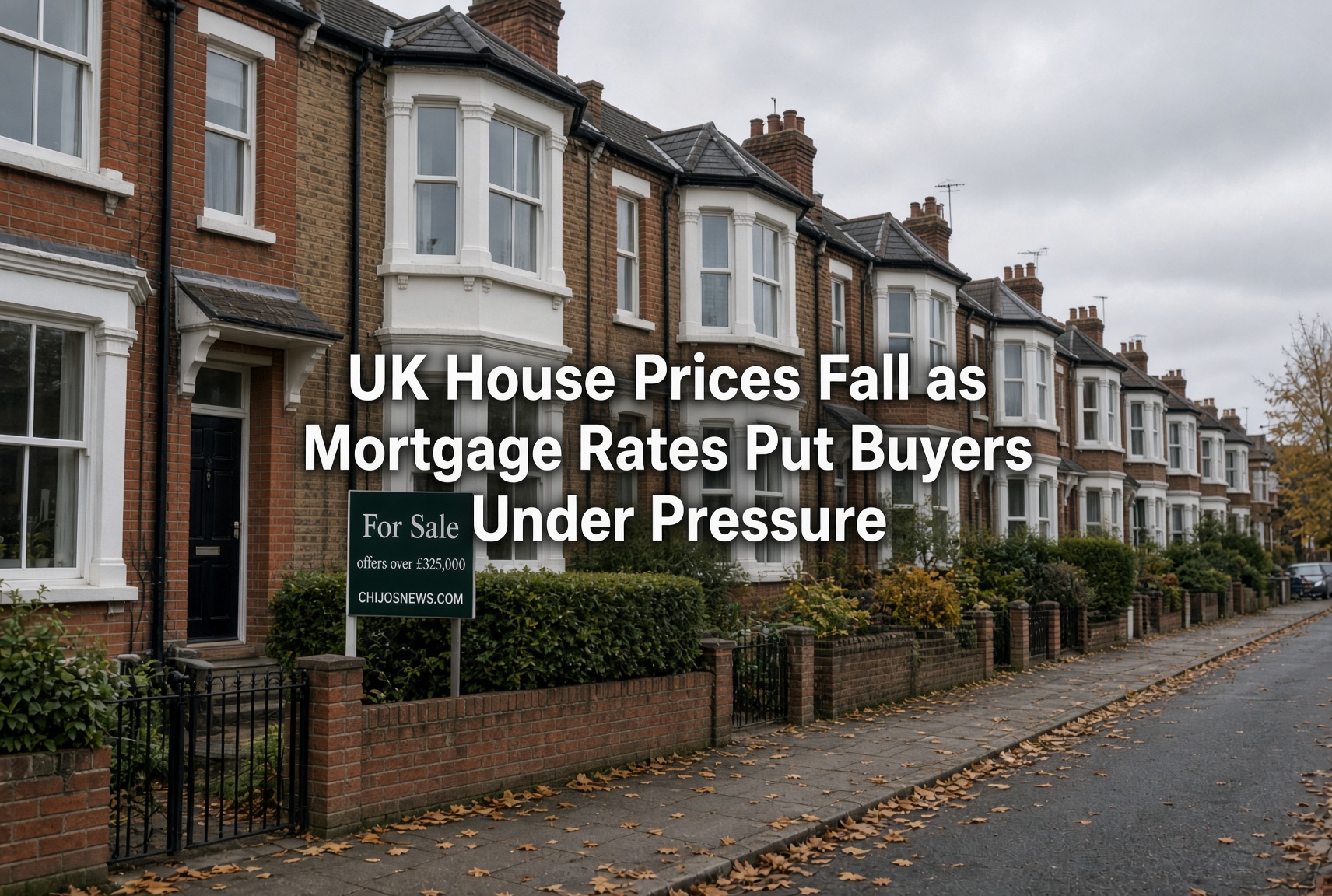
UK house price growth slowed sharply in September, with annual growth falling to its weakest level since December 2025 as higher borrowing costs and uncertainty surrounding the wider economy weighed on demand.
House prices increased by just 0.8% compared with September last year, according to Nationwide Building Society, down significantly from the 1.6% annual growth recorded in August. The figure was also weaker than the 1.3% increase economists had expected in a Reuters poll.
On a monthly basis, house prices fell by 0.2% in September, marking the joint-largest monthly decline since May and coming below economists’ expectations of no change.
The latest figures point to a cooling UK housing market as prospective buyers face higher mortgage costs and uncertainty over the direction of interest rates.
Nationwide chief economist Robert Gardner said housing market activity and prices had remained subdued in recent months, partly because of the uncertain economic environment.
He also pointed to continuing geopolitical tensions and the conflict in the Middle East, which have contributed to higher energy prices and renewed concerns about inflation.
Higher mortgage rates weigh on the housing market
The increase in energy prices has raised concerns that inflation could remain higher for longer, potentially putting further pressure on the Bank of England to keep interest rates elevated or increase them.
Although there have been signs that higher energy costs have not yet translated into broader underlying price pressures, financial markets have increasingly expected the Bank of England to raise borrowing costs.
Markets are currently pricing in a quarter-point increase in the Bank Rate in November, with another increase expected in February.
Higher interest rates generally make mortgages more expensive, potentially reducing the amount prospective buyers can afford to borrow. This can weaken demand for homes and contribute to slower house price growth.
For existing homeowners, higher mortgage costs can also put additional pressure on household budgets, particularly for borrowers whose fixed-rate deals are coming to an end and who may have to refinance at a higher rate.
First-time buyers could get new support
The weaker housing market comes as Prime Minister Andy Burnham has announced a new loan programme aimed at helping first-time buyers get onto the property ladder.
Under the proposed scheme, eligible buyers would be able to purchase a property with a deposit of 2.5%, while the government would provide a loan worth up to 20% of the property’s value.
Further details of the programme are expected to be confirmed by Finance Minister John Healey in the upcoming Budget.
The scheme could provide additional support for people who are struggling to save a large enough deposit, particularly at a time when high rents and other living costs make it difficult for many households to build savings.
However, the overall affordability of buying a home will continue to depend on factors including mortgage rates, property prices, household incomes and the availability of suitable homes.
What falling house prices could mean for Nigerians in the UK
For Nigerians and other members of the African diaspora living in the UK, changes in the housing market can have a significant impact on financial planning.
Many Nigerian households in Britain are balancing rent or mortgage payments with other costs such as energy bills, childcare, transport and financial support for relatives. Higher mortgage rates can make buying a home more expensive, while slower house price growth could provide some relief for buyers if it eventually leads to more affordable properties.
The latest figures also highlight the importance of understanding the full cost of buying a home rather than focusing only on the size of the deposit. Mortgage rates, monthly repayments, legal costs, taxes and other expenses can all affect whether a property is affordable over the long term.
For Nigerians planning to buy their first home in the UK, the proposed government support could become an important development if the programme makes it easier for eligible buyers to meet deposit requirements. However, buyers will still need to consider whether they can comfortably afford the resulting mortgage repayments.
UK housing market outlook
The September figures suggest that the UK housing market is entering a more cautious period as buyers and sellers respond to higher borrowing costs and uncertainty over the economic outlook.
The direction of interest rates will remain particularly important. If borrowing costs rise further, housing demand could come under additional pressure. On the other hand, any eventual easing in mortgage rates could improve affordability and encourage more buyers to return to the market.
For now, Nationwide’s figures show that annual UK house price growth has slowed considerably, while prices have fallen on a monthly basis.
For Nigerians living in the UK, the housing market is more than a property story. Mortgage rates, rent levels, energy costs and household incomes all influence decisions about buying a first home, moving to a larger property or continuing to rent.
Chijos News will continue to track major changes affecting UK housing, mortgages, household finances and government support, with a particular focus on what these developments mean for Nigerians and the wider African diaspora living in Britain.