
For Nigerians and Africans living abroad, global military developments are never just “foreign news.” They shape oil prices, immigration conversations, travel routes, and even the cost of living back home. At Chijos News, we break down complex international stories in a way that connects the dots, so diaspora readers understand not just what’s happening, but why it matters to your life in the UK and your ties to home.
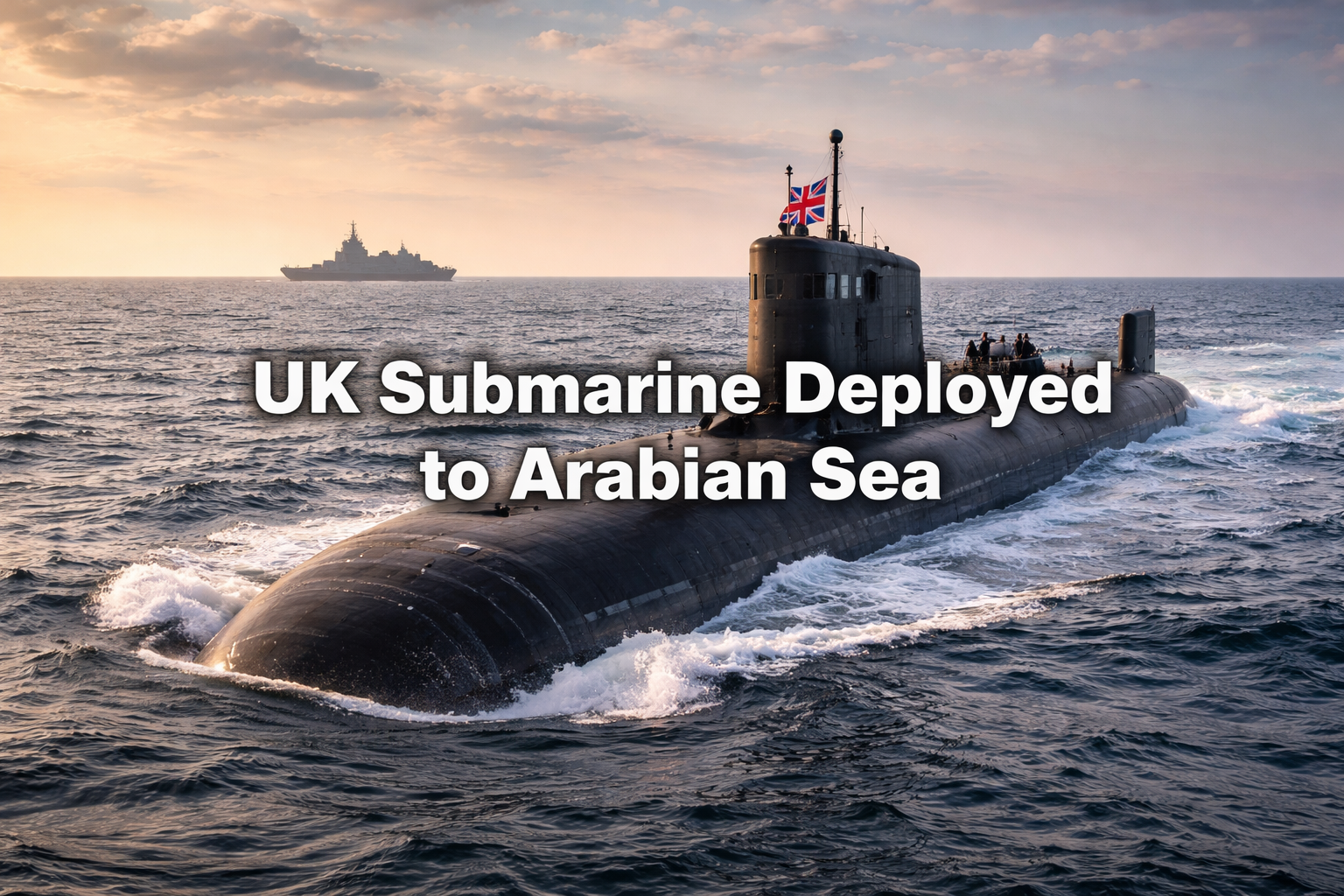
A British nuclear-powered submarine has quietly taken position in the Arabian Sea, a move that signals rising military readiness as tensions in the Middle East continue to simmer.
The vessel at the centre of this development is HMS Anson, one of the UK’s most advanced submarines, reportedly equipped with long-range Tomahawk cruise missiles capable of striking targets from hundreds of miles away.
According to reports first published by the Daily Mail, the submarine travelled approximately 5,500 miles after departing from Perth earlier this month. Its presence in the region gives the United Kingdom the ability to respond rapidly if the situation escalates.
While the report has not yet been independently verified by Reuters, and the Ministry of Defence has not issued an official statement, the implications are already being widely discussed.
At the heart of the tension is the strategic importance of the Strait of Hormuz, one of the world’s most critical oil transit chokepoints. Any threat to this narrow passage can have immediate global consequences, from rising fuel prices to economic instability.
For many in the diaspora, especially Nigerians living in the UK, this kind of development may feel distant, but its ripple effects are often closer than they appear. Oil markets, international relations, and security decisions in this region can directly influence living costs, remittances, and economic conditions back home.
The submarine’s operations are tightly controlled. Reports indicate that it periodically surfaces to communicate with the UK’s Permanent Joint Headquarters in Northwood. Any decision to launch a strike would require authorisation at the highest level of government, including the prime minister, before being passed down through military command.
This deployment also follows reports that Downing Street authorised the United States to use British bases for potential strikes targeting Iranian-linked threats in the region. While no direct military action has been confirmed, the positioning of such a submarine is widely seen as a strategic signal rather than an immediate act of war.
Moments like this often exist in a grey zone—between preparation and escalation. Governments position assets, send signals, and prepare for scenarios they hope never happen.
For everyday people, especially those navigating life between countries, the concern is less about military strategy and more about what comes next. Will tensions rise? Will oil prices spike? Will global travel or economic stability be affected?
These are the real-life questions behind headlines like this.
For now, there is no confirmation of imminent conflict. But the presence of a British submarine armed with long-range strike capability in such a sensitive region is a reminder of how quickly global situations can shift.
And in an interconnected world, even events unfolding thousands of miles away can shape conversations at home, in group chats, and across diaspora communities trying to stay informed, prepared, and grounded.
As always, the story is still developing.