
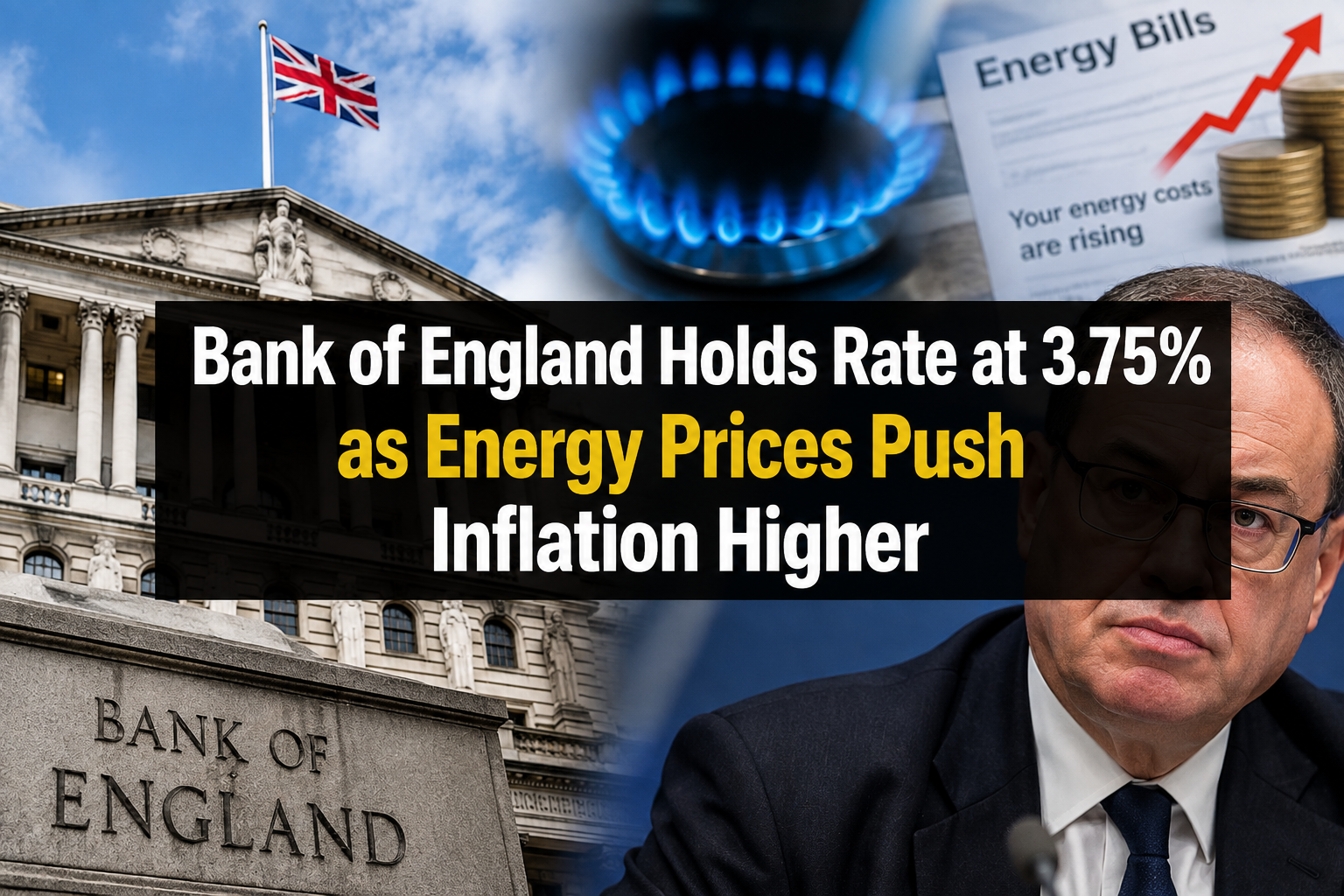
The Bank of England has kept its key interest rate at 3.75 per cent, while warning that rising energy prices could keep inflation elevated and force policymakers to take a more cautious approach to future rate decisions. The decision comes as households and businesses across the UK continue to face higher costs, with the central bank warning that inflation could rise above 4 per cent in early 2027 if energy prices remain high.
The Bank’s latest decision leaves the base rate unchanged, but its warning about persistent inflation has raised expectations that interest rates could increase again in the months ahead. The next scheduled rate-setting meeting is due to take place on November 5, with Barclays analysts expecting a 25-basis-point increase as continuing conflict in the Middle East increases the risk of prolonged pressure on global energy prices.
UK inflation remains above the Bank of England’s target
UK inflation reached 3.1 per cent in August, significantly above the Bank of England’s 2 per cent target. Energy costs remain one of the main sources of pressure, with higher prices gradually feeding into household bills, transport costs and the prices of goods and services.
The Bank has warned that if energy prices remain elevated for an extended period, the impact could become more widespread throughout the economy. While the initial effect may be concentrated in areas such as household energy and transport, businesses facing higher operating costs can eventually pass some of those increases on to consumers.
This creates a difficult situation for the Bank of England. Keeping interest rates higher for longer can help control inflation by reducing demand, but it can also increase borrowing costs for households and businesses.
Bank of England warns inflation could exceed 4 per cent
The central bank has warned that inflation could rise above 4 per cent in early 2027 if elevated energy prices persist. The concern is that the longer the energy shock continues, the more likely it becomes that higher costs will spread through the wider economy.
Bank of England Governor Andrew Bailey said the impact of the energy crisis on overall inflation had so far remained relatively limited. However, he warned that prolonged high energy prices could create more persistent inflationary pressures.
“If the conflict in the Middle East is prolonged and the risk of second-round effects on prices and wages increases, monetary policy may need to become tighter,” Bailey said.
The comments signal a more cautious approach from the central bank as policymakers assess how developments in global energy markets could influence UK inflation over the coming months.
Barclays expects another interest rate increase
Barclays analysts led by Jack Meaning expect the Bank of England to raise interest rates by another 25 basis points at its November meeting. The bank also sees the possibility of another quarter-point increase in February 2027 if the conflict in the Middle East continues and inflationary pressures remain persistent.
The Barclays forecast is broadly in line with expectations from JPMorgan, which is also forecasting rate increases in November 2026 and February 2027. JPMorgan had previously expected one increase in November followed by two interest rate cuts in 2027, highlighting how the changing inflation outlook has altered expectations for UK monetary policy.
Financial markets have also been monitoring the possibility of another increase. According to LSEG data cited in the supplied report, markets were pricing in a 63 per cent probability of a November rate increase, with another increase expected in December.
Bank changes its government bond reduction programme
The interest rate decision came alongside a significant change to the Bank of England’s balance-sheet reduction programme. The central bank has frozen active sales of government bonds for six months, while sales of longer-term bonds have also been halted following pressure in the UK bond market.
The decision represents a change in how the Bank is managing its holdings of government debt while policymakers monitor financial market conditions alongside the inflation outlook.
The move is particularly significant because government bond markets play an important role in the wider financial system. Changes in bond yields can affect borrowing costs across the economy, including the cost of government borrowing and, indirectly, financing conditions for households and businesses.
What higher interest rates could mean for households
Any future increase in the Bank of England base rate could have consequences for people across the UK, particularly borrowers. Mortgage holders coming off fixed-rate deals may face higher monthly repayments if borrowing costs rise, while people with variable-rate mortgages and some other forms of borrowing can also be affected by changes in interest rates.
Higher rates can also influence savings. While savers may benefit from improved returns on some savings products, households carrying significant debt can face higher repayment costs.
For many families already dealing with higher food, energy, housing and transport costs, the prospect of another increase in interest rates could add further pressure to household budgets.
Why energy prices matter for UK inflation
Energy prices have become a major factor in the Bank of England’s assessment of the inflation outlook. Higher energy costs can directly increase household bills, but their effects can also spread through the economy because businesses use energy to manufacture products, transport goods, heat buildings and provide services.
If those higher costs continue for long enough, companies may increase prices to protect their margins. Workers may also seek higher wages if household living costs rise, creating the potential for what the Bank refers to as second-round effects on prices and wages.
This is one of the key risks policymakers are watching as they assess whether inflation will return towards the 2 per cent target or remain elevated for longer.
What the latest Bank of England decision means for the UK
The decision to keep the base rate at 3.75 per cent provides no immediate change to the headline interest rate, but the Bank’s warnings indicate that the path ahead remains uncertain. Energy prices, the conflict in the Middle East, inflation expectations and developments in wages will all influence future decisions.
The Bank of England will have to balance the need to bring inflation back towards its 2 per cent target with the potential economic consequences of maintaining or increasing borrowing costs. The next major test will come at the November 5 meeting, when policymakers will have more economic data available to assess whether the recent inflation pressures are temporary or becoming more persistent.
For UK households, the key issue is whether inflation begins to ease again or whether higher energy costs result in another period of rising prices and borrowing costs.
What the interest rate outlook means for Nigerians living in the UK
For Nigerians living in the UK, changes in Bank of England interest rates can have a direct impact on everyday financial decisions. Mortgage payments, rent, personal loans, credit costs, savings returns and household budgets can all be influenced by the direction of interest rates and wider inflation.
The situation can also matter for members of the Nigerian diaspora who support relatives in Nigeria. When UK households face higher living and borrowing costs, the amount available for international transfers and family support can come under pressure. Exchange rate movements can also affect how much money sent from the UK is ultimately received by relatives in Nigeria.
For Nigerian professionals, students, families and business owners in the UK, keeping track of interest rate and inflation developments can therefore be important when planning household spending, borrowing, saving and international financial commitments.
For Nigerians and other members of the diaspora living in the UK, Bank of England decisions are more than financial headlines because changes in interest rates and inflation can affect mortgages, rent, household bills, savings, borrowing and the money families are able to send home. Chijos News keeps Nigerians across the UK informed about major developments affecting the economy, cost of living, employment, business and everyday life in Britain, while highlighting issues that matter to the wider Nigerian diaspora.