
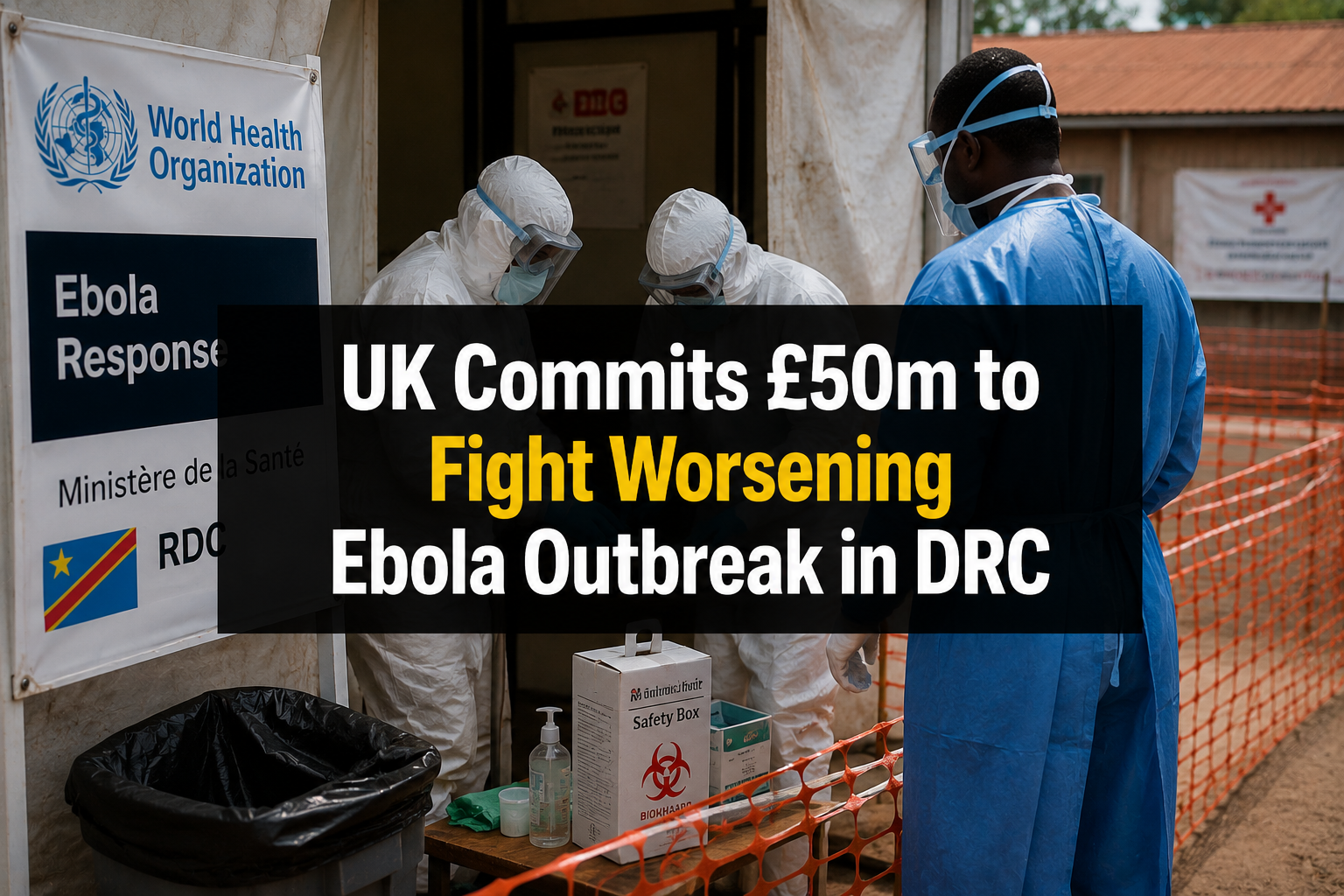
The UK Government has announced more than £50 million in additional support to help contain the worsening Ebola outbreak in the Democratic Republic of the Congo (DRC), as health workers and communities face an increasingly serious public health emergency.
The new funding package is designed to support thousands of vulnerable people affected by the outbreak and strengthen efforts to prevent the virus from spreading further. It brings the UK’s total contribution to the response to £78 million.
The announcement was made by FCDO Minister for Africa Kirsty McNeill on the first day Parliament returned, highlighting the urgency the UK Government is placing on the escalating outbreak.
The UK says the response is being accelerated because the outbreak is continuing to spread against a backdrop of conflict, displacement and severe humanitarian need. The combination of these pressures has made it more difficult for health authorities and humanitarian organisations to reach affected communities and contain the disease.
According to the UK Government, the outbreak is on course to become the deadliest and most extensive Ebola epidemic ever recorded. The worsening situation has increased concerns about the potential for further loss of life and the possibility of international spread if the virus is not brought under control.
The additional UK funding will support a range of measures aimed at stopping transmission and protecting people working on the front line. This includes strengthening disease surveillance so that new cases can be identified more quickly, supporting health workers, improving infection prevention and control, expanding access to treatment and increasing engagement with communities affected by the outbreak.
Funding will also help support safe and dignified burials, an important part of the Ebola response because the virus can spread through contact with the bodies of people who have died from the disease.
Minister for Africa Kirsty McNeill said families across the DRC were experiencing devastating loss as Ebola continued to affect communities and leave thousands of people fighting for survival.
She said the UK recognised that speed was critical in responding to the outbreak and that Britain had been among the first countries to provide support and deploy experts to the region. However, as the outbreak intensifies, the UK is increasing its response to match the scale of the emergency.
The latest commitment includes £40 million from humanitarian crisis and contingency funding and a further £11 million redirected from existing Foreign, Commonwealth and Development Office allocations.
The UK is already working with international and regional organisations involved in the response, including the Africa Centres for Disease Control and Prevention, the World Health Organization, the United Nations and humanitarian organisations operating on the ground.
British public health experts have also been deployed across the region to assist with disease surveillance, infection prevention, community engagement and preparations to respond to further cases.
The international response is particularly important because Ebola outbreaks can develop rapidly when health systems are under pressure and communities are difficult to reach. Conflict and displacement can make it harder for people to access healthcare, while misinformation and fear can also make it more difficult for health workers to persuade communities to follow measures designed to prevent transmission.
The UK Government says the new funding will therefore not only focus on treating people who become infected but also on strengthening the systems needed to identify cases quickly and prevent further transmission.
Community engagement is expected to remain a central part of the response. Building trust between health workers and affected communities can help encourage people to seek treatment, report potential cases and follow public health guidance.
The situation in the DRC is being closely watched internationally because of the potential consequences of a large Ebola outbreak occurring alongside an already severe humanitarian crisis. The country’s health services are operating under significant pressure, while conflict and population displacement have created additional challenges for humanitarian organisations.
The UK Government says its response is intended to help save lives, contain the disease and reduce the risk of Ebola spreading beyond affected areas.
For communities in the DRC, the additional funding could provide much-needed support at a time when families are dealing with the consequences of illness, deaths and disruption to everyday life. For frontline workers, it is also intended to provide additional resources and protection as they work to identify cases and provide treatment.
The UK’s decision to increase its financial contribution also reflects the wider international effort to contain the outbreak. Britain is working alongside African and international health organisations rather than responding alone, with British expertise being deployed as part of a coordinated regional response.
The Africa CDC, WHO, United Nations and humanitarian organisations will continue to play important roles in supporting surveillance, treatment, infection prevention and community engagement as the situation develops.
The £51 million package announced by the UK represents a significant increase in support and takes Britain’s overall contribution to the Ebola response to £78 million. The Government says the additional assistance will be used to reach vulnerable people, protect frontline health workers and strengthen measures aimed at bringing the outbreak under control.
The coming weeks will be crucial as health authorities and international partners work to slow transmission and prevent the situation from becoming even more devastating. With the outbreak occurring amid conflict, displacement and severe humanitarian needs, the ability to reach communities quickly and maintain public trust will be critical.
For Nigerians and other Africans living in the UK, developments in the DRC are particularly important because major public health emergencies in Africa can have consequences that extend beyond national borders. Many diaspora communities maintain close family, social and professional connections across the continent, making reliable information about major health emergencies increasingly important.
The UK Government’s latest commitment also demonstrates Britain’s continuing involvement in international health and humanitarian responses across Africa. As the Ebola situation develops, further international support and coordinated action are likely to remain essential to protecting communities and reducing the risk of wider spread.
For Nigerians and other members of the African diaspora living in the UK, major health emergencies across Africa can have a direct and personal impact through family, community and international connections. Chijos News keeps the diaspora informed about important developments in Britain, Nigeria and across Africa, bringing you trusted stories on health, immigration, business, opportunities, community affairs and issues that matter to life in the UK.