
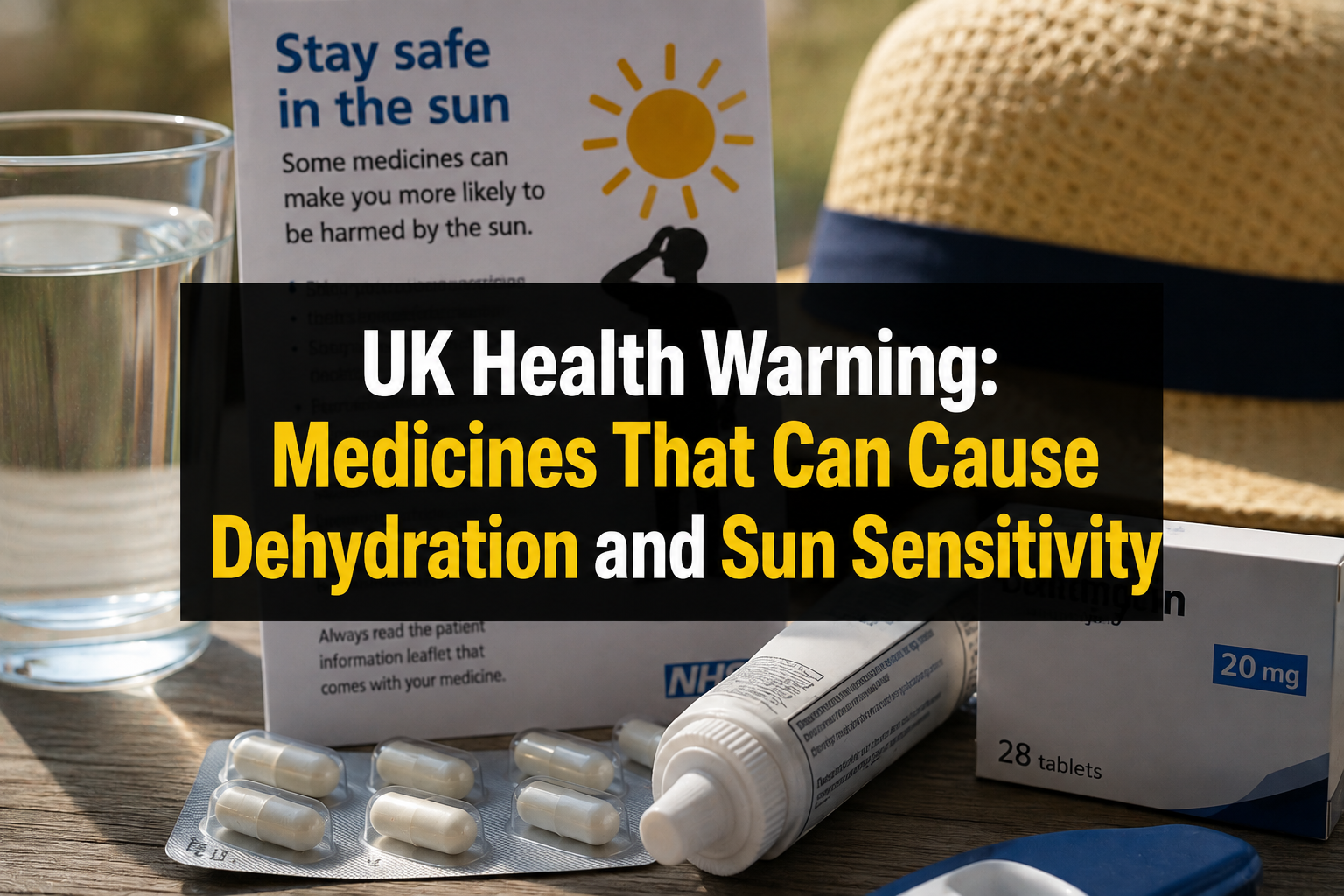
As temperatures continue to rise across the UK, the Medicines and Healthcare products Regulatory Agency (MHRA) is reminding people taking certain prescription and over the counter medicines to take extra precautions during hot weather. The warning forms part of the agency’s ongoing “Summer-proof your health” campaign, which aims to help people use medicines and medical devices safely throughout the warmer months.
The MHRA says that while medicines play an important role in treating health conditions, some can make it harder for the body to stay hydrated, regulate its temperature or protect itself from the effects of strong sunlight. These changes can increase the risk of dehydration, heat exhaustion and sunburn, particularly during prolonged periods of high temperatures.
Dr Alison Cave, the MHRA’s Chief Safety Officer, explained that several commonly used medicines can affect how the body responds to hot weather. She said that diuretics, which are widely prescribed to treat high blood pressure and heart conditions, increase fluid loss and can make dehydration more likely. Certain antidepressants and antipsychotic medicines may interfere with the body’s natural ability to regulate temperature, while beta blockers can reduce the body’s response to heat stress.
The regulator also highlighted that some medicines can make skin far more sensitive to sunlight. Antibiotics such as doxycycline and tetracycline, acne treatments including isotretinoin and topical retinoids, and antifungal medicines like voriconazole are among those known to increase the risk of severe sunburn. In addition, disease modifying antirheumatic drugs, commonly known as DMARDs, including methotrexate and azathioprine, which are used to treat conditions such as rheumatoid arthritis, psoriatic arthritis and lupus, can also increase sensitivity to sunlight.
Dr Cave added that proton pump inhibitors, commonly taken to relieve acid reflux and heartburn, have been linked to a very small risk of developing a lupus-like skin reaction following sun exposure. She also noted that widely used painkillers such as ibuprofen and naproxen may increase sensitivity to the sun in some people.
The MHRA is encouraging people not to stop taking prescribed medicines simply because of hot weather. Instead, patients should continue their treatment as directed and seek advice from a pharmacist or GP if they are concerned about how their medication may be affected by heat or sunlight.
The agency advises people to read the patient information leaflet that comes with every medicine, as it contains important guidance on hydration, storage and possible reactions to sun exposure. These leaflets are also available online for easy access.
Health experts are also urging people to watch for signs that their bodies may be struggling in the heat. Symptoms such as dizziness, headaches, unusual tiredness, confusion and reduced urination could indicate dehydration or heat related illness. Skin that becomes unusually red, painful, blistered or reacts more severely after time in the sun may also be a sign that a medicine is increasing sensitivity to ultraviolet rays.
Simple protective measures can significantly reduce the risks. Staying well hydrated, avoiding direct sunlight during the hottest part of the day, wearing lightweight protective clothing and applying sunscreen regularly can all help minimise the effects of heat and sun exposure while taking medicines.
The MHRA also reminds anyone who believes they are experiencing a side effect from a medicine to speak to their doctor, pharmacist or nurse. Suspected side effects can also be reported directly through the MHRA Yellow Card scheme, which helps regulators continue to monitor the safety of medicines across the UK. The service now allows people to sign in securely using their NHS login, making it easier to submit reports online.
The Medicines and Healthcare products Regulatory Agency is responsible for ensuring that medicines and medical devices used in the UK meet strict standards of safety, quality and effectiveness. Through its “Summer-proof your health” campaign, the regulator hopes more people will be aware of how warmer weather can affect medicines and take practical steps to protect their health throughout the summer.
For Nigerians and other African communities living across the UK, warmer summers can present new health challenges, particularly for those managing long term medical conditions or taking regular medication. At Chijos News, we remain committed to providing trusted UK health updates, public safety guidance and practical information that helps the Nigerian diaspora make informed decisions, protect their wellbeing and stay connected with the latest developments affecting life in Britain.

