
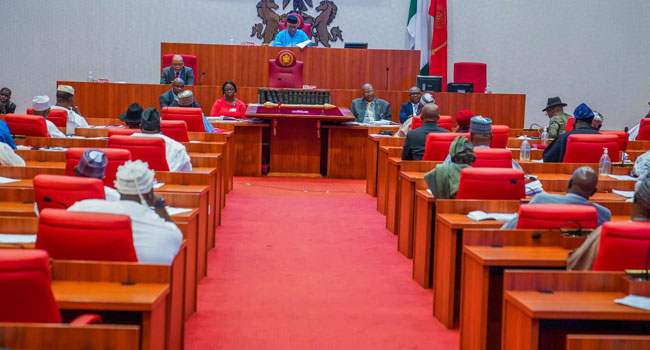
The Senate has advanced the Electricity Act (Amendment) Bill, 2025, to second reading in a bid to salvage Nigeria’s troubled power sector from imminent collapse.
Sponsored by Senator Enyinnaya Abaribe (Abia South), the proposed amendments seek to address critical gaps in the 2023 Electricity Act, with some lawmakers advocating the death penalty for electricity infrastructure vandals.
Leading the debate, Abaribe, who chairs the Senate Committee on Power, warned that the sector is crippled by inefficiency and a ₦4 trillion federal debt. He criticized the existing law for weak penalties, unclear regulatory roles, and unresolved funding and labor disputes, particularly after recent constitutional reforms empowering states in electricity regulation.
“Electricity is an essential service. No one should hold the nation hostage under the guise of strikes. We must eliminate ambiguities and make this law enforceable,” Abaribe asserted. He also condemned electricity distribution companies (DisCos) for failing to pay for power supplied, worsening the sector’s instability.
Supporting the bill, Senator Adamu Aliero (Kebbi Central) lamented the federal government’s continued financial burden in the privatized power sector, despite handing over generation and distribution to private firms. He called for capital punishment against saboteurs destroying critical national assets.
“We privatized power, yet trillions of naira are still being spent on behalf of private entities. Vandals sabotaging power infrastructure must face the harshest penalties, including death,” Aliero declared.
Key provisions of the bill include stricter penalties for vandalism, clearer guidelines for transferring regulatory authority from the Nigerian Electricity Regulatory Commission (NERC) to states, and stronger enforcement of the Electricity Consumer Assistance Fund.
After scaling second reading, the bill was referred to the Senate Power Committee for further review, with a report expected within six weeks. The move signals lawmakers’ urgency to revive a sector plagued by blackouts, revenue shortfalls, and rampant infrastructure sabotage.

