
You know that quiet heartbreak that never quite makes it to Instagram or LinkedIn?
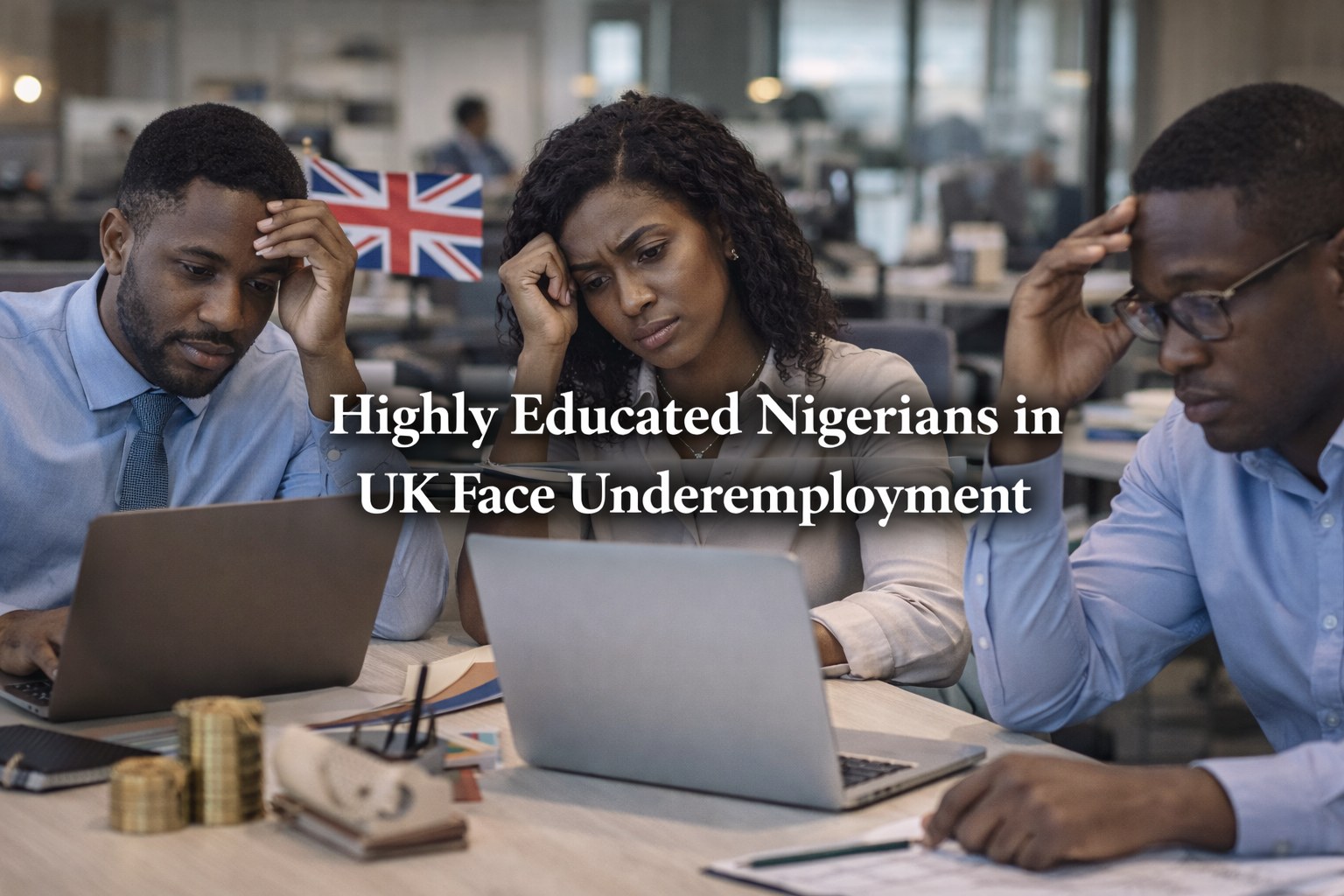
The kind that sits behind polite smiles and carefully worded updates. The one where someone who was a manager, lecturer, engineer, lawyer or senior specialist in Nigeria is now in the UK doing night shifts in care homes, stacking shelves in supermarkets, working security or starting again in roles they are clearly overqualified for.
On paper, they still look impressive. They have Master’s degrees, professional certifications, years of experience and leadership roles. But in reality, in the UK, it feels like starting from zero.
This is the untold story of many highly educated Nigerians rebuilding their careers abroad. Not the polished success stories, not the motivational quotes, but the real, complicated middle.
Before arriving in the UK, the expectation is often clear and confident. With strong qualifications and years of experience, it feels logical to believe that opportunities will come quickly. Friends and family reinforce that belief, reminding you how capable you are and how far your CV should take you.
Then reality lands.
For many, the first major shock comes in a simple sentence repeated by recruiters: you have great experience, but you do not have UK experience. It sounds harmless, even polite, but it carries weight. It quietly suggests that everything achieved before now exists in a different category, one that does not fully translate.
That moment hits deeper than finances. It challenges identity.
There is also the quiet restructuring of your story. The CV that once reflected leadership and seniority is reshaped to fit a new market. Titles are softened. Experience is reframed. Roles applied for begin to look unfamiliar, not because of lack of ability, but because of strategy.
It is not pride that makes this difficult. It is the emotional distance between who you were and who you are now allowed to be.
At the same time, life does not pause. Rent must be paid. Bills must be settled. Food must be on the table. For many, the decision becomes practical rather than ideal. Survival jobs are taken not out of confusion, but out of necessity.
Care work, warehouse shifts, cleaning roles, retail jobs and delivery driving become part of daily life. These roles are honest and essential, yet they often exist far from the careers people spent years building.
The challenge is not the work itself. It is how long the transition can take.
Underemployment carries an emotional cost that is rarely spoken about openly. Conversations become carefully managed. Answers are softened. Achievements from the past feel harder to mention. There is a quiet tension between truth and perception.
From back home, the narrative is often very different. Being abroad is seen as success in itself. There is an assumption of comfort, of stability, of progress. Requests for support come with that belief. What is not visible is the reality behind it, the sacrifices, the adjustments, the starting again.
In the middle of all this, identity shifts. Titles that once defined you fade into the background. The respect that came naturally in one environment has to be rebuilt in another. It raises questions that many do not say out loud. Questions about value, about direction, about whether things will align again.
Read Also: When You Start Thinking in Pounds Instead of Naira: The Hidden Diaspora Experience
It is important to acknowledge that this experience is not simply about effort. There are structural barriers that shape the journey. Qualification recognition can be complex. Professional licensing can require time, money and additional exams. Employers often prefer familiarity, which can make foreign experience harder to position. Visa limitations can also influence opportunities in ways that are not always obvious.
Yet even within these constraints, there are moments that matter deeply. The first interview in your field. The first time your experience is genuinely considered. The first role that feels even slightly aligned with your career path. These moments may seem small on the outside, but they carry significant emotional weight.
Social media can make the journey feel even more difficult. Success stories appear fast and polished. People celebrate new roles, career switches and high salaries. It becomes easy to compare timelines and feel behind. What is often missing from those comparisons is context. Different networks, different opportunities, different circumstances.
Behind the scenes, many Nigerians are rebuilding quietly. They are studying after long shifts, preparing for exams, volunteering, networking and taking strategic steps that may not be visible to others. The progress may be slow, but it is real.
Coping with this phase requires both emotional and practical adjustment. Some people begin to separate their sense of self from their current job title. Others find strength in community, connecting with people who understand the experience firsthand. There is also power in simply acknowledging the difficulty instead of constantly pretending everything is fine.
Progress often comes through small, intentional moves rather than dramatic leaps. Targeted upskilling, meaningful networking and openness to adjacent roles can gradually create pathways forward. It is rarely a straight line. It is a process of repositioning, learning and adapting.
There is also a truth that many people do not like to say out loud. Even when you do everything right, the journey can still take longer than expected. Timelines shift. Plans change. What you imagined in one or two years may take much longer. That does not mean failure. It reflects the complexity of starting again in a different system.
At its core, this experience is not a story of loss. It is a story of transition.
You are not less intelligent because your current role does not match your qualifications. You are not less valuable because your title changed. You are not less ambitious because you chose stability while working toward something bigger.
You are someone who left familiarity, stepped into uncertainty and chose to rebuild.
That is not weakness. That is resilience.
Your career has not ended. It is being rewritten in a new environment, with new rules, at a pace you may not have chosen. And one day, when you look back, the story will not only be about the jobs you did, but about the strength it took to keep going when things did not look the way you expected.
At Chijos News, we tell the stories that often go unheard within the Nigerian diaspora. Beyond the highlight reels and success headlines, there is a deeper reality shaped by resilience, reinvention and quiet determination. For Nigerians in the UK and across the world, this journey is not just about survival, it is about rebuilding identity, reclaiming purpose and redefining success on your own terms. Your story matters, even in the in-between.

