
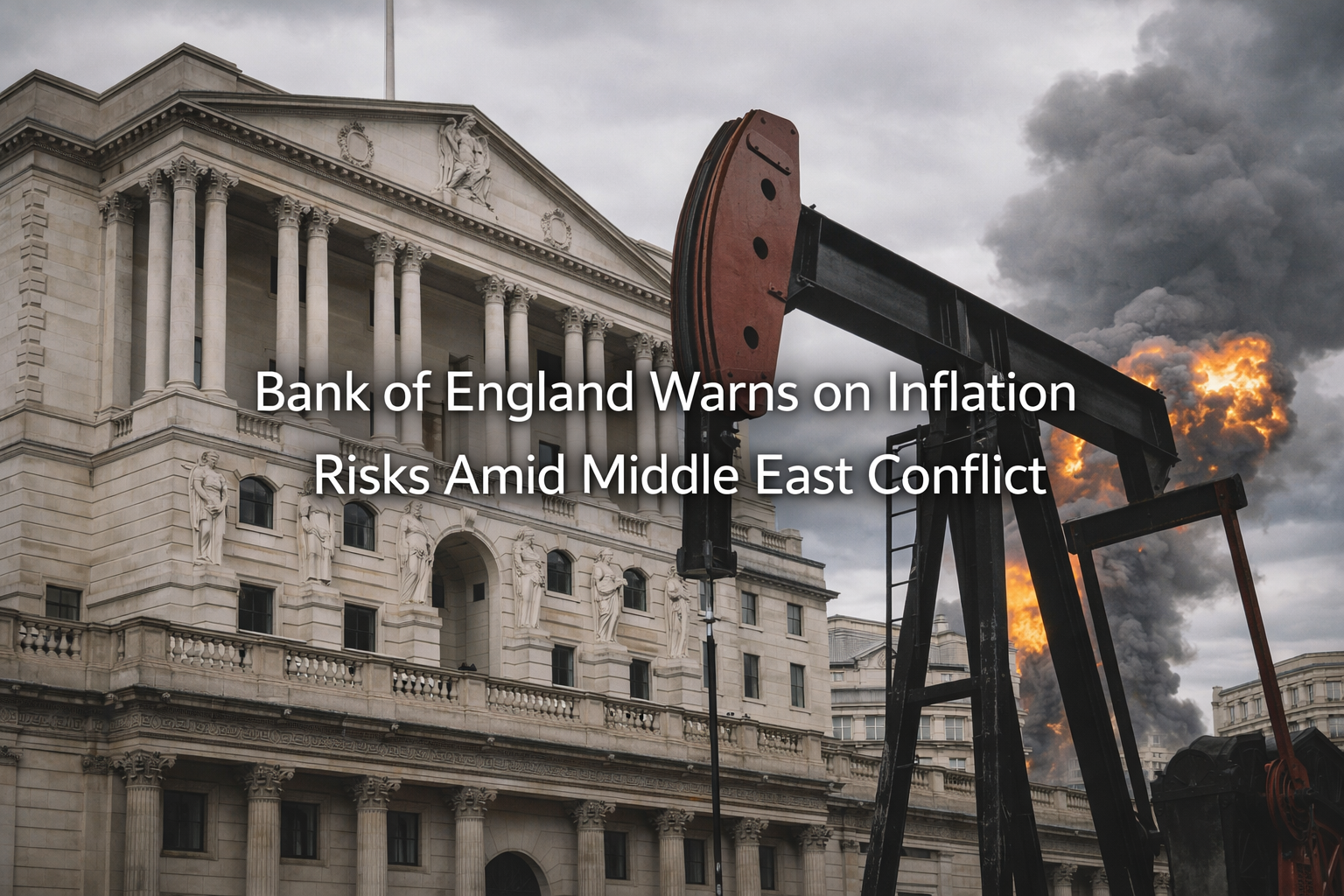
Fresh warnings from the Bank of England are raising concerns that the UK could face renewed cost-of-living pressures, with policymakers signalling they are prepared to act if inflation risks continue to grow.
Speaking at a central banking conference, the Bank’s Chief Economist Huw Pill made it clear that global uncertainty, particularly linked to tensions in the Middle East, should not delay action if prices begin to rise more persistently. His message was direct: uncertainty is part of economic policymaking, but it cannot become a reason to stand still.
The warning comes at a sensitive moment for the UK economy. Inflation had been expected to fall back toward the Bank’s 2 per cent target, offering some relief after years of rising costs. However, new forecasts now suggest inflation could climb again, potentially reaching around 3.5 per cent in the coming months. Much of this shift is being driven by rising energy prices, which are closely tied to instability in global markets.
For many households, especially within diaspora communities, this is more than an abstract economic debate. Higher energy costs tend to ripple through the entire economy, pushing up transport, food, and housing expenses. When fuel prices rise, everyday life becomes more expensive, and the impact is often felt most by those already balancing tight budgets.
Huw Pill has previously expressed concern that interest rates may have been cut too quickly over the past year. Now, he is signalling a readiness to reverse course if inflation pressures become more entrenched. His stance highlights a growing divide in economic thinking, as markets increasingly expect interest rates to rise again, while some analysts believe weak economic growth could limit how far the Bank is willing to go.
Meanwhile, Andrew Bailey has urged caution, suggesting that investors may be moving too quickly in predicting rate hikes. This difference in tone reflects the balancing act facing policymakers: controlling inflation without stalling an already fragile economy.
One key concern raised by Pill is that the UK labour market may no longer respond to economic slowdowns in the same way it once did. In the past, weaker growth would typically ease inflationary pressure. Now, structural changes since the pandemic appear to be making inflation more persistent, even when the economy softens. This means price increases could linger longer than expected.
At the heart of the issue is energy. Rising costs linked to global conflict are seen as an external shock, something the Bank cannot directly control. While interest rate decisions can influence borrowing and spending, they cannot lower global oil or gas prices. Instead, higher energy costs are likely to reduce real incomes, leaving households with less spending power.
For migrants and diaspora families, this creates a double strain. Living costs in the UK increase, while the value of money sent abroad may also be affected by currency shifts and inflation. Supporting relatives back home, already a key responsibility for many, becomes even more challenging in this environment.
The broader message from the Bank of England is one of caution and readiness. Policymakers are watching closely, aware that inflation could once again become a defining economic issue. At the same time, they are navigating a complex global landscape where geopolitical tensions, energy markets, and domestic economic conditions are all tightly linked.
For everyday people, the takeaway is simple but significant. The cost-of-living conversation is far from over. While inflation may have slowed, the risk of it rising again is real, and decisions made in response could shape everything from mortgage rates to job prospects in the months ahead.
For the diaspora, staying informed is not just about understanding the news. It is about preparing for how global events translate into local realities, and how those realities, in turn, affect families, futures, and financial stability across borders.

