
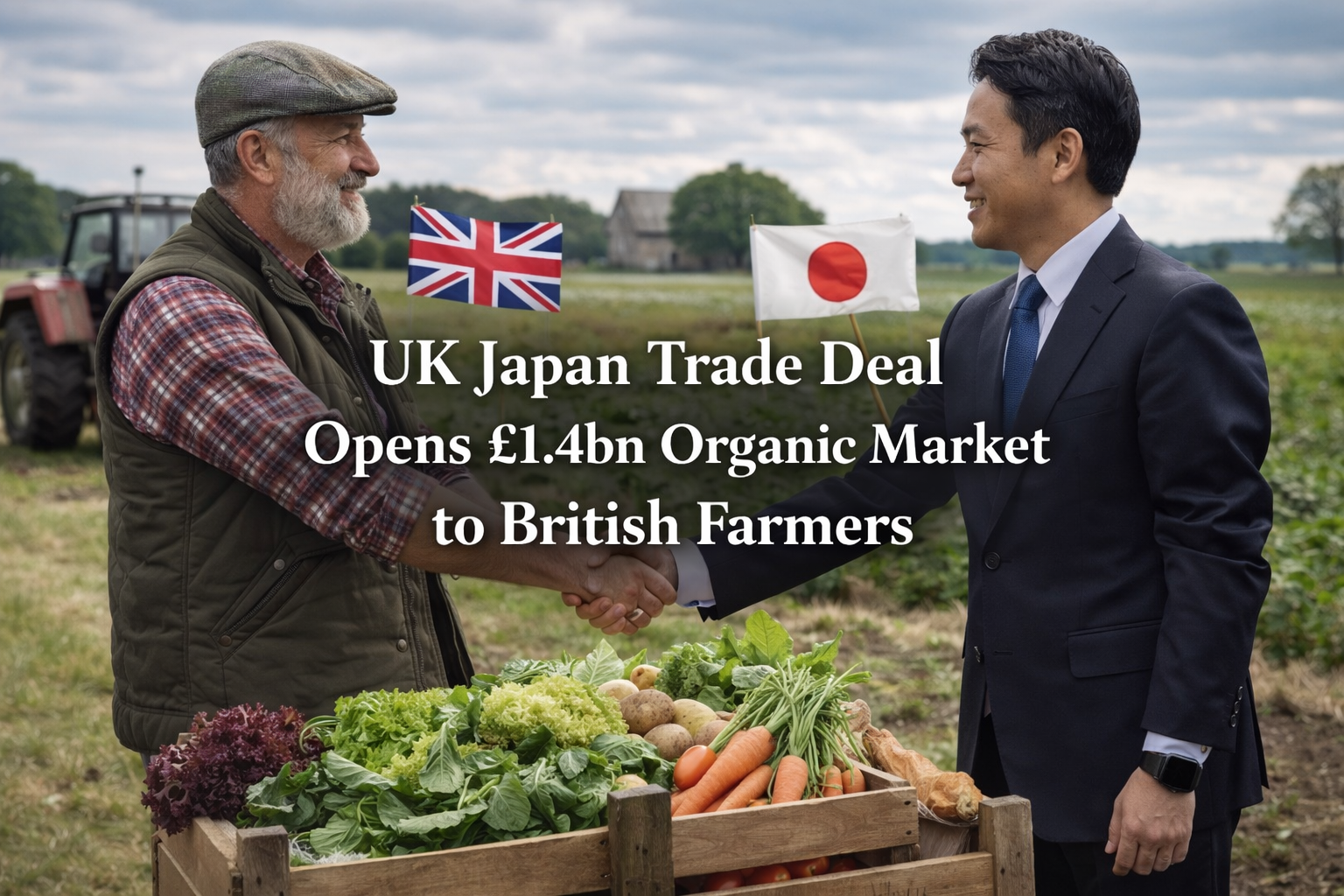
British organic food producers are set to benefit from a major trade breakthrough as the UK opens the door to Japan’s fast-growing organic market, creating new export opportunities and reducing long-standing barriers.
The agreement, announced by the UK government, means that organic livestock standards between the UK and Japan are now officially recognised as equivalent. In practical terms, this allows British producers to export organic meat and dairy products to Japan using a single UK certification, removing the need for duplicate approvals and cutting down on costs and bureaucracy.
For UK farmers and food businesses, this is a significant shift. Products such as organic beef, lamb, bacon, sausages, cheese and butter can now reach Japanese consumers more easily, at a time when demand for high-quality organic goods is rising rapidly across Asia.
Food Security Minister Dame Angela Eagle described the move as a major step forward for British agriculture, highlighting the global reputation of UK produce and the growing appetite for premium organic food in international markets.
Japan represents one of the most attractive opportunities for exporters. As the second largest organic market in Asia, it was valued at around £1.4 billion in 2023 and continues to expand, supported by government efforts to encourage healthier and more sustainable food choices among consumers.
British organic products are already gaining traction in Japan, with items such as tea, cereals, sauces and juices building a presence. The latest agreement extends that success into the livestock sector, unlocking new commercial potential for meat and dairy producers.
For businesses like Calon Wen, a Welsh farmer-owned dairy cooperative, the deal marks a turning point. The company has been expanding across Asian markets and now sees Japan as a key growth destination. Industry voices say the agreement could open access to high-value contracts and strengthen the global standing of UK organic farming.
The UK organic sector itself has been on a steady rise, reaching a retail value of £3.9 billion in 2025. Growth has remained consistent for over a decade, driven by increased consumer awareness around sustainability, health and ethical sourcing.
This latest development also builds on wider trade efforts to strengthen the UK’s agricultural exports. Recent agreements have included improved access for beef exports and expanded opportunities in international livestock markets across regions such as Asia, Africa and Latin America.
By reducing trade friction and improving access to overseas markets, the government aims to support farmers, boost rural economies and increase the global competitiveness of British food products.
As global demand for organic food continues to rise, the UK’s ability to tap into markets like Japan could play a key role in shaping the future of its agricultural sector.
For Nigerians and Africans in the UK, this development highlights how British trade policies can create wider economic opportunities that ripple across communities. Many in the diaspora are involved in food businesses, import-export trade or agricultural investments back home. Understanding how international agreements like this work offers insight into global market trends and potential business pathways. At Chijos News, we connect these global developments to the everyday realities of diaspora life, helping you stay informed, inspired and ready to explore opportunities beyond borders.

