
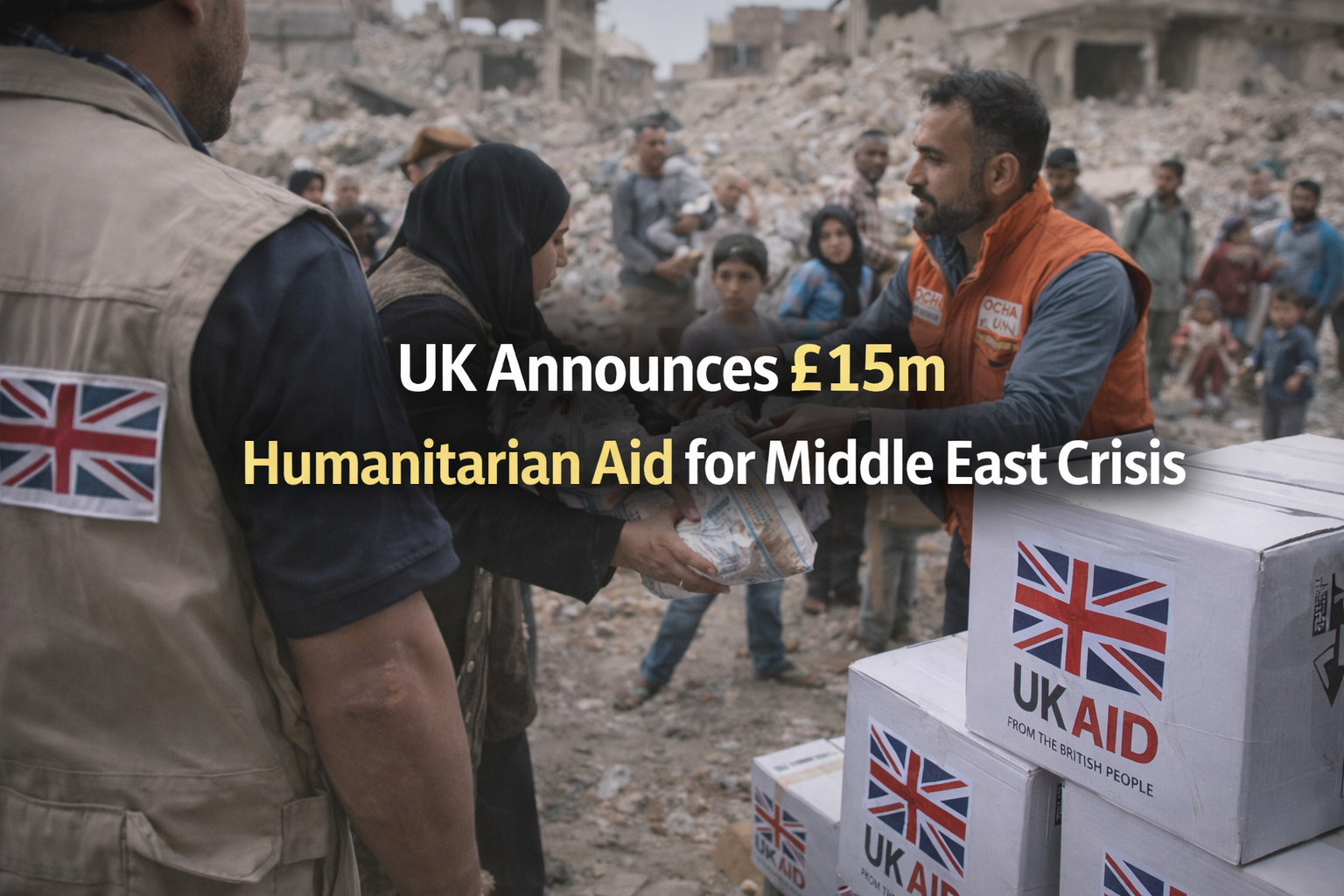
Hundreds of thousands of people forced to flee escalating conflict across the Middle East are set to receive life-saving support, following a new £15 million humanitarian funding package announced by the UK government.
The funding, confirmed by Foreign Secretary Yvette Cooper, comes at a time when the humanitarian situation in the region is rapidly deteriorating, with mass displacement, food shortages, and overwhelmed healthcare systems placing millions at risk.
A significant portion of the aid will be directed towards Lebanon, where the impact of the crisis has been particularly severe. An estimated 800,000 people have already been displaced, many of them in urgent need of shelter, food, clean water, and medical care.
Through partnerships with global humanitarian organisations such as the World Food Programme, UNICEF, and the UN Office for the Coordination of Humanitarian Affairs, emergency assistance will be delivered to civilians struggling to survive the effects of ongoing violence. These efforts are expected to provide immediate relief to families who have lost homes, livelihoods, and access to basic services.
Additional support will be channelled through frontline responders including the Lebanese Red Cross and the International Committee of the Red Cross, ensuring emergency medical care and essential services continue to reach those in critical need.
Beyond Lebanon, the UK’s funding will also extend across the wider region, reflecting growing concerns about potential large-scale displacement linked to instability involving Iran and neighbouring states. Agencies such as the United Nations High Commissioner for Refugees will use the funds to strengthen preparedness, protect vulnerable populations, and provide support to those at risk of becoming refugees.
Countries including Afghanistan and Iraq are also expected to benefit from the funding, particularly in bolstering emergency response systems and supporting healthcare services under strain. Humanitarian operations will focus on delivering medical treatment, maintaining hospital services, and providing nutritional support to children and vulnerable families.
Part of the funding will also go towards addressing emerging humanitarian needs, with a particular focus on protecting women and children, who are often the most affected during crises. Aid agencies are working to ensure that support reaches those most at risk as conditions continue to worsen.
Speaking in Parliament, Yvette Cooper emphasised the urgency of the situation, noting that the UK had already committed £5 million earlier in the week, with this latest package bringing the total to £15 million. She highlighted the government’s focus on delivering emergency medical care, shelter, and life-saving assistance to those caught in the conflict.
For diaspora communities in the UK, particularly those with ties to the Middle East and surrounding regions, the announcement underscores the far-reaching impact of global instability. Many families remain connected across borders, and crises like this often have both emotional and financial implications for those living abroad.
As the situation continues to unfold, humanitarian organisations warn that needs are likely to grow, with more people at risk of displacement and limited resources to support them. The UK’s funding is expected to play a crucial role in stabilising conditions in the short term, while longer-term solutions to the conflict remain uncertain.
This latest intervention reflects the UK’s ongoing commitment to international humanitarian efforts, but also highlights the scale of the crisis and the urgent need for sustained global support.