
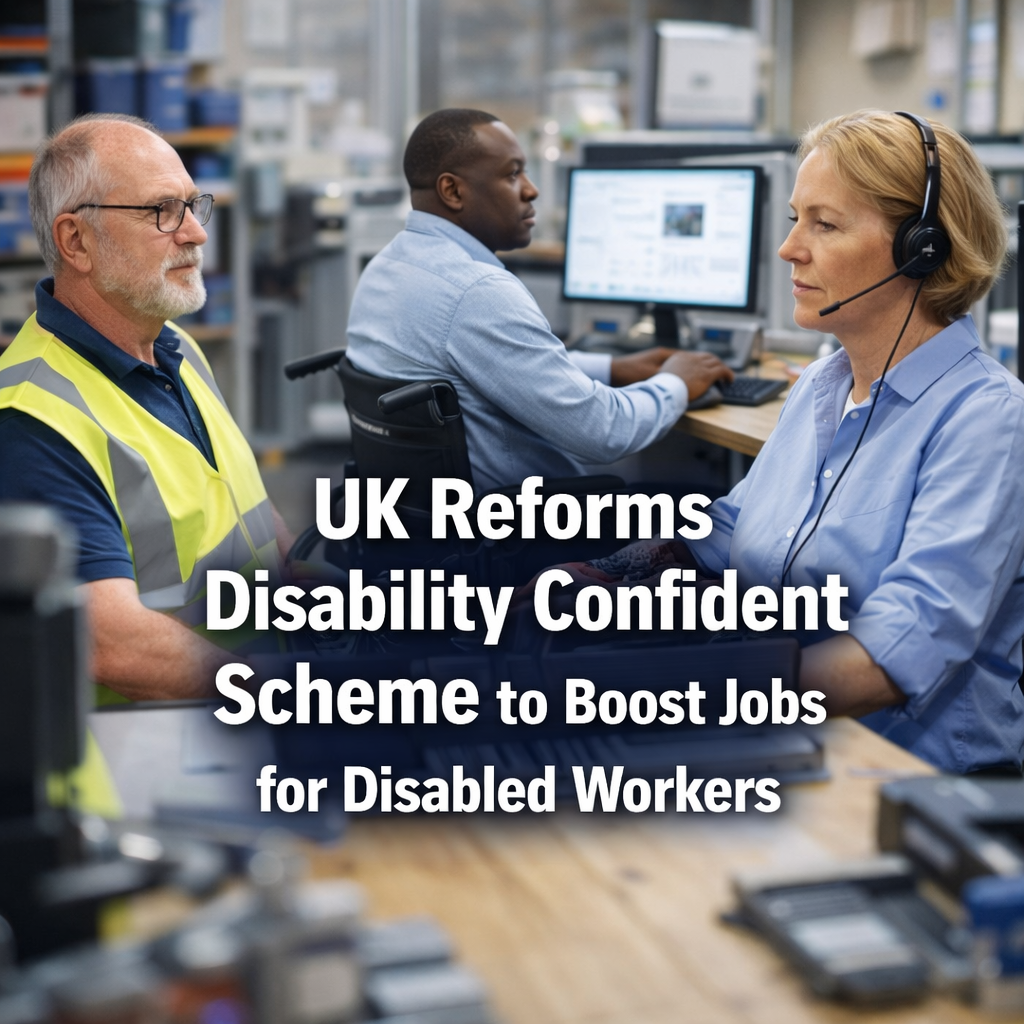
Sick and disabled people across the UK are set to gain more meaningful opportunities to move into secure employment following a major overhaul of the Disability Confident scheme, as the Government looks to tackle long-term sickness, boost living standards and improve workplace inclusion.
For many within the Nigerian and wider African diaspora living in the UK, the challenge of accessing fair employment is already complex. When disability or long-term illness is added to the mix, the barriers can be even higher. The latest reforms signal a renewed attempt to ensure employers do more than simply sign up in name, by creating workplaces where disabled people are genuinely supported to thrive.
The Disability Confident scheme, first launched in 2016, was designed to encourage employers to recruit, retain and develop disabled people. While it has attracted around 19,000 employers and covers an estimated 11 million workers, its impact has varied widely across regions. In many areas, local needs were overlooked, and participation often became a box-ticking exercise rather than a driver of real change.
This concern was highlighted in the Keep Britain Working review led by former John Lewis boss Sir Charlie Mayfield. Although around two-thirds of employers said the scheme had a positive impact on their organisation, the review concluded that Disability Confident “lacks teeth” and fails to consistently deliver for disabled people or employers seeking practical support.
In response, the Government has committed to reforming the scheme as part of a wider strategy to prevent ill health, help people stay in work and support businesses to build healthier, more resilient workplaces. Central to this approach is ensuring that Disability Confident participation leads to measurable progress rather than long-term stagnation.
Under the reforms, employers will no longer be able to remain indefinitely at the entry level of the scheme. The time allowed at this stage will be reduced from three years to two, with no option to renew, encouraging businesses to move forward and deepen their commitment. This is intended to push employers beyond symbolic participation and towards meaningful inclusion.
Small and medium-sized enterprises are also being placed at the heart of the changes. Many SMEs want to support disabled workers but lack the resources or expertise to do so effectively. The revamped scheme aims to offer more tailored guidance that reflects the realities of smaller businesses, making inclusion more achievable regardless of company size.
Another key focus is collaboration. Employers will be better connected to one another, allowing them to share good practice, access peer support and draw on practical resources that help them unlock the full potential of the scheme. Crucially, disabled people’s lived experiences will play a stronger role in shaping guidance, ensuring policies reflect reality rather than theory.
The Government believes these changes will make the scheme more impactful for employers while significantly improving employment outcomes for disabled people. This is particularly important given that more than 2.8 million people in the UK are currently signed off as long-term sick, many of whom want to work but face structural and health-related barriers.
Social Security and Disability Minister Sir Stephen Timms said the scheme has enormous potential but has not delivered enough support for either disabled people or employers. He confirmed that reforms will strengthen accountability, improve access to resources and offer greater support to SMEs, alongside a broader £1 billion annual investment in employment support by the end of the decade.
That investment includes the Connect to Work programme, which aims to help 300,000 sick or disabled people into employment by the end of the current parliament. For migrant and diaspora communities, where economic participation is closely tied to integration and stability, such programmes could make a significant difference if implemented effectively and fairly.
Regional leaders have welcomed the changes. Tees Valley Mayoral Combined Authority described the reforms as an opportunity to test new approaches that strengthen the scheme’s impact, while the Federation of Small Businesses said the addition of a small business-focused track reflects long-standing recommendations to recognise the work already being done by smaller firms.
The Government will now engage closely with current scheme members, SMEs, large employers and the Independent Disability Advisory Panel to ensure the reforms are both practical and ambitious. Employers such as The Gym Group, already recognised as Disability Confident leaders, will also help shape the next phase.
For Chijos News readers, particularly those navigating work, health and inclusion in the UK as part of the diaspora, these reforms represent a critical moment. If properly enforced, they could move Disability Confident from a well-meaning label to a genuine pathway into work for thousands of disabled and long-term sick people, helping families, communities and the wider economy move forward together.