
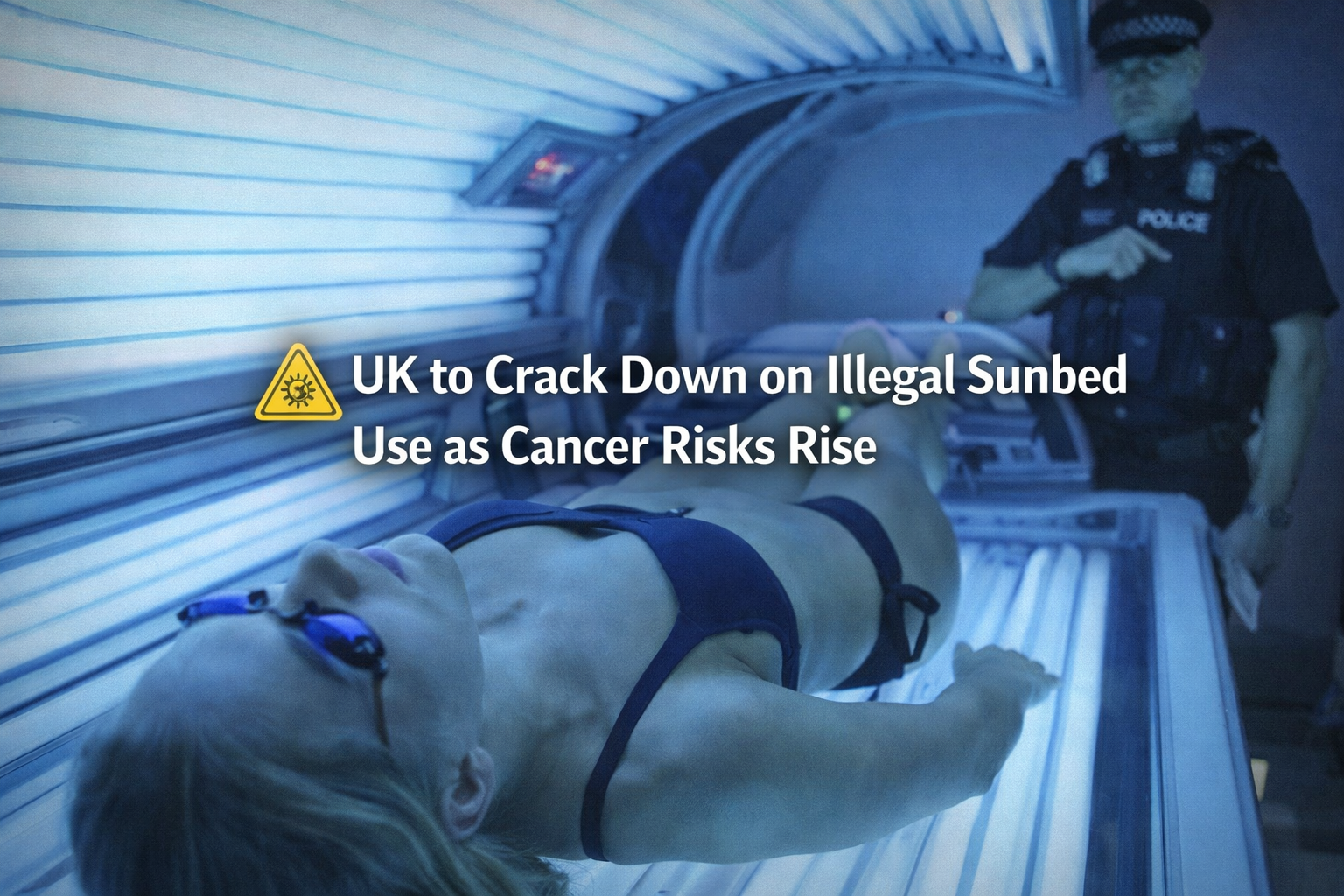
For many Nigerian families living in the UK, health risks are not always the first thing on the mind. The focus is often on work, school, immigration status and settling into a new system. But a new government crackdown on sunbed use is a reminder that some dangers are hiding in plain sight, especially for young people growing up in Britain.
Under new proposals linked to the upcoming National Cancer Plan, the UK government is moving to tighten rules around commercial sunbeds after evidence showed that children as young as 14 are still gaining access, despite it being illegal. The measures are aimed squarely at rogue tanning salons that continue to flout the law and put children’s health at serious risk.
The proposals include banning unsupervised sunbed sessions and introducing mandatory ID checks to ensure users are over 18. For parents in the Nigerian diaspora, particularly those raising teenagers who are navigating British youth culture, this is a development worth paying attention to.
Investigations have revealed that the existing ban on under-18s is routinely ignored. This is especially worrying given that the World Health Organisation has classified sunbeds as being as dangerous as smoking. According to the WHO, using a sunbed before the age of 20 increases the risk of melanoma skin cancer by 47 per cent compared to people who have never used one.
Reducing avoidable cancer risks is a major pillar of the new National Cancer Plan, part of the government’s ambition to make England a global leader in cancer survival. Health officials say prevention is not just cheaper than treatment, but essential for saving lives and protecting the NHS.
Health Minister Karin Smyth said stronger protections are needed to ensure people truly understand the risks. She stressed that there is no safe level of sunbed use and warned that too many young people are being exposed to a known carcinogen without understanding the long-term consequences. The new proposals, she said, are designed to clamp down on illegal operators and properly enforce the law.
For many Nigerians in the UK, sunbeds may seem like a minor issue or something associated with beauty culture rather than health. But the risks are very real. The Sunbeds (Regulation) Act 2010 already bans under-18s from using commercial sunbeds and requires businesses to actively prevent children from accessing them. The fact that teenagers are still using sunbeds shows how weak enforcement has been.
The human cost behind the statistics is clear in stories like that of Louise Dodds, who is living with melanoma. Her cancer was discovered by chance after a mole became dark and itchy. Within weeks, she found herself back in the NHS system undergoing surgery and lymph node tests. Although some results were clear, others were not, leaving her living with ongoing uncertainty. She has said plainly that if she had known earlier how dangerous UV exposure and sunbeds were, she would never have taken the risk.
Cancer charities have welcomed the proposed crackdown. Melanoma Focus says the need for action is urgent, pointing to research showing that more than a third of UK teenagers aged 16 to 17 have used sunbeds despite the ban. The charity also highlighted that melanoma rates in the UK have risen sharply in recent years, making public education more important than ever.
For Nigerian parents raising children in the UK, this is also about understanding cultural differences. In Britain, teenagers are exposed to trends and beauty standards that may not exist back home, including tanning culture. Without proper awareness, young people may see sunbeds as harmless or even beneficial. Polling shows that nearly a quarter of 18 to 25-year-olds wrongly believe sunbeds reduce cancer risk, while only about six in ten adults know they increase it.
Melanoma skin cancer is now the fifth most common cancer in the UK. In 2023 alone, there were almost a quarter of a million new skin cancer diagnoses, costing the NHS an estimated £750 million every year. These figures underline why the government says prevention must come before treatment.
The consultation process will also seek views from businesses, including small and medium-sized tanning salons. Officials say they are aware of the need to balance public health protections with the economic impact on legitimate businesses, and that any new rules must be practical and enforceable.
Alongside the consultation, a broader call for evidence will examine whether further action is needed to reduce melanoma cases even more. NHS England has backed the proposals, warning that while a sunbed tan may last only a few weeks, the damage caused by UV radiation can last a lifetime.
For Nigerians living in the UK, this development is another reminder that adapting to life abroad also means learning new health risks and systems. Awareness, especially among young people, can make the difference between a temporary cosmetic choice and a lifelong health battle.
As the National Cancer Plan takes shape, the message from health authorities is clear: protecting young people from avoidable cancer risks is not optional. It is a necessary step towards a healthier future for families across the UK, including those in the Nigerian diaspora who now call Britain home.