
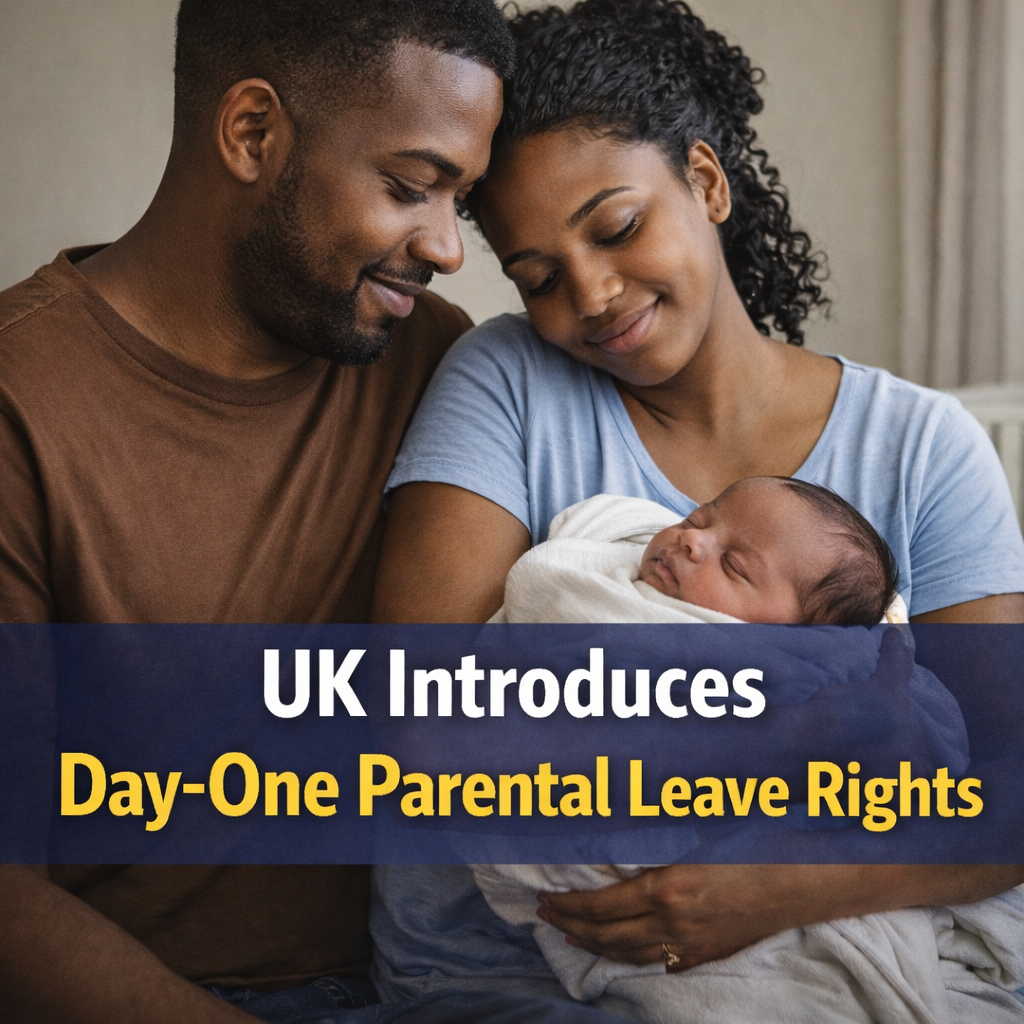
For millions of workers across the UK, especially migrants and diaspora families who often work in insecure or frontline roles, becoming a parent has too often come with an impossible choice: be present for your newborn or protect your job. From April 2026, that painful dilemma is set to change.
At Chijos News, we focus on how UK policies affect Nigerians and other diaspora communities in real life, not just on paper. For many African and migrant families, parental leave has never been a given. New jobs, short contracts, agency work and fear of dismissal have meant many parents quietly returned to work days after childbirth or missed crucial bonding moments altogether. The new day-one parental leave rights mark a significant shift that could reshape family life for thousands of diaspora households.
What Is Changing Under the New Law
The UK Government has confirmed that new parental leave measures will come into force from April, following regulations laid in Parliament under the Employment Rights Act. These changes remove the qualifying period that previously required workers to be employed for 26 weeks before accessing key parental rights.
In simple terms, parents will no longer have to “earn” the right to be present at one of the most important moments of their lives. From their first day in a new job, eligible workers will be able to access parental leave without fear of losing employment.
This reform means an estimated 32,000 additional fathers each year will qualify for Paternity Leave immediately, bringing them closer in line with mothers who already have day-one access to maternity leave. For many Nigerian and African fathers working long hours in logistics, healthcare, security and transport, this change could finally allow them to support their partners and bond with their newborns without risking their livelihood.
Why This Matters So Much to Migrant and Diaspora Parents
For diaspora families, job mobility is often a necessity rather than a choice. Many parents change roles frequently to improve pay, secure better hours or escape exploitative working conditions. Under the old system, changing jobs often meant losing parental leave rights entirely. This trapped families in unsuitable roles and discouraged career progression at critical moments in their lives.
The removal of the qualifying period means parents can now change jobs without sacrificing their right to care for their child. For families already juggling immigration pressures, rising living costs and limited extended family support, this flexibility could be life-changing.
Unpaid Parental Leave From Day One
Another significant reform is the extension of Unpaid Parental Leave from the first day of employment. This change will benefit an estimated 1.5 million parents, giving families more freedom to share caring responsibilities, manage childcare and respond to unexpected family needs.
Around 390,000 people in the UK are currently out of work due to caring responsibilities but want to return to employment. The Government estimates that even if a small percentage of these individuals were able to take up part-time work as a result of increased flexibility, it could boost the UK economy by around £150 million a year.
For many diaspora parents, particularly mothers, the ability to balance work and care without permanently exiting the workforce is critical to long-term financial stability.
Bereaved Partner’s Paternity Leave: Closing a Cruel Gap
One of the most emotionally significant changes is the introduction of Bereaved Partner’s Paternity Leave from April. This new right will allow fathers and partners who lose their partner before their child’s first birthday to take up to 52 weeks of leave.
Previously, bereaved partners were often left relying solely on the goodwill of employers during an unimaginable period of grief. Campaigning by individuals with lived experience, including Aaron Horsey, helped expose the cruelty of a system that offered no guaranteed protection at such a vulnerable time.
By embedding this right in law, the Government has created a clear and compassionate route for support, ensuring grieving parents can care for their child and begin rebuilding their lives with dignity rather than fear.
Stronger Sick Pay and Wider Worker Protections
The parental leave reforms sit alongside wider changes designed to improve job security and worker wellbeing. Up to 1.3 million additional workers in lower-paid or part-time roles will gain access to Statutory Sick Pay, with entitlement starting from the first day of illness rather than after a three-day wait.
This shift addresses a long-standing problem where workers felt forced to work while ill, risking long-term health issues and spreading illness in workplaces. For migrant workers, who are disproportionately represented in lower-paid sectors, this change provides a vital safety net that recognises dignity at work.
What the Government and Stakeholders Are Saying
Prime Minister Keir Starmer has described the reforms as part of a broader reset for working people, aimed at restoring basic rights and security while supporting families with the rising cost of living. He emphasised that no parent should be forced to work through illness or miss the early weeks of their child’s life just to survive financially.
Business Secretary Peter Kyle echoed this, stressing that the changes are about ensuring families are supported when they need it most, while also creating a fairer and more productive economy.
Trade unions, family advocacy groups and employment experts have broadly welcomed the reforms. The TUC has described the legislation as a long-overdue step that brings the UK closer to international standards, while organisations like Working Families and Acas have highlighted the potential benefits for staff wellbeing, employer-employee relationships and economic growth.
What This Means Going Forward
More than 18 million workers are expected to benefit from the Government’s wider Plan to Make Work Pay, with particular gains for those in insecure jobs, lower-paid roles and sectors where exploitation has historically been common. By restricting practices such as unfair fire-and-rehire tactics and expanding access to flexible working, the reforms aim to create a more level playing field for employers and employees alike.
For diaspora families, these changes represent more than policy reform. They signal a growing recognition that modern Britain is built by diverse workers whose lives, families and responsibilities deserve protection.
Chijos News Perspective
At Chijos News, we know that laws only matter if people understand them and feel confident using them. Many Nigerians and other migrants are unaware of their rights or fear speaking up due to immigration status concerns, misinformation or workplace pressure. As these new parental leave rules come into force, awareness will be just as important as legislation.
This reform has the potential to reduce stress, keep families together during critical moments and allow parents to participate fully in both work and family life. For diaspora parents who have sacrificed so much to build a future abroad, that balance matters more than ever.