
For many Nigerian families raising children in the UK, navigating food choices is already a daily struggle. Between busy work schedules, rising living costs and children being constantly exposed to adverts on TV, YouTube and social media, unhealthy food marketing has quietly shaped habits inside many homes. At Chijos News, we understand that parenting abroad comes with unique pressures, which is why this latest government move matters deeply for diaspora families.
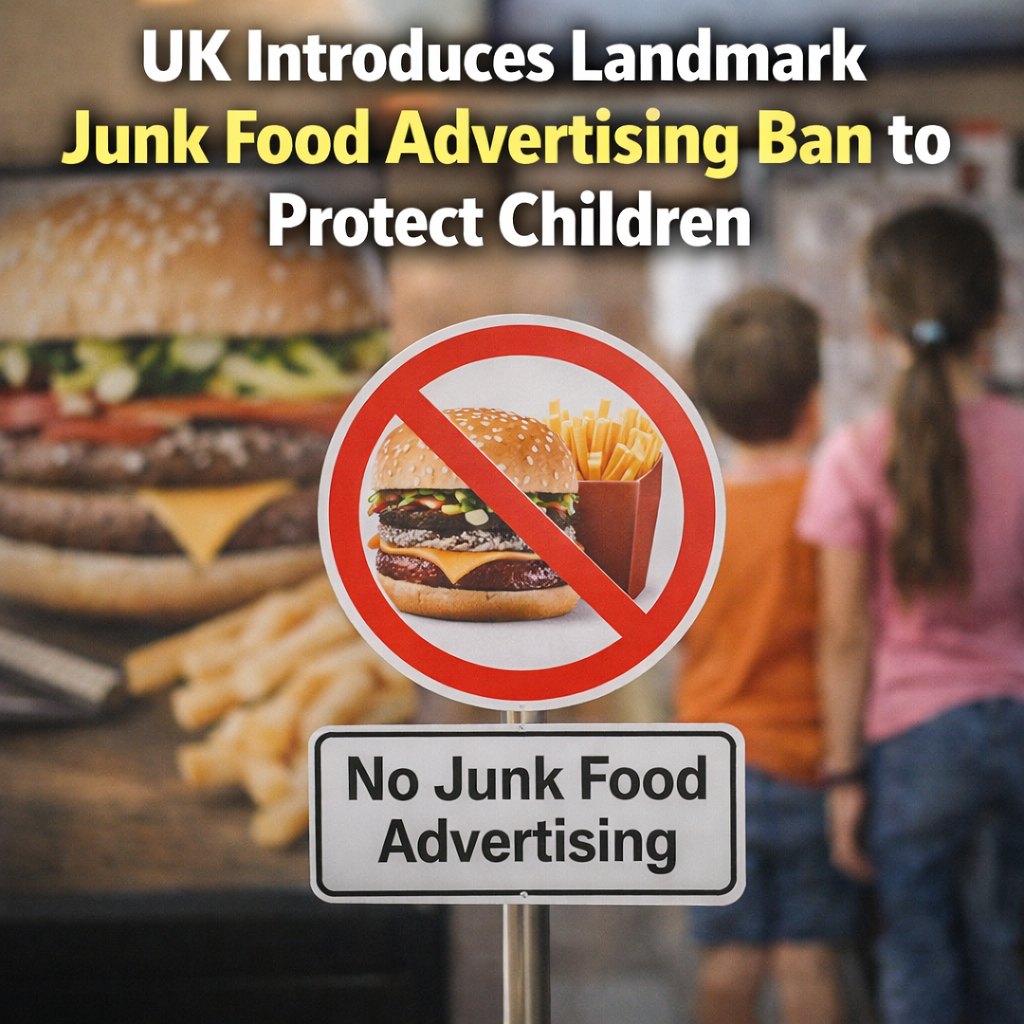
From today, new UK regulations have come into force banning adverts for less healthy food and drinks on television before 9pm and banning paid online advertising for these products at all times. The aim is clear: to reduce children’s exposure to junk food marketing and help tackle the growing childhood obesity crisis.
The government says this world-leading intervention is expected to remove up to 7.2 billion calories from children’s diets every year, reduce the number of children living with obesity by around 20,000 and deliver an estimated £2 billion in long-term health benefits.
Why the Government Is Acting Now
Health experts have long warned that advertising plays a powerful role in shaping what children want to eat and when they want to eat it. From a young age, constant exposure to adverts for sugary snacks, fast food and high-fat drinks influences children’s preferences, normalises unhealthy choices and increases the risk of obesity and diet-related illnesses later in life.
In England, more than one in five children are already living with higher weight or obesity when they start primary school. By the time they leave, that figure rises to more than one in three. Tooth decay remains the leading cause of hospital admissions for young children aged between five and nine, highlighting how poor diets affect health long before adulthood.
By targeting the times and platforms children use most, particularly early evenings and online spaces, the government hopes to limit the impact of aggressive marketing and make healthier choices easier for families.
A Shift Towards Prevention, Not Just Treatment
Minister for Health Ashley Dalton said the government is committed to giving every child the healthiest possible start in life. She explained that restricting junk food advertising before 9pm and banning paid online adverts removes excessive exposure to unhealthy products, helping parents and children make better choices without constant pressure from marketing.
She also stressed that this policy reflects a wider shift away from relying solely on the NHS to treat illness, towards preventing ill health in the first place. By reducing obesity and diet-related conditions early, the health system can remain sustainable and available for those who need it most.
The government worked closely with health campaigners and the food and drink industry to balance child health with economic growth. Many companies had already begun complying voluntarily with the restrictions since October, ahead of the regulations becoming law.
Learning From Past Successes
Previous policies, such as the Soft Drinks Industry Levy, have shown that regulation can drive meaningful change. That levy encouraged companies to reformulate products to reduce sugar content, leading to healthier options without removing choice altogether.
The new advertising restrictions have already had a similar effect, prompting brands to promote healthier alternatives and rethink how they market to families. The Soft Drinks Industry Levy will now be extended to cover more products, including sugary milk-based drinks, further strengthening the push for better diets.
The government is also banning the sale of high-caffeine energy drinks to children under 16, responding to growing concerns about their impact on young people’s health and behaviour.
What This Means for Nigerian Families in the UK
For many Nigerian parents, this change offers welcome support. Children often pressure parents to buy foods they see advertised, especially when those adverts appear repeatedly during family TV time or online gaming and social media use. Reducing this exposure can make everyday food conversations at home less stressful.
Combined with other measures, such as savings of up to £500 a year on baby formula announced in December, supervised toothbrushing programmes for young children and wider efforts to reduce child poverty, the policy forms part of a broader attempt to support families struggling with the cost of living.
Health charities and advocacy groups have widely welcomed the move. Obesity Health Alliance described the restrictions as a long-awaited step towards protecting children from harmful advertising, while Diabetes UK highlighted the growing threat of type 2 diabetes in young people and the urgent need to improve children’s diets.
Cancer Research UK also praised the legislation, noting that obesity and higher weight contribute to at least 13 types of cancer and that children living with obesity are far more likely to carry it into adulthood.
Local government leaders and public health directors echoed these views, emphasising that while there is no quick fix, tighter advertising rules are a proven way to reduce preventable illness and health inequalities.
A Broader Vision for Healthier Childhoods
These advertising restrictions sit alongside other major public health reforms, including the Tobacco and Vapes Bill, which aims to prevent the next generation from becoming addicted to nicotine by limiting vape advertising, packaging and flavours that appeal to young people.
Together, these policies signal a clear shift in the government’s 10-Year Health Plan towards prevention and early intervention, with the stated ambition of raising the healthiest generation of children the UK has ever seen.
For Nigerian families and other diaspora communities, this is a reminder that while parenting abroad brings many challenges, supportive policies can help create healthier environments for children to grow, learn and thrive. As always, Chijos News will continue to break down what these changes mean in real terms for families navigating life in the UK.