
For many Nigerians living in the UK, the NHS is more than a public service, it is the system we rely on in moments of real fear, urgency and vulnerability, whether for ourselves, our children or order relatives. So when emergency response times slow down, or ambulances fail to arrive quickly enough, the anxiety is deeply felt across homes and communities.
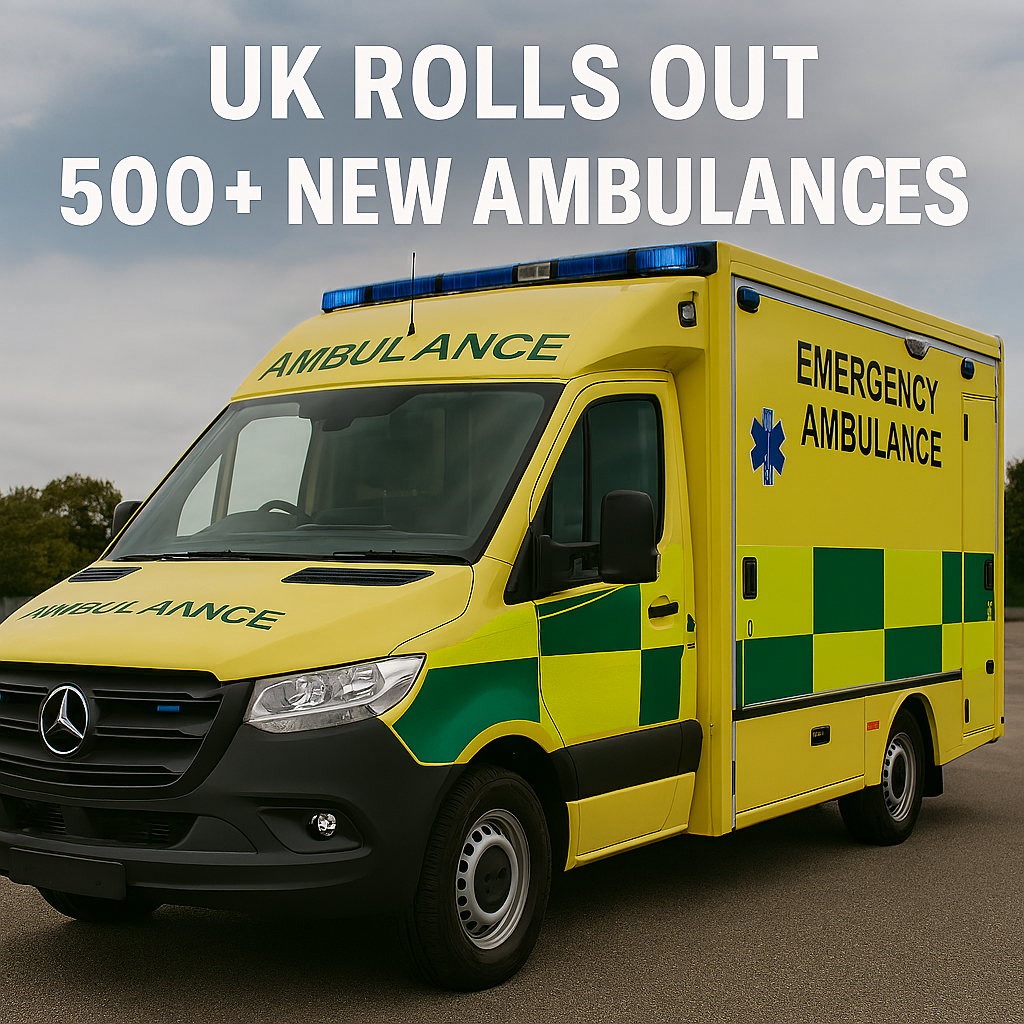
Against the backdrop of a harsh winter and a widespread flu epidemic, the UK government has rolled out a new fleet of more than 500 ambulances across England, marking one of the largest upgrades to the NHS ambulance service in recent years. The move is aimed at strengthening frontline emergency care at a time when demand is surging and public confidence has been under pressure.
The new ambulances are replacing older, unreliable vehicles and have been distributed to every region of England. For patients, this means a better chance of faster response times. For paramedics and emergency staff, it means safer working conditions and more dependable equipment during long, exhausting shifts.
Each of the new double-crewed ambulances comes fitted with modern safety and medical technology designed to protect both patients and staff while enabling quicker, more effective treatment during emergencies. Early data already suggests the upgrade is having an impact, with fewer breakdowns reported and less time spent off the road for repairs. In practical terms, that means more ambulances available when people dial 999.
This investment also carries wider economic implications. The ambulances have been converted by businesses across England, including in Yorkshire, Cheshire, Cambridgeshire and London, supporting skilled jobs and regional growth. For diaspora communities that contribute heavily to the UK workforce, including many Nigerians working within the NHS itself, this combination of service improvement and job creation matters.
Health and Social Care Secretary Wes Streeting said the upgrade reflects a focus on reliability at the most critical moments. He stressed that when someone calls 999, delays caused by ageing equipment should not be part of the equation, especially during a winter marked by flu outbreaks and the after-effects of industrial action. He also acknowledged the strain NHS staff continue to work under, describing their commitment as extraordinary and deserving of proper support.
From within the NHS, leaders say the new fleet is already easing pressure. Sarah Jane Marsh, the NHS national director for urgent and emergency care, described modern and reliable ambulances as a vital link in the chain of care, whether treating patients at home, in transit or on arrival at hospital. She noted that the rollout comes at a time when emergency services are under intense strain, making reliability more important than ever.
The ambulance upgrade forms part of a broader Urgent and Emergency Care Plan, which includes investment in new same-day emergency care centres, urgent treatment centres and mental health crisis assessment units. Together, these measures aim to reduce pressure on overcrowded A&E departments and keep more patients safely cared for in the community.
The government has also committed a further £412 million over the next four years to continue modernising ambulance services, signalling that this rollout is not intended as a one-off fix but part of a longer-term strategy.
This comes as the NHS grapples with significant winter challenges, including an early and aggressive flu season and staff shortages linked to illness and recent strikes. Despite this, ambulance response times have improved compared to last year, vaccination delivery has increased, and more care is being provided outside hospital settings.
Health leaders have broadly welcomed the move. Rory Deighton of the NHS Confederation said new ambulances will help address public concern about emergency care performance, though he cautioned that winter pressures remain intense and sustained collaboration across the health system is essential to avoid annual crises.
From the operational side, Jason Killens, Chief Executive of London Ambulance Service and Chair of the Association of Ambulance Chief Executives, highlighted the long-term benefits of the new vehicles. Beyond improved reliability, the ambulances are lighter, more fuel-efficient and produce fewer emissions, supporting both environmental goals and operational efficiency.
For UK-based Nigerians, many of whom work within healthcare or depend on it daily, this upgrade represents a tangible step toward a more responsive emergency system. While challenges remain, especially during winter peaks, the arrival of hundreds of new ambulances offers reassurance that lessons are being learned and investment is finally reaching the frontline.
At a time when trust in public services is fragile, faster response times and visible improvements on the road could make the difference between panic and reassurance and, in some cases, between life and death.