
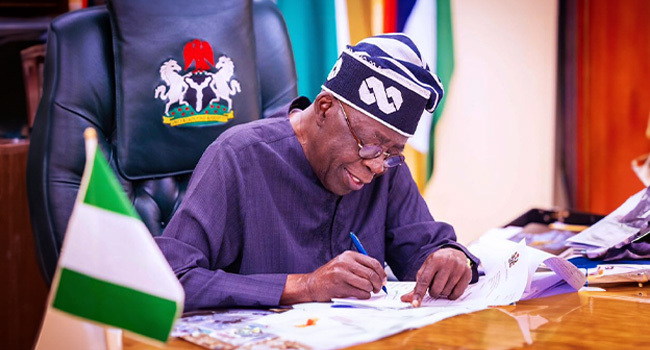
President Bola Ahmed Tinubu’s latest act of clemency — freeing and pardoning 175 convicts and former convicts, including controversial figures and historical icons — has ignited a fresh wave of debate over justice, accountability, and political symbolism in Nigeria.
The announcement, made through the Special Adviser on Information and Strategy, Bayo Onanuga, paints the move as an exercise in compassion and reform. Yet, beneath the surface, critics see a pattern of selective justice and political performance wrapped in the language of forgiveness.
Among those granted presidential mercy are Major General Mamman Vatsa, executed in 1986 for alleged treason; Ken Saro-Wiwa and members of the Ogoni Nine; and Maryam Sanda, convicted for the high-profile murder of her husband. Others include individuals jailed for drug trafficking, corruption, fraud, and other serious offences.
The Presidential Advisory Committee on the Prerogative of Mercy, chaired by Attorney-General Lateef Fagbemi (SAN), reportedly based its recommendations on “remorse, good conduct, old age, and rehabilitation.” However, such criteria have often been subject to political manipulation in Nigeria, where the line between justice and favouritism remains blurry.
Historical Revisionism or Genuine Justice?
Perhaps the most symbolic — and controversial — of the decisions was the posthumous pardon of nationalist Sir Herbert Macaulay, convicted by colonial authorities in 1913. While hailed by some as a long-overdue correction of historical injustice, others see it as a convenient distraction — a grand gesture toward history while present-day injustices continue to thrive unchecked.
The inclusion of Ken Saro-Wiwa and the Ogoni Eight also raises difficult questions. Their executions under the Abacha regime are widely condemned as judicial murders, yet a posthumous pardon decades later does little to heal the wounds or deliver real justice to their communities. Critics argue that such symbolic gestures cost nothing politically but serve to polish the government’s image at home and abroad.
Clemency for the Powerful, Harsh Justice for the Poor
The list of beneficiaries reveals a familiar pattern — one where influential or high-profile figures appear to benefit from leniency unavailable to ordinary Nigerians. For instance, Farouk Lawan, convicted for corruption, and Professor Magaji Garba, jailed for fraud, both received presidential grace.
Meanwhile, hundreds of inmates serving time for minor drug offences or petty crimes remain in overcrowded, inhumane prisons. The government’s sudden empathy for select convicts contrasts sharply with its indifference toward systemic injustice in the correctional system.
Critics have described the move as “mercy with double standards”, noting that the same administration has done little to reform the judiciary or address the pervasive inequality in sentencing and legal representation.
A Nation of Pardons, Not Accountability
Nigeria’s political history is littered with waves of presidential pardons that often favour the well-connected. From military rulers to civilian presidents, clemency has too often been used as a tool to rewrite history, rehabilitate disgraced elites, or earn political goodwill.
That Senator Ikra Aliyu Bilbis was asked to “rehabilitate and empower” the released illegal miners only reinforces the perception that these acts of mercy serve administrative optics rather than social justice.
Observers have also pointed out that President Tinubu’s decision comes amid growing criticism of his administration’s handling of economic hardship, insecurity, and governance failures — making this mass clemency appear conveniently timed to project empathy and moral leadership.
Justice or Political Theatre?
While the Presidential Advisory Committee insists that the decision reflects the government’s “commitment to humane correctional management,” the reality remains that Nigeria’s justice system is anything but humane or just. Thousands of inmates languish in pre-trial detention, some for decades, without legal aid or conviction — yet none were included in this round of mercy.
Forgiving convicted politicians, symbolic historical figures, and even those convicted of murder raises the question: Whose mercy is this, and at whose expense?
President Tinubu’s gesture may be framed as compassion, but to many Nigerians, it smacks of political calculation — a carefully choreographed display of benevolence in a nation where the powerful rarely face the full weight of the law.

