
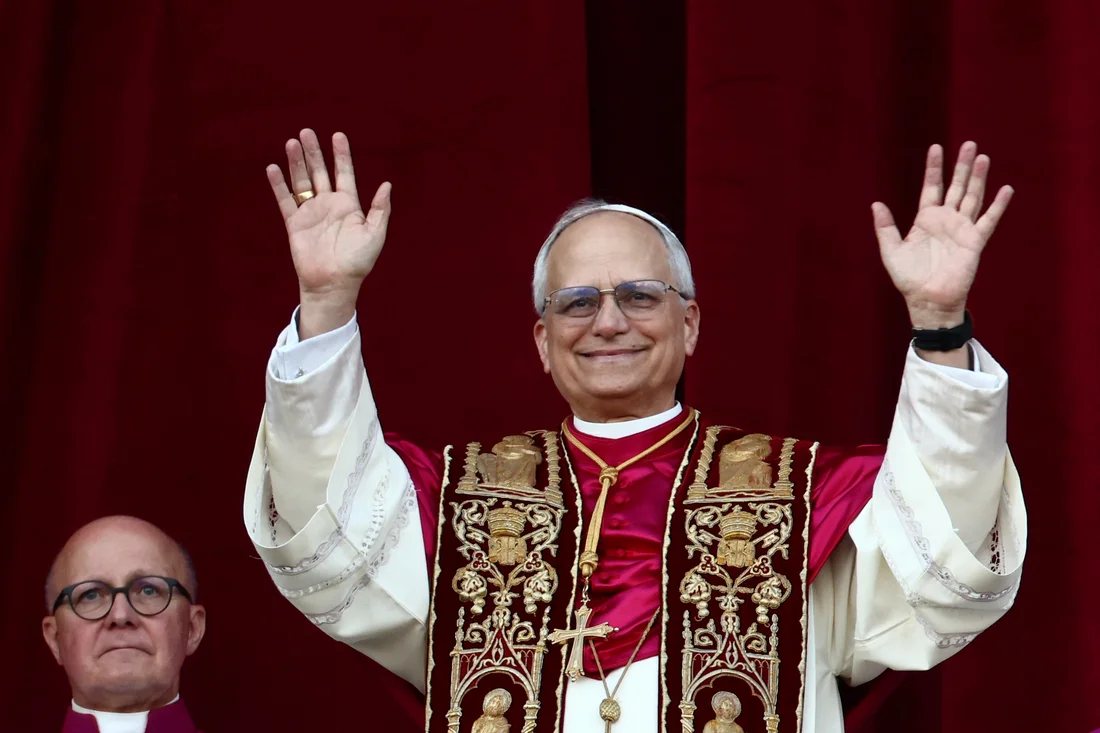
Pope Leo XIV on Sunday called for “courage” from world leaders working to forge a peace plan for Gaza, as international attention pivots toward a high-profile summit in Sharm el-Sheikh aimed at ending the two-year war in the region. The pontiff’s appeal came during his Angelus prayer, where he praised recent diplomatic efforts but warned of the immense human cost of delay.
“The agreement to begin the peace process has given a spark of hope in the Holy Land,” the US-born pope said. “I encourage the parties involved to courageously continue on the path towards a just and lasting peace that respects the legitimate aspirations of the Israeli and Palestinian peoples.”
The summit, co-chaired by US President Donald Trump and Egyptian President Abdel Fattah al-Sisi, is set to begin Monday. Leaders will discuss the implementation of a ceasefire following Hamas’s October 7, 2023 attack and Israel’s subsequent counter-offensive, which has left more than 67,000 Palestinians dead. Critics have noted that the staggering death toll has yet to yield meaningful accountability or a durable resolution.
“Two years of conflict have left death and destruction everywhere,” Pope Leo said, “especially in the hearts of those who have brutally lost their children, their parents, their friends, everything.” He called on God to help “accomplish what now seems humanly impossible: to rediscover that the other is not an enemy, but a brother.”
Yet while the Gaza summit garners global attention, the pope also voiced sorrow over renewed violence in Ukraine, where civilian infrastructure has been targeted and children killed in recent attacks. “My heart goes out to the suffering population, who have lived in anguish and deprivation for years,” he said, renewing his call for an end to the violence.
Ukrainian officials have expressed frustration that diplomatic momentum to end Russia’s invasion has stalled, in part due to the international community’s shift in focus toward Gaza. On Saturday, President Volodymyr Zelensky urged Trump to extend his peacemaking efforts to Ukraine, stating, “If the US president could stop one war, others can be stopped as well.”
Observers warn that the selective urgency of global diplomacy risks deepening divisions and prolonging suffering in regions not currently in the spotlight. As the Gaza summit begins, questions remain about whether the international community can—or will—sustain equal commitment to resolving multiple crises with the same vigor.