
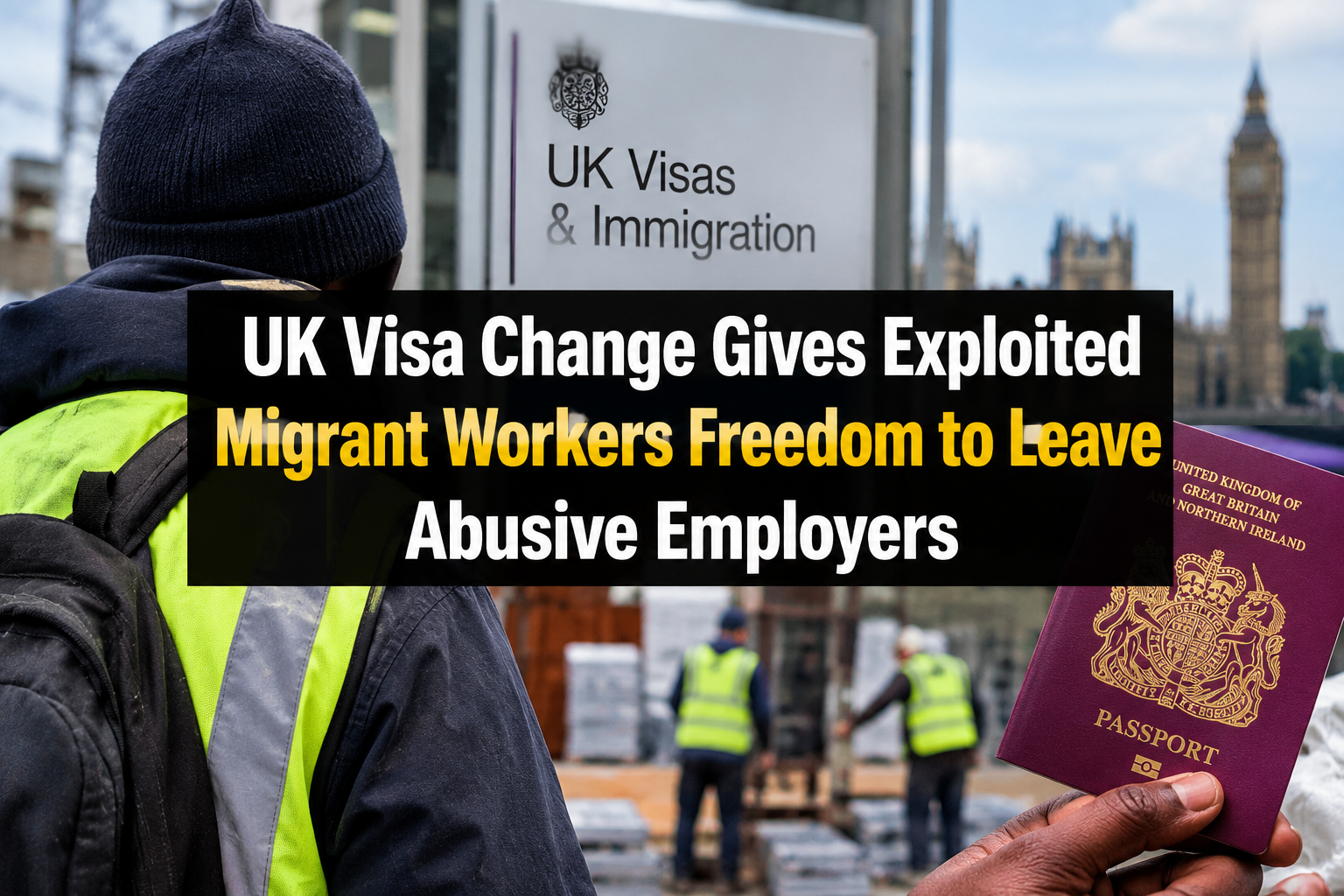
Modern slavery victims on UK Skilled Worker visas will be able to leave abusive employers without putting their immigration status at risk under a new government measure introduced today. The change is designed to help exploited workers escape harmful working conditions, find lawful alternative employment and begin rebuilding their lives without the fear of losing their right to remain in the UK.
Under the new rules, once a person has been formally recognised by the Home Office as a victim of modern slavery, they will no longer be tied to the employer sponsoring their visa. Instead, they can take up other lawful work for the remainder of their existing visa, giving them greater freedom to support themselves financially and move away from exploitative employers.
Previously, workers on the Skilled Worker route could face a devastating choice when dealing with an abusive sponsor. Leaving the job could put their immigration status at risk, while remaining could expose them to continued exploitation. Because Skilled Worker visa holders generally have no recourse to public funds, losing their employment could also leave them struggling to pay rent, meet essential living costs and support family members.
The government says the change removes this pressure for people formally identified as victims of modern slavery. It also addresses a long-standing concern raised by anti-slavery campaigners, who have argued that workers should not have to choose between their safety and their ability to remain in the UK lawfully.
Skilled Worker visa holder paid £20,000 before facing exploitation
The scale of the problem is illustrated by the experience of one worker who paid an agency £20,000 for what she believed would be stable, full-time employment in the UK care sector. Instead of receiving the work she had been promised, she faced demands from her sponsor for £400 a month simply to keep her visa active, despite receiving little or no work.
For months, she struggled to cover her rent and support her family while facing repeated threats that her visa would be cancelled. When work eventually became available, she was reportedly paid just £200 to £300 a month, far below what she had expected from the job she had travelled to the UK to undertake.
Her experience highlights how workers who enter the UK hoping to build a more secure future can become vulnerable when an employer uses sponsorship arrangements to exert control over their lives. For people who have invested substantial sums in recruitment, relocation and visa-related costs, the fear of losing their immigration status can make it even harder to challenge abuse or walk away from a harmful workplace.
Under the new measure, workers in similar circumstances will be able to leave an abusive sponsor once formally recognised as victims of modern slavery, seek other lawful employment and work towards financial independence for the rest of their visa.
Government promises action against employers who exploit migrant workers
Minister for Migration and Citizenship Jo White said no one should have to endure the exploitation experienced by victims of modern slavery. She said the changes would give survivors the freedom to leave abusive workplaces, rebuild their lives and move forward after the trauma they had experienced.
The minister also stressed that the government would pursue employers responsible for exploiting overseas workers, warning that rogue sponsors would face the full force of the law.
The changes form part of wider government efforts to tackle modern slavery and abuse within the immigration sponsorship system. Through its Immigration White Paper, the government has also committed to making it easier for sponsored workers to change employers, with the aim of reducing their dependence on individual sponsors and strengthening safeguards against exploitation.
According to the figures provided by the government, more than 6,600 sponsors have had their licences to recruit overseas workers revoked since it came to power. The government says this is more than the number of revocations recorded over the previous decade under the preceding administration.
More than 4,400 sponsor licences were revoked in the year ending June 2026, representing a 140 per cent increase on the previous year and the highest level on record, according to the figures. Where evidence of criminal activity is identified, sponsors will be referred to the police and may face further legal action.
Anti-slavery organisations welcome greater freedom for survivors
Independent Anti-Slavery Commissioner Eleanor Lyons welcomed the change, saying survivors had repeatedly described how fear of losing their livelihood and immigration status kept them trapped in abusive employment. She has consistently called for sponsored workers to have greater freedom to leave exploitative employers without jeopardising their immigration position.
Lyons said allowing victims to find alternative work and support themselves financially would remove a significant barrier that can prevent people from escaping exploitation. She stressed that no one should be forced to remain with an abusive employer because they fear the consequences of leaving.
The Salvation Army also welcomed the measure. Major Heather Grinsted, Deputy Director of Anti-Trafficking and Modern Slavery at the organisation, said financial independence was an important part of helping survivors regain stability and protect themselves from further exploitation.
She described the ability to work for another sponsor for the remainder of an existing visa as an important step towards helping survivors rebuild their lives safely and with dignity. The organisation also backed the government’s efforts to crack down on employers who exploit vulnerable workers, noting that such practices can create opportunities for criminal gangs to deceive, control and traffic people for profit.
What the change means for Nigerians working in the UK
The announcement is particularly relevant to Nigerians and other overseas workers who came to the UK through sponsored employment, including people recruited into care and other eligible occupations. While many migrants arrive with genuine hopes of earning a living and supporting loved ones at home, abusive recruitment agencies or employers can turn those plans into a costly and frightening experience.
For Nigerian workers who have paid large recruitment fees, borrowed money to relocate or made financial commitments to support family members, the fear of losing a sponsored job can make it difficult to speak out about mistreatment. The new measure offers an important safeguard for people formally recognised by the Home Office as victims of modern slavery, allowing them to seek other lawful work without being tied to the abusive sponsor for the remainder of their visa.
However, the change does not mean that every worker experiencing poor treatment automatically qualifies for the protection. The measure described by the government applies once a person has been formally recognised as a victim of modern slavery, and workers must still comply with the immigration conditions that apply to their circumstances. Anyone who believes they are being exploited should seek help from an appropriate support organisation or a qualified immigration adviser before making decisions that could affect their status.
At Chijos News, we recognise that for Nigerians building a future in Britain, a sponsored job can represent far more than employment. It can mean repaying family loans, sending money home and creating stability after a difficult move abroad. Protections that help recognised victims escape abusive sponsors matter because no worker should have to endure exploitation simply to preserve their chance of staying in the UK.