
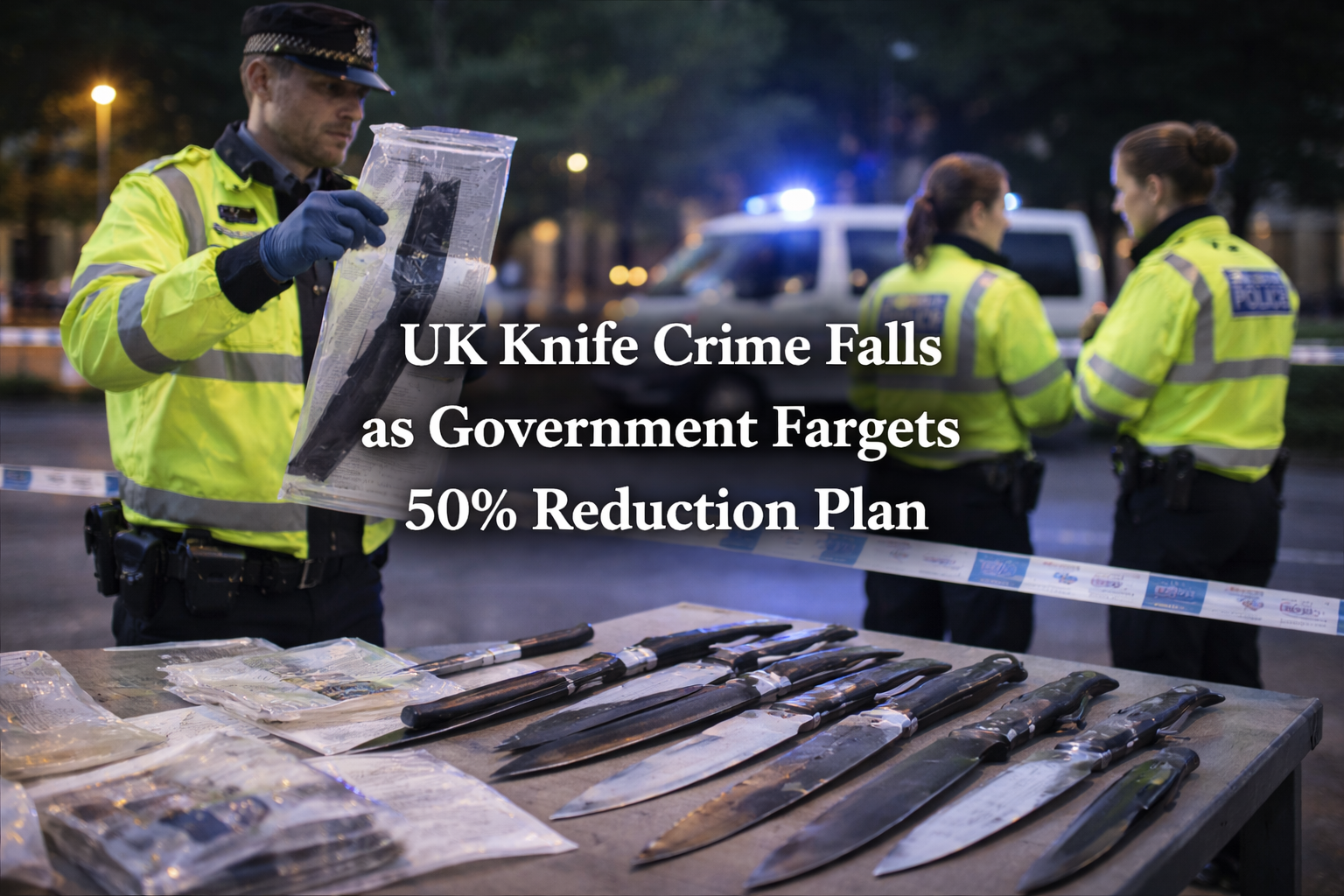
Knife crime across the UK is showing signs of decline, according to new government figures, offering cautious hope to communities long affected by violence.
Over the same period, knife-related homicides have fallen by 27 percent. Knife-point robberies have dropped by 10 percent, while hospital admissions for stabbings are down by 11 percent. Behind these numbers is a broader push by the UK Government to reduce violent crime and improve public safety.
The data comes as ministers unveil a long-term strategy aimed at cutting knife crime in half within the next decade. The plan, titled “Protecting Lives, Building Hope”, is designed not only to reduce crime but to reshape the future for young people and strengthen communities across the country.
At the centre of this effort is a mix of enforcement and prevention. Thousands of weapons have already been removed from circulation. Since the election, surrender schemes and new bans targeting zombie-style knives, machetes and ninja swords have led to 57,726 weapons being handed in.
At the borders, Border Force has intercepted 4,656 knives, preventing them from entering the country. Within communities, police operations under the County Lines Programme have removed a further 1,229 weapons from the streets.
These efforts reflect a shift toward tackling knife crime at multiple levels, from supply chains to street-level enforcement.
Speaking on the government’s approach, Sarah Jones emphasised the human cost behind the statistics. She described knife crime as a force that destroys lives, devastates families and damages entire communities, adding that the government remains committed to removing dangerous weapons and protecting the public.
Beyond enforcement, the strategy places strong focus on prevention. The government says it aims to support young people earlier in life, intervene before individuals are drawn into violence and strengthen policing to ensure offenders are caught and held accountable.
A significant part of the new measures comes from the proposed “Ronan’s Law”, introduced through the Crime and Policing Bill. The legislation was inspired by the tragic death of Ronan Kanda, who was fatally stabbed in 2022 with a ninja sword bought online.
His mother, Pooja Kanda, has since become a leading voice in the push for tighter controls on knife sales. Her campaign has helped shape new rules that will require stricter age verification for online knife purchases, both at the point of sale and at delivery. Retailers will also be required to report suspicious bulk purchases to law enforcement.
For Pooja Kanda, the progress made so far is meaningful, but deeply personal. She has spoken about the reality of losing her son and the urgency of closing the gaps that allowed such a weapon to be so easily accessed. While the removal of more than 63,000 knives from the streets marks a step forward, she continues to stress that more must be done to prevent similar tragedies.
Her advocacy highlights the human stories behind policy changes. These are not just statistics or legislative updates. They are responses to real loss, real families and real consequences.
Further proposals within the Crime and Policing Bill aim to strengthen police powers. A new offence will make it illegal to possess a knife with the intent to commit unlawful violence, even in private settings. Police will also gain expanded authority to seize weapons where there is clear intent to use them for harm.
The government’s broader message is that tackling knife crime requires both immediate action and long-term change. Removing weapons from the streets is one part of the solution, but addressing the root causes, particularly among young people, remains equally important.
While the decline in figures offers some encouragement, the issue is far from resolved. Knife crime continues to impact families and communities across the UK, and the effectiveness of these new measures will be closely watched in the years ahead.
At Chijos News, we recognise that issues like knife crime are not distant headlines for the Nigerian diaspora in the UK. They shape everyday life, safety, parenting decisions and community wellbeing. For many Nigerians raising families abroad, these developments matter deeply because they affect the environments where children grow, learn and socialise. By bringing context, clarity and human stories to these reports, Chijos News remains committed to helping the diaspora stay informed, aware and connected to the realities shaping life in the UK.