
At Chijos News, we understand that border stories resonate strongly with diaspora communities. For many Nigerians and other migrants living in or travelling to the UK, borders are not abstract concepts, they are real places tied to travel, family visits, trade and movement. That is why stories about what crosses UK borders, legally or illegally, matter far beyond headlines.
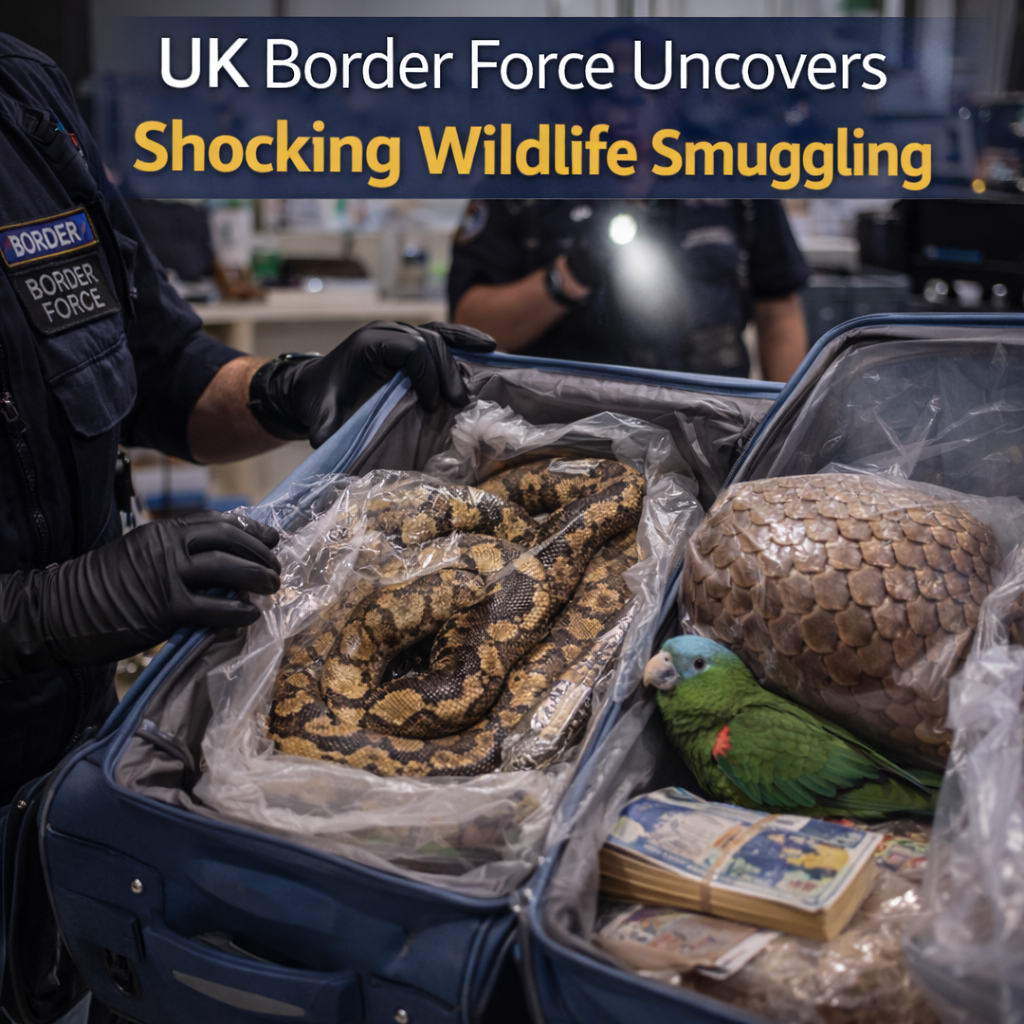
UK Border Force officers have uncovered a disturbing scale of wildlife smuggling after finding live snakes, tarantulas and endangered birds crammed into vehicles and parcels entering the country. The discoveries followed a coordinated international crackdown on organised wildlife trafficking gangs, revealing just how lucrative and widespread the illegal trade has become.
Hundreds of Endangered Animals Seized in One Month
In just one month, Border Force seized more than 250 endangered species and illegal wildlife products at airports, ports and mail depots across the UK. The seizures, made during autumn operations, marked a 73% increase compared to the same period in 2023.
Among the most shocking finds was a rainbow boa constrictor hidden under blankets in a vehicle stopped at Dover. Officers discovered that the driver had bought the snake at a reptile show in Germany but had no licence to bring it into the UK.
In another case, officers uncovered more than 100 endangered birds packed into a single car. Species including scarlet ibis, green-cheeked conures and lovebirds were found in filthy conditions, with some already dead. Officials warned that the way the birds were transported posed serious risks of disease spreading.
Surge in Spider Trafficking Raises Alarm
Border Force has also recorded a sharp rise in spider trafficking since 2023. In one particularly alarming interception, officers stopped a car transporting more than 2,000 live tarantulas from Europe, with an estimated street value of £70,000. Over 300 of the spiders belonged to protected species and were being moved without the required licences.
Adult tarantulas can sell for anywhere between £50 and £500, depending on the species, making them highly attractive to smugglers targeting the exotic pet market.
Alongside live animals, officers seized a range of illegal wildlife products intended for the black market. These included an elephant hair ring from the United States, king cobra balm from Thailand and a blacktip shark jaw shipped from Australia.
A Global Crime Worth Billions
Wildlife crime is now estimated to be worth up to £17 billion a year worldwide, ranking as the fourth largest international crime after drugs, firearms and human trafficking. The seized items are protected under the Convention on International Trade in Endangered Species, known as CITES, which is marking its 50th anniversary this year.
Migration and Citizenship Minister Mike Tapp described wildlife smuggling as serious organised crime, warning that it fuels corruption, drives species towards extinction and undermines border security. He praised Border Force for cutting off a major funding stream for criminal gangs and stressed that anyone attempting to bring illegal wildlife into the UK will be searched and prosecuted.
DEFRA Minister Mary Creagh echoed the message, calling the illegal wildlife trade vile and destructive. She said the government is determined to pursue criminal networks involved in wildlife crime and bring those responsible to justice.
Operation Thunder and the Role of UK Border Force
The seizures took place between 13 September and 15 October as part of Operation Thunder, an annual international operation led by Interpol and the World Customs Organization. The initiative brings together customs and law enforcement agencies worldwide to dismantle wildlife smuggling networks.
UK police forces supported the operation by carrying out inspections across the country. Where sellers could not produce proper documentation, officers seized items including shark and crocodile meat, ivory carvings and even a tiger claw bottle.
Border Force’s specialist CITES team at Heathrow is widely recognised as a global leader in detecting illegal wildlife products. Officers increasingly rely on intelligence-led methods, working closely with international partners to identify smuggling routes and disrupt criminal networks before animals reach the black market.
Where possible, seized animals and products will be rehomed or used for scientific research, ensuring that rescued wildlife can still serve a purpose beyond the illegal trade.
Why This Matters to Diaspora Communities
For diaspora travellers, especially those moving between Europe, Africa and the UK, this crackdown is a reminder that border controls extend far beyond immigration checks. Items purchased abroad, including traditional medicines, souvenirs or exotic pets, can carry serious legal consequences if they breach international wildlife protection laws.
Many people unknowingly fall foul of these rules, particularly when cultural practices or informal markets are involved. Authorities are urging travellers to check regulations carefully and avoid transporting animal products or live species without proper documentation.
Stronger Borders, Shared Responsibility
As part of its wider Plan for Change, the UK government says it is committed to strengthening border security and breaking the business models of organised crime groups. Officials stress that public awareness is just as important as enforcement.
Anyone who suspects wildlife smuggling or trafficking is encouraged to report it using the UK’s online smuggling reporting service.
At Chijos News, we will continue to highlight stories that affect how borders operate and how global crime networks impact everyday lives. For diaspora communities, staying informed is not just about news, it is about staying safe, lawful and protected when crossing borders in an increasingly connected world.