
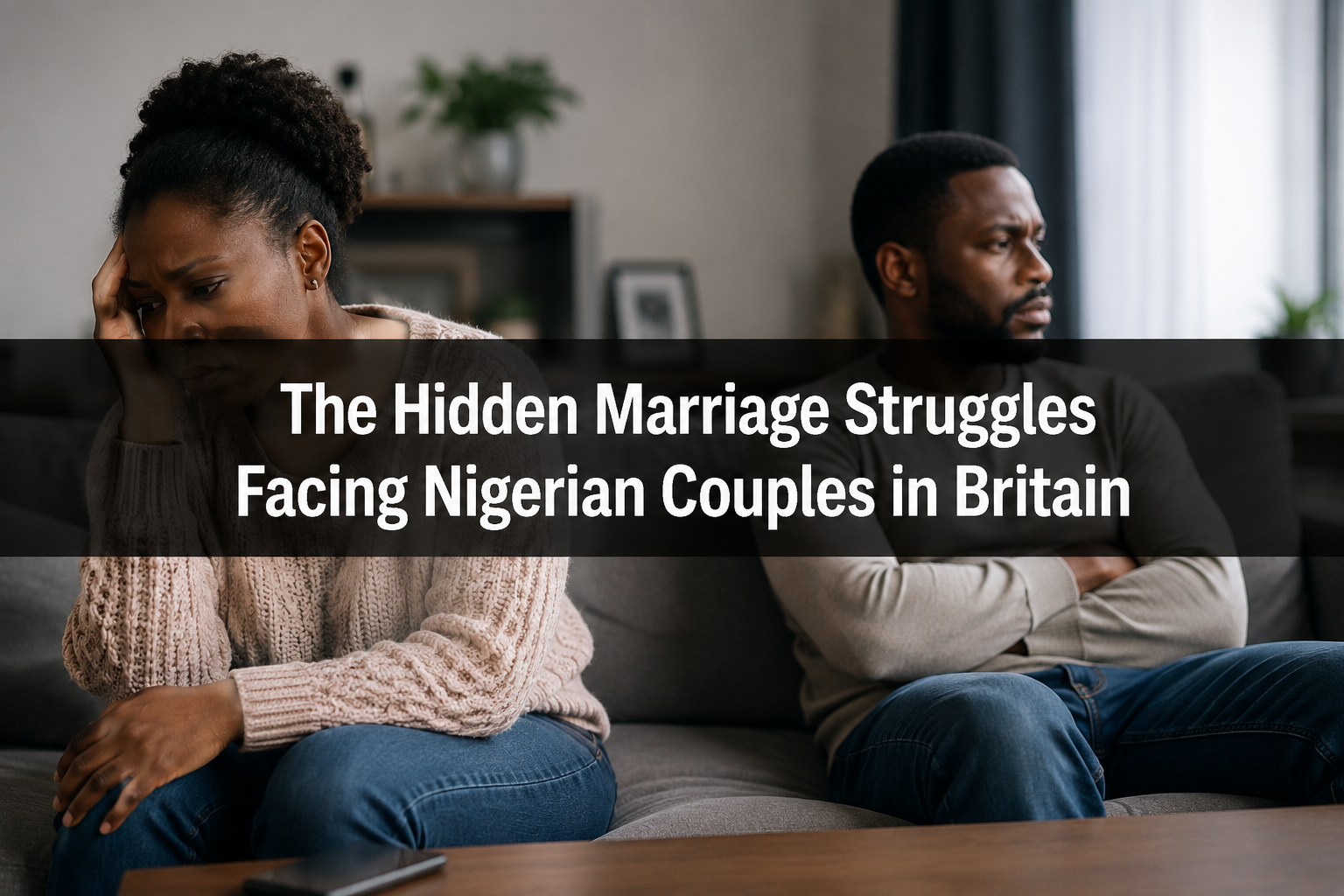
Marriage is never just about love. It is also about expectations, responsibilities, communication and the everyday realities of building a life together. For many Nigerian couples living in the UK, one of the biggest tests of marriage is not financial hardship or immigration challenges but the changing expectations of gender roles. Conversations about who should cook, clean, provide, care for children or make major decisions have become increasingly common in diaspora households, yet they are rarely discussed openly.
If you spend time around Nigerian families in Britain, you are likely to hear familiar comments. “She changed after moving abroad.” “He still thinks we are living in Nigeria.” “We keep arguing about who should be doing what.” Behind these remarks are couples trying to reconcile the traditions they grew up with and the realities of life in a country where both partners often work demanding jobs and have little family support.
Migration does more than move people across borders. It reshapes family dynamics, redistributes responsibilities and challenges long-held beliefs about marriage, power and partnership. For many Nigerian couples, adjusting to these changes can become one of the greatest challenges of building a successful life abroad.
Why traditional gender roles are changing in the UK
Many Nigerians arrive in the UK with a clear understanding of how marriage should function. Traditionally, the husband is viewed as the primary provider, responsible for major financial decisions and regarded as the head of the household. The wife is expected to manage the home, care for the children and provide emotional support while carrying much of the domestic workload.
Even when women have careers in Nigeria, there is often an expectation that they will continue to shoulder most of the cooking, cleaning and childcare responsibilities. Men may assist occasionally, but domestic work is frequently seen as the woman’s responsibility.
Life in the UK quickly challenges that model.
The cost of living is significantly higher, childcare is expensive and many families do not have access to the extended support network they relied on back home. There are no live-in house helps, relatives nearby or neighbours constantly available to assist. Both partners often work long hours simply to meet household expenses, yet the cooking, cleaning and parenting still need to be done.
For many couples, this is where tension begins.
When reality exposes outdated expectations
Take the example of Chinedu and Ada, who relocated from Lagos to London shortly after getting married. Back home, Ada managed a successful fashion business while a relative helped with much of the household work. Chinedu worked in banking and rarely worried about domestic responsibilities.
After relocating, both accepted physically demanding jobs while trying to rebuild their careers. Ada continued handling the cooking, laundry and cleaning after exhausting shifts until one evening she broke down in tears, overwhelmed by the endless responsibilities.
When she asked Chinedu to help more around the house, he felt his role as a husband was being challenged. From his perspective, providing financially was enough. Ada saw things differently. She believed they had become equal partners in every aspect of life, including the home.
Their disagreement was never really about washing dishes. It was about identity, expectations and adapting to a completely different environment.
This story reflects the experiences of many Nigerian couples across Britain.
Money can change the balance of power
Financial independence has become another source of conflict in many diaspora marriages.
In Nigeria, many men grow up believing that being the primary provider naturally places them in a leadership position within the family. However, the UK employment market often creates very different circumstances.
Many Nigerian women secure stable employment quickly, particularly in healthcare, social care and retail. In some households, wives begin earning as much as or even more than their husbands.
This financial shift can create insecurity for some men while giving women greater confidence in family decision making.
Consider Bisi and her husband, who relocated to Britain through the Skilled Worker visa route. Initially, her husband supported the family financially while she settled into life in the UK. Within months, Bisi secured a nursing position and her salary became the household’s primary source of income.
As financial responsibilities changed, so did family dynamics.
Bisi wanted a stronger voice in decisions affecting the family because she was contributing significantly to household expenses. Her husband struggled with the transition, believing his authority was being diminished.
Arguments that appeared to be about money were actually rooted in changing perceptions of respect, identity and equality.
Parenting often becomes another battleground
Raising children presents another major challenge for many Nigerian families living abroad.
Traditional Nigerian parenting often places fathers in the position of final authority, with discipline sometimes involving physical punishment and strict obedience.
British society promotes a different approach.
Schools, social workers and child protection laws encourage communication, emotional development and non-violent discipline. Children growing up in Britain quickly notice these differences and often question parenting methods that differ from those of their classmates.
For couples like Ibrahim and Chika in Manchester, disagreements over parenting became increasingly common.
When their teenage son challenged his father, Ibrahim insisted the boy should kneel and apologise, reflecting the respect he expected growing up in Nigeria.
Chika disagreed.
She believed their son was growing up within British society and that parenting methods also needed to evolve.
Their disagreement represented much more than discipline. It reflected two different visions of what it means to raise Nigerian children successfully in the UK.
Extended family expectations create additional pressure
Migration also transforms relationships with extended family members.
In Nigerian culture, wives are often expected to host guests, maintain relationships with in-laws and prepare meals whenever relatives visit.
Balancing these expectations alongside full-time employment can become exhausting.
Ada frequently found herself spending her only day off preparing meals for guests invited by her husband while he relaxed with friends.
Eventually she explained that hospitality should also involve shared responsibility.
Her husband viewed cooking for guests as part of being a good wife.
Ada believed supporting one another was part of being good partners.
Neither was intentionally trying to hurt the other, but both were holding onto different definitions of marriage.
Read Also: Divorce Among Nigerians in the UK: Why More Marriages Are Breaking Down in the Diaspora
Faith can either deepen conflict or encourage understanding
Churches and mosques often play an important role in shaping attitudes towards marriage within Nigerian communities.
Some faith leaders emphasise traditional gender roles, encouraging men to lead and women to submit without discussing how migration changes everyday realities.
Others promote partnership, mutual respect and shared responsibility.
Many couples say the guidance they receive from their faith communities significantly influences how they navigate conflict at home.
Where practical conversations replace rigid expectations, marriages often become stronger.
Communication remains the strongest foundation
Not every marriage experiencing gender role conflict ends in separation.
Many couples successfully adapt by recognising that migration requires flexibility rather than rigid adherence to traditions developed under completely different circumstances.
Some create practical schedules based on working hours instead of gender.
Others openly discuss financial responsibilities, parenting styles and household duties without assuming one partner should carry a heavier burden.
These conversations are not always easy.
They require vulnerability, patience and a willingness to rethink long-held beliefs.
However, they often strengthen relationships rather than weaken them.
Building stronger diaspora marriages
Gender role clashes are not evidence that Nigerian culture has failed or that Western culture offers all the answers.
Instead, they demonstrate that migration changes everyday life in ways many couples never anticipated.
Successful diaspora marriages often emerge when both partners recognise that some traditions remain valuable while others require thoughtful adaptation.
Marriage in the UK demands teamwork more than ever before.
When couples stop focusing on who should hold power and begin asking how they can support each other, they create healthier homes not only for themselves but also for their children.
The next generation of British Nigerians will largely learn what healthy relationships look like by watching how today’s couples navigate these conversations.
Their example may shape families for decades to come.
What this means for Nigerians living in the UK
For many Nigerians living across the UK, conversations about gender roles, family expectations and shared responsibilities are becoming increasingly important as couples adapt to life in a different social and economic environment. While every marriage is unique, open communication, mutual respect and a willingness to grow together can help families overcome challenges that migration often brings.
At Chijos News, we are committed to telling the stories that matter most to Nigerians in the UK. From relationships and family life to immigration, careers, business, healthcare and community issues, we provide trusted journalism and thoughtful analysis that informs, empowers and connects the Nigerian diaspora across Britain.

