
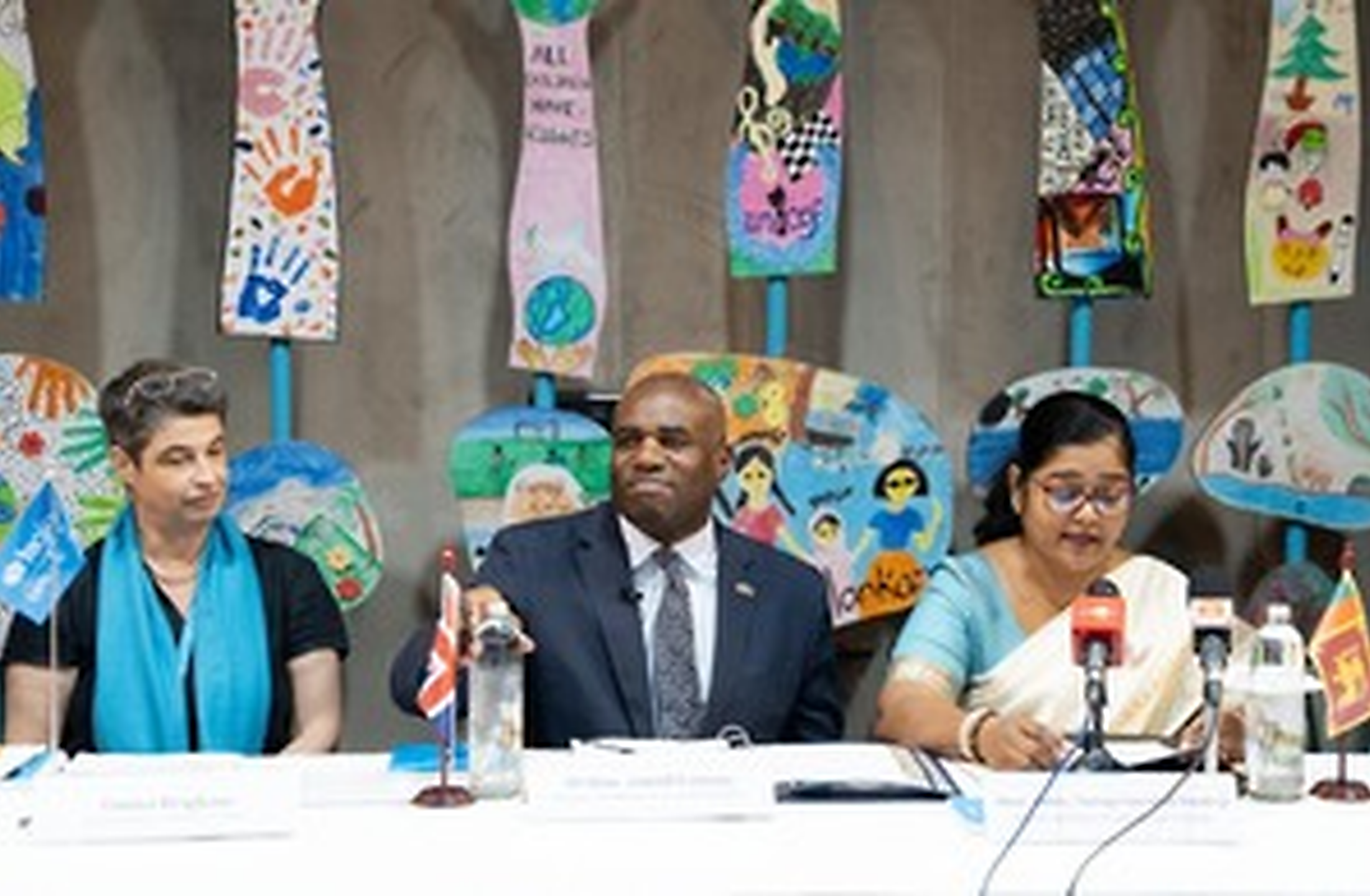
Sri Lanka has taken a significant step toward protecting vulnerable children by signing a letter of intent to join the Global Charter for Children’s Care Reform, a growing international initiative now backed by 35 countries.
The agreement was signed in Colombo by Sri Lanka’s Minister for Women and Child Affairs, Saroja Paulraj, during a visit by UK Deputy Prime Minister David Lammy, who launched the Charter earlier this year. The initiative aims to strengthen families, prevent unnecessary separation of children from parents, promote safe family-based care and ultimately end the reliance on institutional care worldwide.
For diaspora families across the UK, including the large Sri Lankan, South Asian, African and Caribbean communities, child welfare and family unity remain deeply personal issues. Many have lived through displacement, migration or conflict, making the protection of children’s rights a matter that resonates across generations.
Deputy Prime Minister Lammy described the move as a meaningful step toward ensuring every child has the opportunity to grow up in a safe and supportive family environment. He emphasised that reforming children’s care systems globally is not only about policy but about restoring hope and giving vulnerable children the chance to thrive.
The visit also included high-level discussions between Lammy and Sri Lankan President Anura Kumara Dissanayake. Talks focused on economic cooperation, reconciliation and humanitarian priorities. Lammy met with the Leader of the Opposition, Tamil political leaders and civil society groups, underlining the UK’s continued commitment to supporting reconciliation and transitional justice for all Sri Lankans.
Alongside its diplomatic engagement, the UK has provided £1 million in urgent humanitarian assistance following Cyclone Ditwah. The funding, delivered through trusted partners on the ground, supported emergency shelter, clean water, sanitation and essential supplies for affected families. For many in the diaspora who regularly send remittances to relatives back home, such humanitarian support reinforces long-standing ties between the UK and Sri Lanka.
The Global Charter for Children’s Care Reform represents a shift in international thinking about child protection. For decades, institutional care has often been used as a default solution for vulnerable children. However, global evidence increasingly shows that family-based care environments lead to better long-term emotional, educational and social outcomes.
By committing to the Charter, Sri Lanka signals its intention to prioritise policies that keep families together wherever possible and provide safe alternatives when separation cannot be avoided.
Within Britain’s diaspora communities, where extended family networks often play a central role in childcare and support, the Charter’s principles echo cultural values that place family at the heart of society.
As more nations sign up to the initiative, the UK is positioning itself as a leading advocate for global children’s care reform. The coming months will likely focus on translating commitments into practical reforms, funding mechanisms and accountability measures.
Chijos News will continue to deliver diaspora-focused coverage on international development, humanitarian partnerships and policies that shape the lives of families both in the UK and across the Global South.