
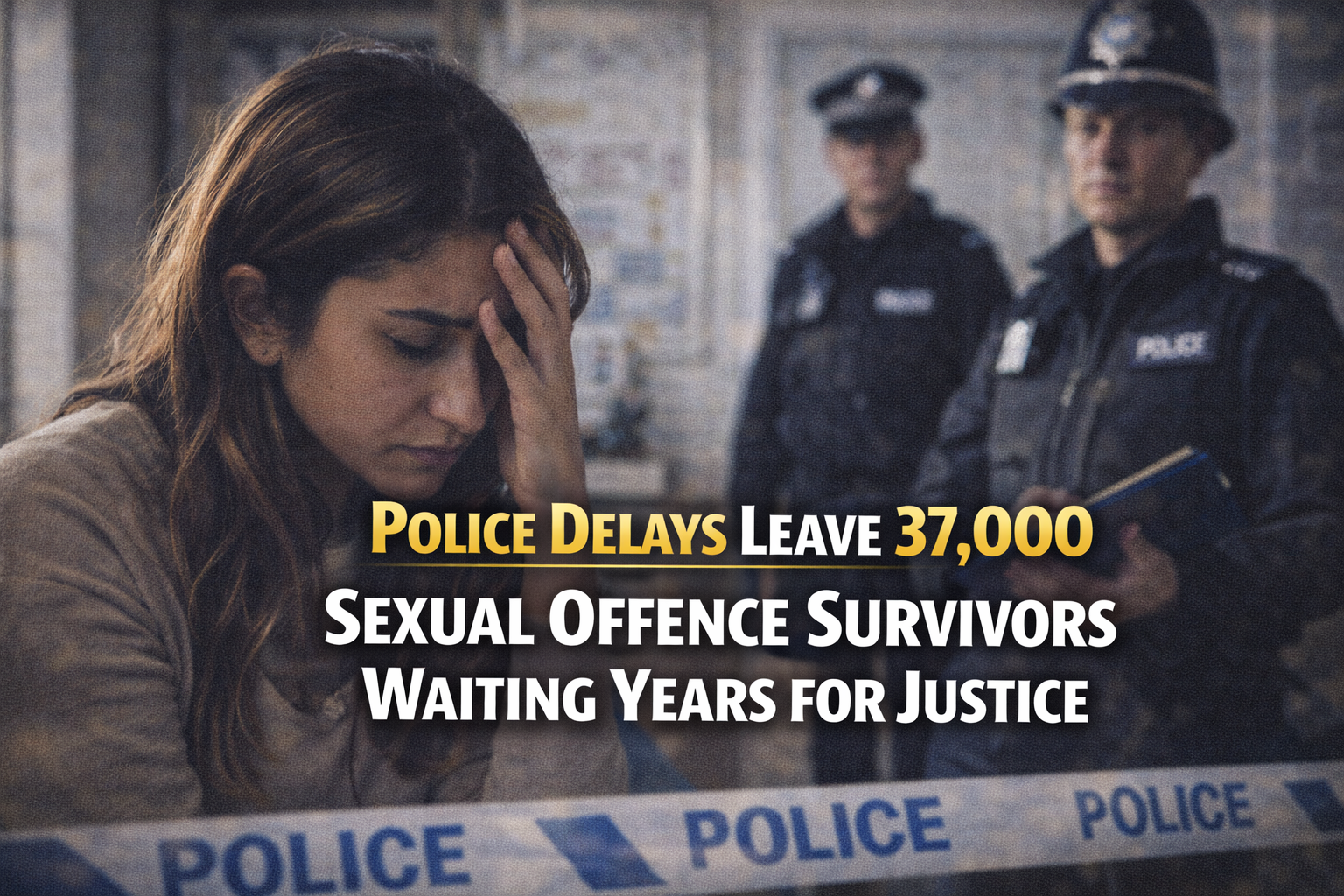
More than 37,000 survivors of sexual offences have been left waiting over three years for police investigations to progress over the past decade, according to survivor organisations who have now taken the rare step of launching a super-complaint against policing in England and Wales.
The legal action, submitted by Cambridge Rape Crisis Centre, the Centre for Women’s Justice, Rape Crisis England and Wales and law firm Bindmans LLP, comes amid mounting concern that the criminal justice system is no longer functioning in a way that is humane or fair for survivors of sexual violence. Campaigners argue that the scale and length of police delays have become not only damaging but potentially unlawful.
According to research presented with the complaint, more than half of these long-running investigations have taken longer than four years, with many extending even further. At the end of March 2025 alone, almost 14,000 sexual offence investigations that had already exceeded three years were still unresolved.
A System Under Strain, and Survivors Paying the Price
For survivors, especially those from diaspora and migrant communities who may already fear authority or face language and cultural barriers, reporting sexual violence is often an act of courage. The organisations behind the complaint say many survivors report crimes in good faith, only to experience years of silence, repeated delays and a sense that their cases have been quietly deprioritised.
The data shows that investigations lasting more than three years have increased by more than 650 per cent over the past decade. Survivors caught in these delayed cases describe feeling unable to move forward with their lives, while living in prolonged uncertainty about whether justice will ever come.
Surveys carried out by the charities found that more than two-thirds of survivors affected by lengthy delays said they were unsure they would ever report to the police again. While the sample is not representative, the findings echo national research, including conclusions from the Bluestone Operation Soteria review, which highlighted deep structural problems in how sexual offences are investigated.
Why the Super-Complaint Matters
The super-complaints system exists to allow organisations to raise concerns about systemic failures in policing that cause widespread harm. It is not about one force or one case, but about patterns of practice that affect thousands of people.
In this case, the organisations argue that excessive delays may breach the UK’s obligations under the European Convention on Human Rights, which requires the state to investigate serious crimes effectively and without undue delay. They warn that police forces could be legally liable where investigations stagnate for years with little progress.
The complaint also challenges how delays are officially recorded. According to the organisations, government crime data masks the true scale of the problem by failing to make very long investigations visible. As a result, some of the longest-running cases effectively disappear from public accountability.
“An Informal Waiting List for Justice”
Ellie Ball, ISVA Manager at Cambridge Rape Crisis Centre, said survivors are often left feeling abandoned by a system that should protect them. She described cases being pushed to the back of what feels like an informal waiting list for justice, leaving survivors with lasting mistrust and disillusionment.
She also warned that long delays mean suspects accused of serious sexual offences may remain effectively unpoliced for years, despite having come to the attention of authorities. Survivors who come forward to prevent further harm are left questioning whether their sacrifice was worth it.
For many working within the system, Ball noted, investigations lasting three, four or even five years have become normalised, a reality she described as an urgent wake-up call for government and policing leaders.
Hidden Data, Hidden Survivors
Nogah Ofer of the Centre for Women’s Justice said the experiences of survivors trapped in these lengthy investigations are largely hidden from public view because of how national crime data is presented. She said the super-complaint aims to reveal the true picture and push policing bodies to act quickly.
Rape Crisis England and Wales echoed those concerns, warning that when police delays are combined with the growing Crown Court backlog, survivors are being asked to engage with a process that no longer resembles a functioning justice system. As cases drag on, memories fade, stress intensifies and some survivors understandably withdraw altogether.
A Human Rights Issue, Not Just an Administrative One
India Cooper of Bindmans LLP described excessive delays as a widespread feature of UK policing that risks breaching survivors’ human rights. She said justice delayed is not neutral, but actively harmful, prolonging trauma and undermining safety.
For diaspora communities, where trust in policing may already be fragile due to experiences at home or in the UK, these failures can have long-lasting consequences. When survivors see years pass without answers, entire communities may become reluctant to engage with authorities at all.
What Comes Next
The organisations behind the super-complaint are calling for an immediate audit by police forces to establish how many sexual offence cases are effectively stuck in the system. They want transparency, accountability and a fundamental rethink of what survivors have the right to expect when they report serious crimes.
As delays continue to grow, the question is no longer just about efficiency. It is about dignity, trust and whether the justice system can still deliver meaningful outcomes for survivors who have already endured profound harm.
For many, especially women from migrant and diaspora backgrounds, the cost of silence is already high. This legal challenge asks whether the cost of speaking out has now become unbearable.