
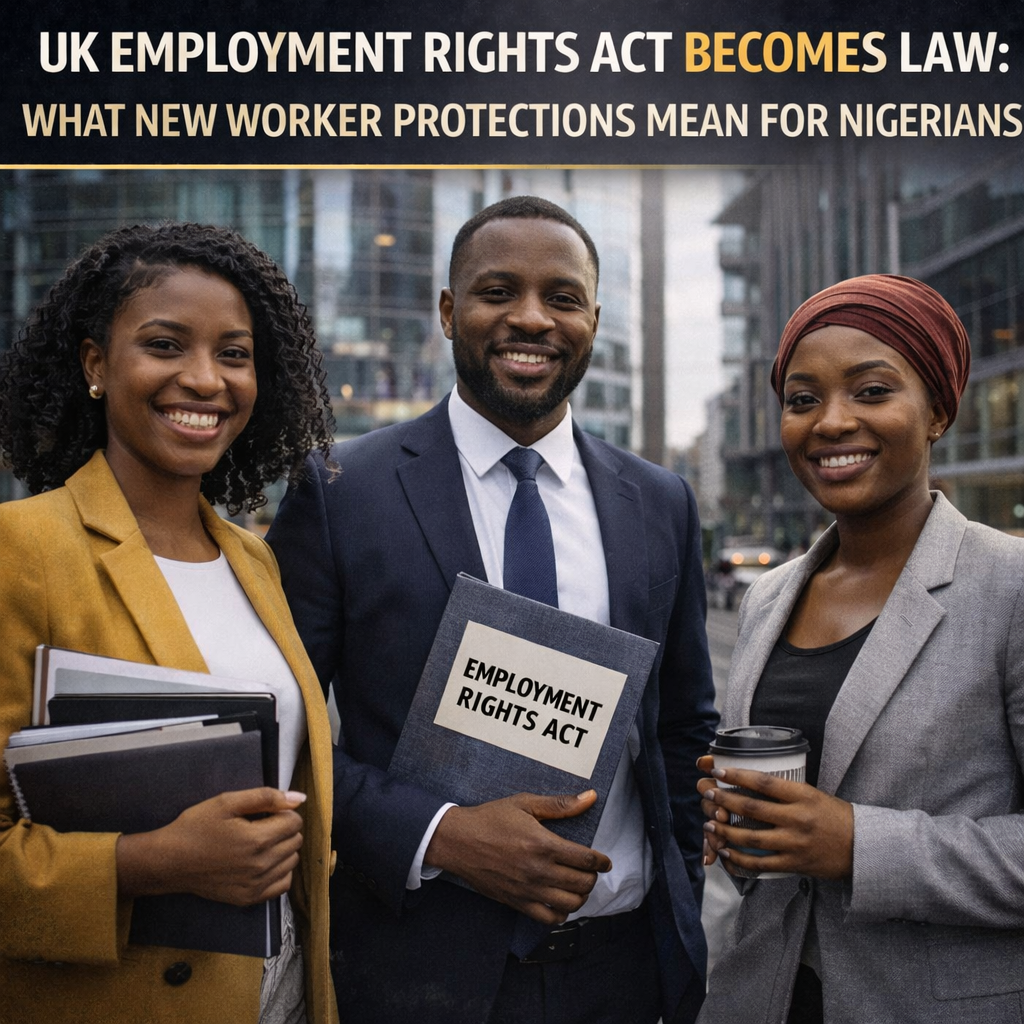
The UK has taken a major step in reshaping working life as the Employment Rights Act officially became law, a move that will affect more than 15 million workers across the country. For Nigerians and other members of the diaspora building their lives in Britain, the new legislation marks a significant shift toward greater security, fairness and dignity at work.
At Chijos News, we understand how closely employment conditions are tied to settlement, family stability and long-term success for migrants. Many Nigerians work in sectors where insecure contracts, limited sick pay and unclear rights have been a daily reality. This new law aims to change that.
The Employment Rights Act introduces a modern framework designed to help people stay in work, support productivity and improve living standards. One of the most impactful changes is the introduction of new “day one” rights. From the first day in a new job, parents will now have stronger legal backing. Around 32,000 more fathers and partners each year will be eligible to take paternity leave, while an additional 1.5 million parents will gain access to unpaid parental leave. For Nigerian families balancing demanding jobs with childcare responsibilities, this offers much-needed flexibility and peace of mind.
The reforms also address one of the most common fears among migrant workers: losing income when illness strikes. Under the new statutory sick pay rules, an estimated 1.3 million workers will now be able to take time off when they are unwell without worrying about losing pay. By removing previous barriers, the law recognises that no one should have to choose between their health and their livelihood.
The Act also brings a new level of compassion into the workplace. Employees facing personal loss will now be entitled to bereavement leave, with up to 2.7 million workers a year expected to benefit. For diaspora communities who may already be dealing with separation from family abroad, this recognition of human vulnerability at work is a powerful change.
Another key area of reform tackles the growth of insecure work. Zero-hours contracts have increased over the past decade to more than one million workers, many of whom are among the lowest paid. Under the new law, these workers will gain stronger protections, including the right to a contract that reflects the hours they actually work and compensation when shifts are cancelled at short notice. For many Nigerians in hospitality, care work and logistics, this could mean more predictable income and better financial planning.
Job security has also been strengthened. Previously, employees had to wait two years before gaining protection from unfair dismissal. Under the new framework, this protection will apply after six months in a new role, a change that could make a real difference for migrants still finding their footing in the UK job market.
Prime Minister Keir Starmer described the law as proof of what a pro-business, pro-worker government can achieve, saying it would raise living standards while supporting productivity and restoring dignity at work. Business and Trade Secretary Peter Kyle echoed that message, calling the Act a landmark reform that brings workplace law into the 21st century while supporting responsible businesses and fair competition.
Research cited by the government suggests that stronger worker protections are not just socially beneficial but economically smart. Studies from leading institutions including Oxford, Warwick, MIT and UCL consistently show that job satisfaction and security are closely linked to higher productivity and longer job retention, factors that contribute to economic growth.
Importantly, the changes will be introduced gradually over a two-year period, giving employers time to adapt while allowing ongoing consultation with businesses, trade unions and civil society. The government says this phased approach is designed to ensure stability while delivering meaningful reform.
For Nigerians living and working in the UK, the Employment Rights Act is more than a policy announcement. It directly affects how safe you feel at work, how you care for your family, and how confidently you can plan for the future. Whether you are a student working part-time, a skilled worker supporting relatives back home, or a parent raising children in Britain, these reforms touch everyday life.
At Chijos News, we will continue to break down UK laws and policies that matter to the diaspora, helping you understand not just what has changed, but how it affects you personally. As this new era of workers’ rights begins, staying informed is one of the most powerful tools migrants have to protect themselves and thrive in the UK.