
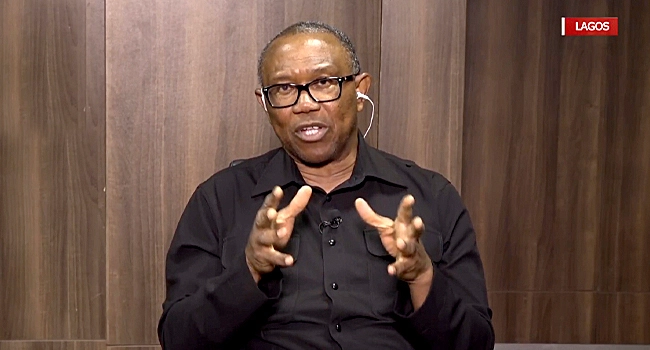
Former presidential candidate Peter Obi has called for a strategic shift in Nigeria’s maritime infrastructure policy, urging the Federal Government to decentralize port development beyond Lagos and invest in underutilized facilities across the country.
Reacting to the recent approval of $1 billion (₦1.5 trillion) for the modernization of Apapa and Tin Can Island Ports, Obi welcomed the initiative but cautioned that such efforts must be guided by transparency, accountability, and equitable national planning.
“While any effort to improve efficiency and embrace technology in our maritime sector is commendable, this development once again exposes a longstanding concentration of our port development only in Lagos,” Obi said.
He noted that Nigeria’s infrastructure investment has historically favored Lagos, often at the expense of strategic ports in Warri, Port Harcourt, Calabar, and Onne. Obi argued that fully developing these ports would unlock new economic corridors, create jobs, and reduce regional disparities.
Drawing comparisons with global practices, Obi cited countries like Vietnam, Indonesia, South Africa, Egypt, Morocco, Algeria, and Ghana, which have embraced decentralized port systems to enhance national connectivity and economic resilience.
“No country seeking to maximize its blue economy concentrates all maritime activities in a single city,” he said. “Decentralization reduces congestion, improves logistics, enhances national security, and promotes balanced economic growth.”
Obi warned that Lagos currently handles over 70% of Nigeria’s port activities, leading to chronic congestion, high demurrage costs, environmental degradation, and logistical delays that inflate the cost of goods nationwide.
He emphasized that revitalizing other ports is not merely an infrastructural necessity but a national imperative. “Developing Warri, Port Harcourt, Calabar, and Onne would decongest Lagos, reduce shipping costs, attract investment, create employment, and stimulate regional economies,” he said.
Beyond physical infrastructure, Obi called for reforms to tackle corruption, reduce bureaucracy, and embrace digital systems to create a seamless, paperless port environment that boosts global competitiveness.
“If prudently managed, the Lagos modernization project could become a model for broader maritime transformation,” he added, urging the government to ensure that similar development radiates across the federation.
Obi concluded by reaffirming his vision for a Nigeria built on fairness, equity, and productivity. “We must rebuild with integrity and a clear commitment to shared prosperity,” he said.

