
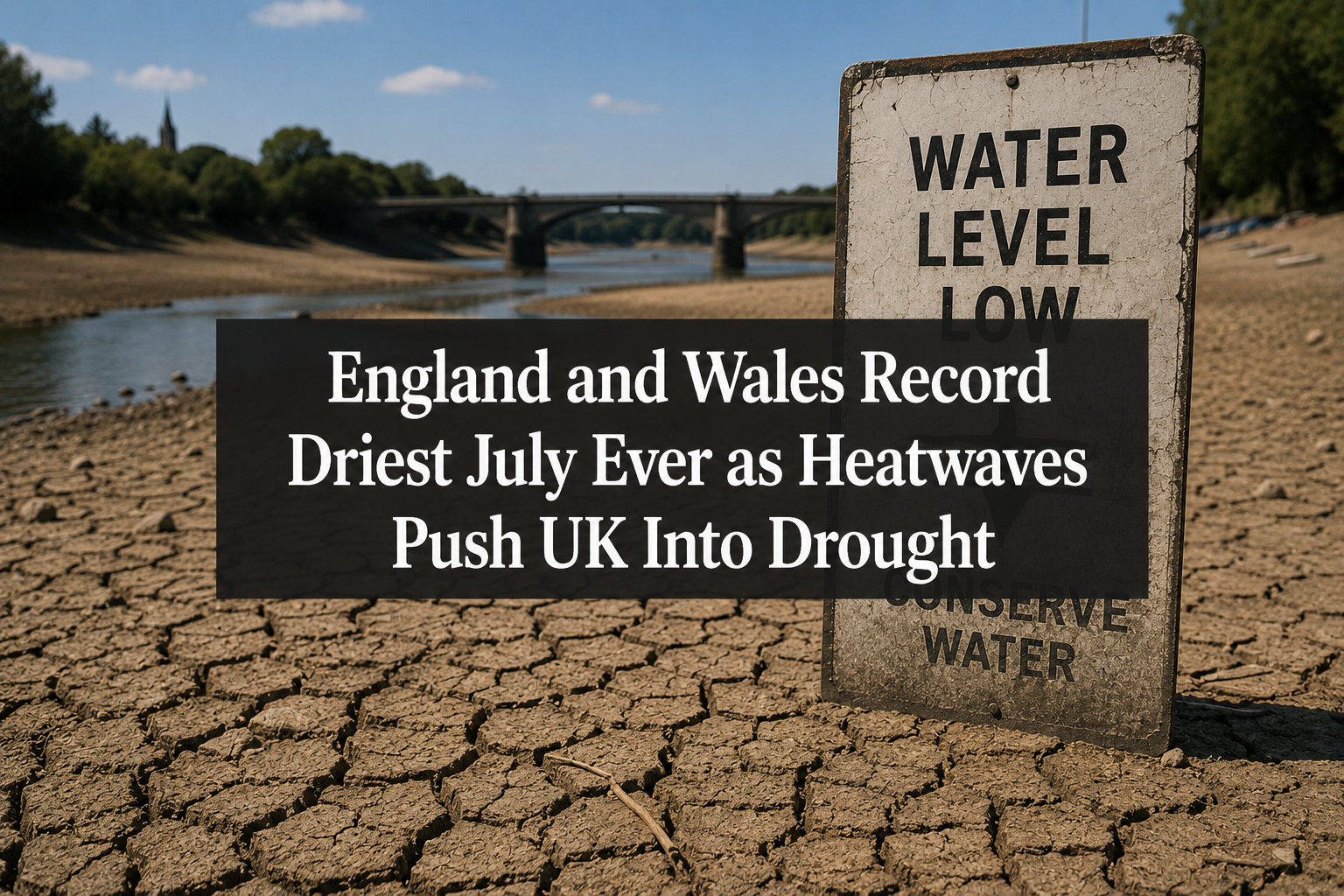
England and Wales have experienced their driest July since records began, as prolonged heatwaves, exceptionally low rainfall and record-breaking sunshine combined to create one of the most extreme summer months ever recorded in the United Kingdom.
According to provisional data released by the Met Office on Monday, England and Wales recorded their driest July on record, while the UK as a whole received just 35 per cent of its average rainfall for the month. The figures make it the driest July across the UK since national rainfall records began in 1868.
The latest statistics highlight the growing impact of extreme weather across Britain, with drought conditions now affecting the whole of Wales and around half of England. The prolonged dry spell has raised concerns over water supplies, agriculture, the natural environment and public health as communities continue to experience unusually high temperatures.
Southern England experienced its driest month ever recorded in a weather series that dates back to 1836. At the same time, England and Wales also recorded their sunniest month on record, reflecting the exceptional weather conditions that have dominated much of the summer.
The record-breaking month follows a series of intense heatwaves that have swept across the UK during 2026. Earlier this year, several parts of the country also experienced their hottest May and June temperatures ever recorded, continuing a pattern of unusually warm weather that climate experts say is becoming increasingly common.
The combination of extreme heat and prolonged dry weather has had serious consequences for public health. It is estimated that 2,877 people across Britain have died from heat-related causes so far this year, underlining the dangers posed by sustained periods of high temperatures, particularly for older people, young children and those with underlying health conditions.
The prolonged absence of rainfall has also placed additional pressure on rivers, reservoirs, wildlife and farming communities, with drought conditions affecting large parts of England and Wales. Farmers have reported difficult growing conditions, while environmental experts continue to monitor the impact on ecosystems that rely on consistent water supplies throughout the summer months.
Amy Doherty, Science Manager at the Met Office, described the month as one of the most remarkable periods ever documented in the UK’s weather history.
“The combination of record-breaking dryness, exceptional warmth and unprecedented sunshine has delivered one of the most notable summer months in our historical records,” she said.
Meteorologists say July’s extraordinary weather demonstrates how multiple climate extremes can occur simultaneously, with record low rainfall, exceptionally high temperatures and prolonged sunshine combining to create widespread environmental and societal impacts.
The latest figures come as government agencies, water companies and local authorities continue monitoring drought conditions across affected regions. Residents are also being encouraged to use water responsibly as authorities work to manage supplies during one of the driest summers in modern British history.
While many people have welcomed the warm and sunny weather, experts continue to warn that prolonged heatwaves carry significant risks, including increased wildfire threats, pressure on healthcare services, reduced crop yields and greater stress on water resources.
As Britain moves further into the summer, meteorologists will continue monitoring weather patterns to determine whether rainfall returns in the coming weeks or whether drought conditions are likely to persist into late summer and early autumn.
Extreme weather affects everyone living in Britain, including thousands of Nigerians across England, Wales, Scotland and Northern Ireland. Prolonged heatwaves and drought conditions can increase household water restrictions, affect transport, agriculture, food prices and public health. Families, particularly older adults, young children and those with medical conditions, should stay hydrated, follow official weather advice and take precautions during periods of extreme heat.
At Chijos News, we are committed to keeping Nigerians in the UK informed about the latest developments in weather, climate, public health, government policy and community affairs. Our mission is to deliver trusted, accurate and relevant journalism that helps the Nigerian diaspora stay prepared, informed and connected to the issues shaping everyday life across the United Kingdom.

