
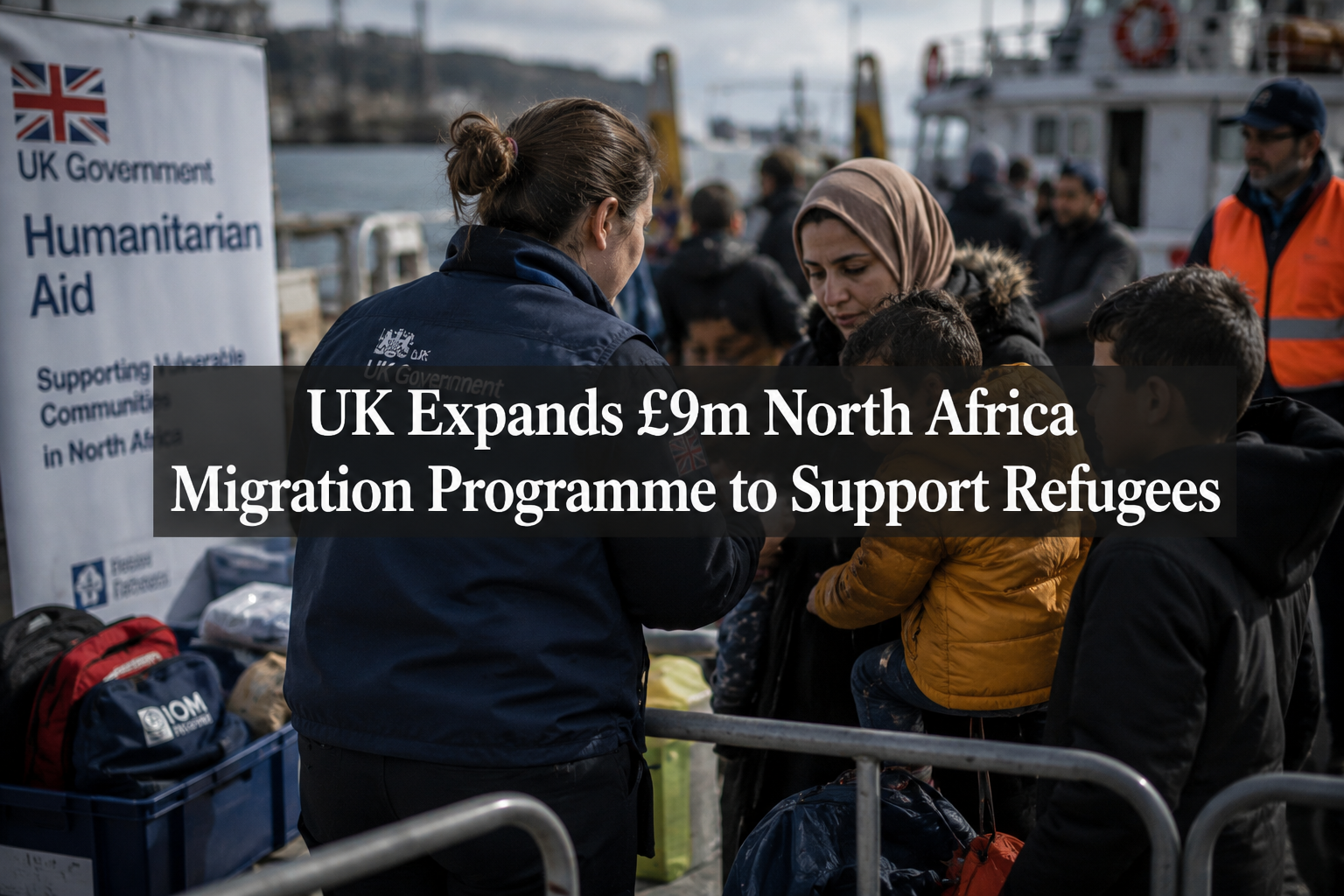
The United Kingdom has announced a significant expansion of its migration support strategy across North Africa, increasing funding for programmes designed to help people displaced by regional conflicts rebuild their lives closer to home while also reducing the need for dangerous and irregular journeys towards Europe and the UK.
The initiative, led through the Foreign, Commonwealth & Development Office, focuses on strengthening stability in countries hosting large numbers of refugees by improving access to work, healthcare, and essential services for both migrants and local communities.
At the heart of the expansion is the North Africa Migration and Development programme, known as NAMAD, which will now extend its operations into Libya for the first time while also scaling up support in Egypt, Algeria and Tunisia. The programme is designed to respond to the growing pressures created by displacement from ongoing conflicts, particularly the war in Sudan, which has forced more than 12 million people from their homes since 2023 and has driven over a million people into neighbouring Egypt alone.
During a visit to Egypt, Foreign Secretary Yvette Cooper is expected to meet Sudanese migrants who have benefited directly from UK-backed support delivered through International Organisation for Migration facilities. These encounters come as the government announces an additional £9 million in funding to expand NAMAD’s work, reinforcing efforts to provide displaced people with practical pathways into employment, access to healthcare, and emergency support that allows them to stabilise their lives in host countries rather than risk unsafe onward travel.
Officials say the approach reflects a broader shift in foreign policy that combines humanitarian assistance with efforts to tackle irregular migration at its source. By investing in local integration and economic resilience, the UK aims to reduce the incentives for migrants to embark on dangerous journeys facilitated by smuggling networks while also supporting countries that are carrying the heaviest burden of displacement. The Foreign Secretary has described this as both a moral responsibility and a practical necessity in addressing the global challenges of forced migration.
Since its launch, NAMAD has already delivered substantial impact in Egypt, reaching more than 22,500 people through a combination of skills training, healthcare support, and financial assistance. Thousands of vulnerable migrants and Egyptians have received job-focused training to improve employability, while more than 15,000 people have benefited from medical support, including mobile health teams operating in hard-to-reach communities. In addition, over 13,400 individuals have received cash assistance or essential non-food items such as blankets and hygiene kits, helping families meet immediate survival needs during periods of instability.
Alongside the migration programme, the UK has also announced a separate £8.7 million partnership with the World Bank aimed at supporting Egypt’s wider economic reform agenda. This initiative will provide technical expertise and policy advice to help strengthen inclusive private sector growth, improve investment conditions, and enhance trade opportunities, with the goal of boosting long-term economic resilience and creating more sustainable employment opportunities for both citizens and migrant populations.
Foreign Secretary Yvette Cooper said migration is a global challenge that requires coordinated international action, highlighting that countries such as Egypt continue to host millions of people displaced by conflict, including those fleeing what she described as one of the most severe humanitarian crises of the modern era in Sudan. She emphasised that supporting host countries and helping vulnerable people rebuild their lives closer to home remains central to preventing dangerous journeys towards Europe and the UK.
As the programme expands into new regions, officials say the focus will remain on combining humanitarian support with economic development, ensuring that both displaced populations and host communities can benefit from improved services, stronger job opportunities and greater stability in the face of ongoing regional pressures.
At Chijos News, we connect global policy decisions like this to diaspora communities worldwide, showing how migration, development, and stability efforts across North Africa shape the lived realities of families and communities with ties across Africa, Europe, and beyond.