
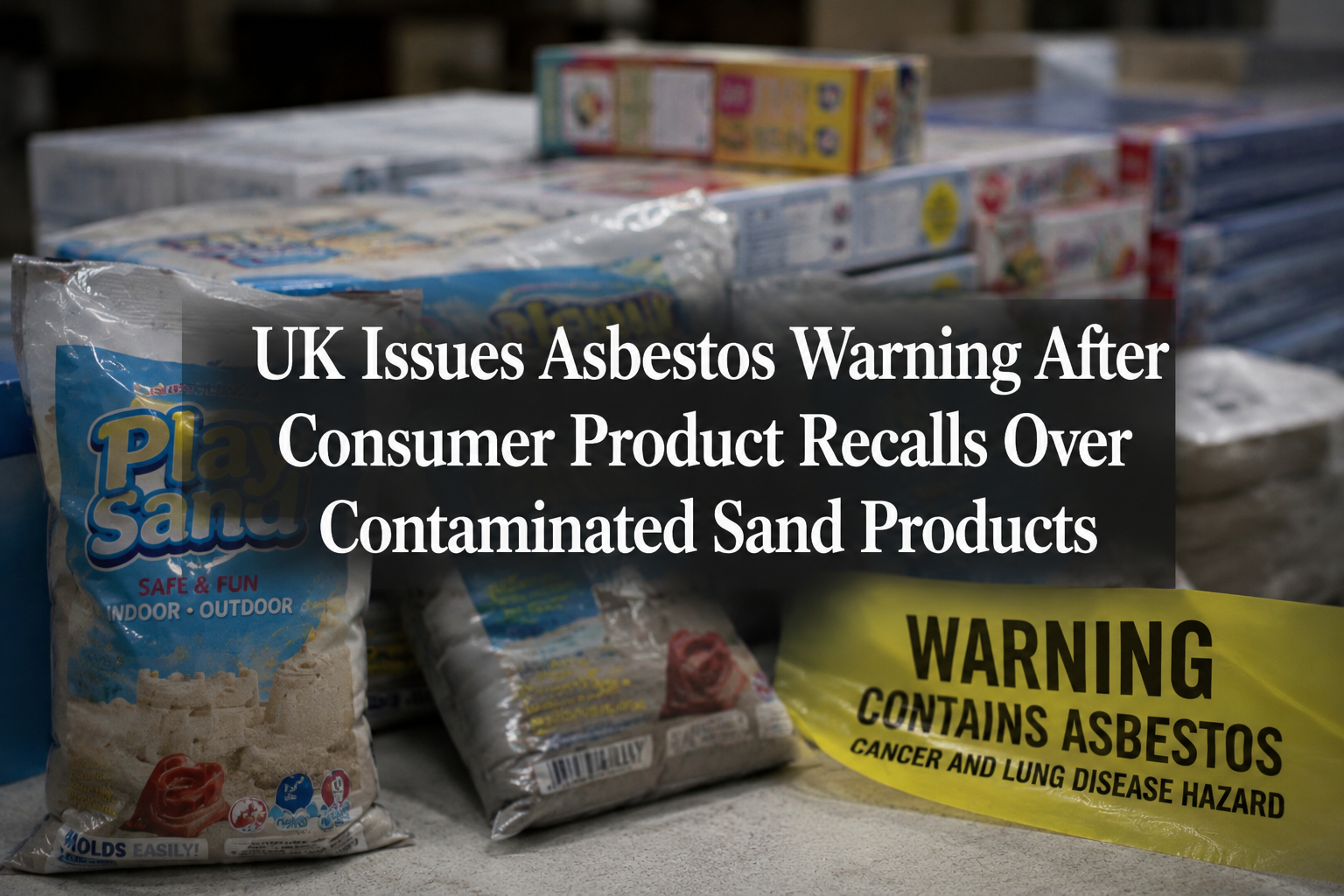
UK authorities have moved to reassure consumers following growing concerns about asbestos contamination in a number of sand-containing products that have been recalled from the market.
The warning comes amid increasing public awareness about potential asbestos risks after small amounts of the hazardous material were discovered in several consumer products, including craft kits, science kits, toys containing sand and decorative doorstops. Officials have stressed that no play pit sand products are currently subject to any recall.
The government has brought together experts from several agencies to coordinate a clear and consistent response to the issue. The joint statement has been agreed by the Office for Product Safety and Standards (OPSS), the UK Health Security Agency (UKHSA), and the Health and Safety Executive (HSE), all of which play key roles in protecting public safety and health across the United Kingdom.
The statement aims to provide reassurance to consumers while reminding businesses of their legal responsibilities when manufacturing, importing or selling products that may pose safety risks.
According to regulators, the UK’s product safety framework is designed to offer strong protection for consumers. Businesses are legally required to ensure that products placed on the market are safe under normal and reasonably foreseeable use. They are also expected to continue monitoring products after sale and take immediate action if any safety concerns emerge.
Officials emphasised that the UK maintains a strict zero-tolerance approach to asbestos in consumer products. Asbestos has been banned in the UK since 1999 due to its well-documented links to serious health conditions, including lung disease and certain cancers. As a result, any consumer product found to contain asbestos must be removed from sale and recalled from customers.
Authorities have made it clear that recalls are being ordered because of the country’s zero-tolerance policy rather than because the products necessarily present an immediate threat to public health.
The government said consumers should understand that the discovery of asbestos in a product does not automatically mean they are in immediate danger. The health risks associated with asbestos exposure depend on several factors, including how the product is used, whether the asbestos-containing material has been disturbed, and the amount and duration of exposure over time.
Experts explain that asbestos materials which remain intact and undisturbed are generally unlikely to release harmful fibres. The primary risk arises when asbestos is broken, damaged or disturbed, allowing microscopic fibres to become airborne and potentially inhaled.
Health officials say the overall risk to consumers from the recalled products is expected to be low, particularly where exposure has been limited to normal use and occasional short-term contact. However, they stress that consumers should stop using any affected products immediately and follow official recall instructions to minimise any potential risk.
The guidance is intended to reassure households while ensuring appropriate precautions are taken. Consumers who believe they may own a recalled product are encouraged to follow the disposal, clean-up and return procedures provided by the manufacturer or retailer.
The recalls have also highlighted the importance of ongoing product testing and market surveillance. Regulators are working closely with manufacturers, importers and retailers to identify any additional products that may be affected and ensure swift action is taken where necessary.
The Office for Product Safety and Standards has confirmed that it is requiring businesses to meet their legal obligations by removing any products found to contain asbestos from sale and carrying out recalls where appropriate. Officials say businesses that fail to comply with product safety laws may face enforcement action.
While the situation has understandably generated concern among parents and consumers, health authorities are urging people not to panic. Experts note that asbestos-related illnesses are generally associated with repeated or prolonged exposure over many years, particularly in occupational settings such as construction, shipbuilding and industrial work where asbestos was historically widespread.
The current recalls involve products containing very small amounts of asbestos, and authorities continue to assess available evidence regarding any potential health impacts.
Government agencies say they will continue monitoring the situation closely and will provide updated guidance if new information becomes available. Their priority remains ensuring that businesses act responsibly, consumers are informed, and public health is protected.
For now, officials advise consumers to remain aware of product recall notices, check whether any products they own are affected, and follow all recall instructions carefully. They stress that the precautionary recalls demonstrate the effectiveness of the UK’s product safety system, which is designed to identify and remove potentially unsafe products before they can cause harm.
As public awareness of product safety issues grows, regulators say maintaining transparency and providing clear information will remain essential in helping consumers make informed decisions and stay protected.
For Nigerians and other members of the African diaspora living in the United Kingdom, product safety alerts like this serve as an important reminder to stay informed about government recalls and public health guidance. Many immigrant families regularly purchase toys, educational kits and household products for their children, making awareness of consumer safety notices especially important. Understanding official advice helps families make safer choices and avoid unnecessary anxiety when health-related warnings emerge.
At Chijos News, we remain committed to providing Nigerians at home and across the diaspora with accurate, trustworthy and easy-to-understand coverage of UK public safety developments, health updates and policy changes that affect everyday life. By keeping our readers informed, we help communities make confident decisions for themselves and their families in an ever-changing world.