
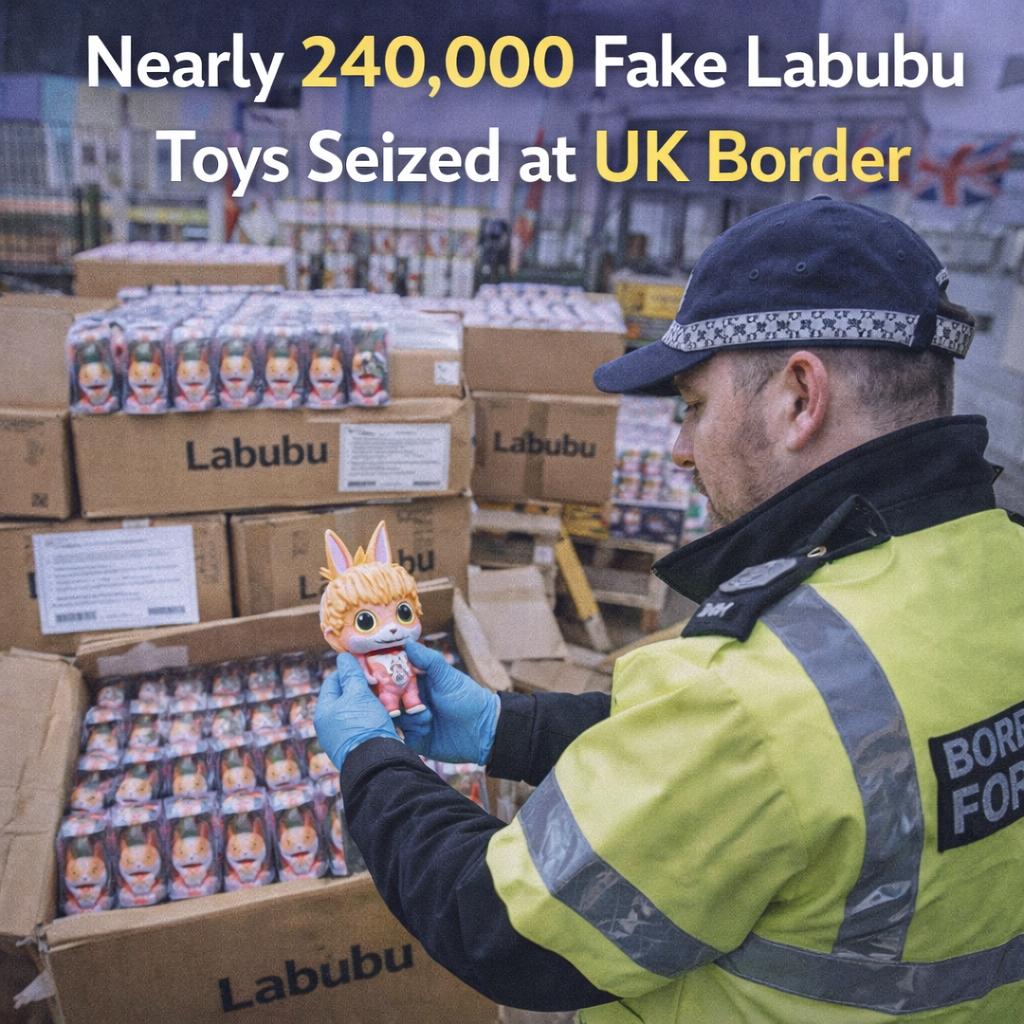
As Christmas approaches, families across the UK, including many within African and migrant communities, are searching for affordable gifts that will bring joy to their children. Popular toys often sell out quickly, pushing parents towards online marketplaces and unfamiliar sellers in a rush to keep festive promises. But this year, UK border officials are warning that the bargain price of some must-have toys may come with hidden and dangerous risks.
At Chijos News, we highlight stories that affect everyday life for diaspora families navigating the UK system. A major crackdown by Border Force has revealed the scale of counterfeit toys entering the country, raising serious concerns about child safety during the festive shopping season.
Border Force Seizes Nearly 240,000 Fake Labubus in Christmas Crackdown
Almost 240,000 fake Labubu dolls have been seized at UK borders in a major blow to organised criminals attempting to profit from one of this year’s most sought-after Christmas toys. The seizures form part of a wider operation that has stopped more than 260,000 counterfeit toys from entering the country in 2025 alone.
Border Force confirmed that around 90 per cent of the fake toys intercepted this year were dangerous imitations, following a sharp rise in demand for Labubu dolls. With Christmas approaching, officers have intensified checks on shipments to prevent unsafe products from reaching children.
Safety concerns remain high, with studies showing that around three-quarters of counterfeit toys fail basic safety tests. Fake versions are often poorly made and can break easily, increasing the risk of choking. Some have also been found to contain banned chemicals linked to cancer, as well as unsafe electrical components.
Alongside counterfeit Labubus, Border Force officers have seized fake Jellycats, PlayStation controllers, Disney merchandise and Pokémon figurines. These items are frequently designed to look almost identical to genuine products, making it difficult for parents to spot the difference when shopping online.
Authorities warn that the trade in fake toys is driven by organised criminal networks that prioritise profit over safety. These groups exploit families during the festive season, while also undermining legitimate retailers and manufacturers who invest heavily in quality control and child safety.
Once detected, counterfeit toys are typically destroyed to prevent them from re-entering the market. Officials say these actions protect both consumers and honest businesses from being undercut by dangerous and illegal goods.
Adam Chatfield, Assistant Director at Border Force, said the operation was not about spoiling Christmas fun, but about protecting children and disrupting criminal networks. He explained that profits from counterfeit goods are often used to fund serious criminal activity, and every seizure helps protect families, businesses and national security.
To tackle the seasonal surge in fake toy sales, Border Force has partnered with the Intellectual Property Office under Operation Foretide. The initiative combines intelligence-led targeting with specialist training to help officers identify counterfeit products and intercept high-risk shipments before they reach shops or homes.
The crackdown comes after a record year for Border Force enforcement, including the seizure of £1 billion worth of cocaine this summer and ongoing efforts to stop weapons and firearms from reaching UK streets. The government says it remains committed to cutting off the financial lifelines of criminal gangs operating through illegal imports.
Helen Barnham, Deputy Director of Enforcement Policy at the Intellectual Property Office, warned that counterfeit toys often hide serious dangers behind attractive packaging. She urged parents to be cautious, particularly when buying from unfamiliar sellers or deals that appear too good to be true, stressing that children should never become unwitting testers of unsafe products.
For families across the diaspora, the message this Christmas is clear: checking the source of toys and prioritising safety over price could make all the difference in protecting children during the festive season.

